FSC100
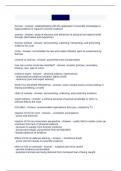
forensic - Answer- relating/dealing with the application of scientific knowledge to
legal problems in regard to criminal evidence
science - Answer- study of structure and behaviour of physical and natural world
through observation and experiment
forensic method - Answer- documenting, collecting, interpreting, and presenting
evidence for court
crime - Answer- act forbidden by law and makes offender open to punishment by
that law
criminal vs civil law - Answer- punishment and compensative
how can a crime scene be classified? - Answer- location (primary, secondary,
tertiary), size, type of crime
evidence types - Answer- - physical (objects, impressions)
- observations/conditions (weather, lights on/off)
- testimony (eye and expert witness)
WHAT IS LOCARDS PRINCIPLE - Answer- every contact leaves a trace (taking or
leaving something, or both)
chain of custody - Answer- documenting, collecting, and protecting evidence
expert witness - Answer- a witness because of special knowledge or skill in a
relevant field to the case.
CSI effect - Answer- unreasonable expectations from jury, created by TV
impacts of CSI on court - Answer- - unrealistic expectations
- jurors well-informed
impacts of CSI on prosecution perspective - Answer- - public fails to realize cases go
unsolved, from lack of physical evidence
- pressure to supply more forensic evidence
- prosecutors began using NEGATIVE WITNESSES
^explain absence of evidence
Effect of CSI on defense attorney - Answer- - introduces doubt
- jurors rely too heavily on scientific evidence
effect of CSI on criminals - Answer- - suspects are more careful
- prevent evidence accumulation
- potential criminals are being deterred from increased fear of being caught
forensic - Answer- relating/dealing with the application of scientific knowledge to
legal problems in regard to criminal evidence
science - Answer- study of structure and behaviour of physical and natural world
through observation and experiment
forensic method - Answer- documenting, collecting, interpreting, and presenting
evidence for court
crime - Answer- act forbidden by law and makes offender open to punishment by
that law
criminal vs civil law - Answer- punishment and compensative
how can a crime scene be classified? - Answer- location (primary, secondary,
tertiary), size, type of crime
evidence types - Answer- - physical (objects, impressions)
- observations/conditions (weather, lights on/off)
- testimony (eye and expert witness)
WHAT IS LOCARDS PRINCIPLE - Answer- every contact leaves a trace (taking or
leaving something, or both)
chain of custody - Answer- documenting, collecting, and protecting evidence
expert witness - Answer- a witness because of special knowledge or skill in a
relevant field to the case.
CSI effect - Answer- unreasonable expectations from jury, created by TV
impacts of CSI on court - Answer- - unrealistic expectations
- jurors well-informed
impacts of CSI on prosecution perspective - Answer- - public fails to realize cases go
unsolved, from lack of physical evidence
- pressure to supply more forensic evidence
- prosecutors began using NEGATIVE WITNESSES
^explain absence of evidence
Effect of CSI on defense attorney - Answer- - introduces doubt
- jurors rely too heavily on scientific evidence
effect of CSI on criminals - Answer- - suspects are more careful
- prevent evidence accumulation
- potential criminals are being deterred from increased fear of being caught