PEDS EXAM 2 WITH PRACTICE QUESTIONS
AND ANSWERS. 2024 FALL REVISION
MATERIAL.
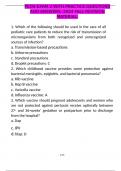
1. Which of the following should be used in the care of all
pediatric care patients to reduce the risk of transmission of
microorganisms from both recognized and unrecognized
sources of infection?
a. Transmission-based precautions
b. Airborne precautions
c. Standard precautions
d. Droplet precautions: C
2. Which childhood vaccine provides some protection against
bacterial meningitis, epiglottis, and bacterial pneumonia?
a. Hib vaccine
b. Hep B vaccine
c. Varicella vaccine
d. Influenza vaccine: A
3. Which vaccine should pregnant adolescents and women who
are not protected against pertussis receive optimally between
27- and 36-weeks’ gestation or postpartum prior to discharge
from the hospital?
a. Dap
c. IPV
d.Tdap: D
1/15
, PEDS EXAM 2 WITH PRACTICE QUESTIONS
AND ANSWERS. 2024 FALL REVISION
MATERIAL.
4. Which childhood vaccine provides protection against
streptococcal infections such as otitis media, sinusitis, and
pneumonia?
a. Rotavirus vaccine
b. Hib vaccine
c. Pneumococcal vaccine
d. MMR vaccine: C
5. One of the most common intestinal parasitic pathogens in the
US acquired from a contaminated water source such as a lake or
swimming pool is:
a. tinea capitis
b. giardia intestinalis
c. pediculosis capitis
d. enterobiasis: B
6. A 9-year-old child in the ED is diagnosed w/ Lyme disease. The
nurse anticipates that the HCP orders will include the
administration of:
a. cefotaxime
b.aqueous penicillin
c. doxycycline
d. thrimethoprim-sulfamethoxazole: C
2/15
AND ANSWERS. 2024 FALL REVISION
MATERIAL.
1. Which of the following should be used in the care of all
pediatric care patients to reduce the risk of transmission of
microorganisms from both recognized and unrecognized
sources of infection?
a. Transmission-based precautions
b. Airborne precautions
c. Standard precautions
d. Droplet precautions: C
2. Which childhood vaccine provides some protection against
bacterial meningitis, epiglottis, and bacterial pneumonia?
a. Hib vaccine
b. Hep B vaccine
c. Varicella vaccine
d. Influenza vaccine: A
3. Which vaccine should pregnant adolescents and women who
are not protected against pertussis receive optimally between
27- and 36-weeks’ gestation or postpartum prior to discharge
from the hospital?
a. Dap
c. IPV
d.Tdap: D
1/15
, PEDS EXAM 2 WITH PRACTICE QUESTIONS
AND ANSWERS. 2024 FALL REVISION
MATERIAL.
4. Which childhood vaccine provides protection against
streptococcal infections such as otitis media, sinusitis, and
pneumonia?
a. Rotavirus vaccine
b. Hib vaccine
c. Pneumococcal vaccine
d. MMR vaccine: C
5. One of the most common intestinal parasitic pathogens in the
US acquired from a contaminated water source such as a lake or
swimming pool is:
a. tinea capitis
b. giardia intestinalis
c. pediculosis capitis
d. enterobiasis: B
6. A 9-year-old child in the ED is diagnosed w/ Lyme disease. The
nurse anticipates that the HCP orders will include the
administration of:
a. cefotaxime
b.aqueous penicillin
c. doxycycline
d. thrimethoprim-sulfamethoxazole: C
2/15