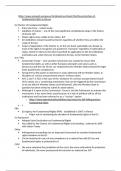
PRINCIPLES INCOME TAX
Taxation - correct answer is the act of laying a tax, the process or means by which
the sovereign, through its law making body, raises income to defray the necessary expenses of the
government.
Lifeblood Theory - correct answer As stated in the case of CIR vs. Algue [158 SCRA
9], the existence of government is a necessity; it cannot exist nor endure without the means to pay its
expenses;
Necessity Theory - correct answer As stated in the case of PHILIPPINE GUARANTY V.
CIR [13 SCRA 775], taxation is a necessary burden to preserve the States sovereignty and a means to give
the citizenry an army to resist aggression, anavy to defend its shores from invasion, a corps of civil
servants to serve, public improvements for the enjoyment of the citizenry, and those which come within
the State's territory and facilities and protection which a government is supposed to provide
Benefits-Protection Theory (Symbiotic relationship) - correct answer According to
this principle, the basis of taxation is found in the reciprocal duties of protection and support between
the State and its inhabitants. In return for his contribution, the taxpayer receives the general advantages
and protection which the government affords the taxpayer and his property.
Jurisdiction - correct answer is a reason why citizens must provide support to the
state so the latter could continue to give protection.
inherent - correct answer It is________ in nature being an attribute of sovereignty.
legislative - correct answer It is ________ in nature because it is subject to
constitutional limitations.
nature - correct answer (kind);
object - correct answer (purpose);
, extent - correct answer (rate);
coverage - correct answer (subjects); and
situs - correct answer (place)
Fiscal Adequacy - correct answer sources of revenue must be adequate to meet
expenditures. Violation of this principle will make the law unsound but still valid and not
unconstitutional.
Theoretical Justice - correct answer Taxes must be based on the taxpayer's ability to
pay and proportional to the relative
Administrative Feasibility - correct answer The taxes should be capable of being
effectively enforced. Violation of this principle will make the law unsound but still valid and not
unconstitutional.
Power to Tax - correct answer Subject to inherent and constitutional limitations, the
power of taxation is regarded as supreme, plenary, unlimited, and comprehensive.
Police power - correct answer is the inherent power of a sovereign state to legislate
for the protection of the health, general welfare, safety, and morals of the public. It involves the power
to regulate both liberty and property for the promotion of public good.
The power of eminent domain - correct answer is the inherent power of a sovereign
state to take private property for a public purpose. The Constitution limits the exercise of this power by
providing that: "Private property shall not be taken for public use without just compensation." (Art. III,
Sec. 9, 1987 Philippine Constitution)
Levy - correct answer the power of taxation is vested on and exercised by the
legislative department. The determination of what should be taxed, when, how, or where lies in the
legislative department.
Taxation - correct answer is the act of laying a tax, the process or means by which
the sovereign, through its law making body, raises income to defray the necessary expenses of the
government.
Lifeblood Theory - correct answer As stated in the case of CIR vs. Algue [158 SCRA
9], the existence of government is a necessity; it cannot exist nor endure without the means to pay its
expenses;
Necessity Theory - correct answer As stated in the case of PHILIPPINE GUARANTY V.
CIR [13 SCRA 775], taxation is a necessary burden to preserve the States sovereignty and a means to give
the citizenry an army to resist aggression, anavy to defend its shores from invasion, a corps of civil
servants to serve, public improvements for the enjoyment of the citizenry, and those which come within
the State's territory and facilities and protection which a government is supposed to provide
Benefits-Protection Theory (Symbiotic relationship) - correct answer According to
this principle, the basis of taxation is found in the reciprocal duties of protection and support between
the State and its inhabitants. In return for his contribution, the taxpayer receives the general advantages
and protection which the government affords the taxpayer and his property.
Jurisdiction - correct answer is a reason why citizens must provide support to the
state so the latter could continue to give protection.
inherent - correct answer It is________ in nature being an attribute of sovereignty.
legislative - correct answer It is ________ in nature because it is subject to
constitutional limitations.
nature - correct answer (kind);
object - correct answer (purpose);
, extent - correct answer (rate);
coverage - correct answer (subjects); and
situs - correct answer (place)
Fiscal Adequacy - correct answer sources of revenue must be adequate to meet
expenditures. Violation of this principle will make the law unsound but still valid and not
unconstitutional.
Theoretical Justice - correct answer Taxes must be based on the taxpayer's ability to
pay and proportional to the relative
Administrative Feasibility - correct answer The taxes should be capable of being
effectively enforced. Violation of this principle will make the law unsound but still valid and not
unconstitutional.
Power to Tax - correct answer Subject to inherent and constitutional limitations, the
power of taxation is regarded as supreme, plenary, unlimited, and comprehensive.
Police power - correct answer is the inherent power of a sovereign state to legislate
for the protection of the health, general welfare, safety, and morals of the public. It involves the power
to regulate both liberty and property for the promotion of public good.
The power of eminent domain - correct answer is the inherent power of a sovereign
state to take private property for a public purpose. The Constitution limits the exercise of this power by
providing that: "Private property shall not be taken for public use without just compensation." (Art. III,
Sec. 9, 1987 Philippine Constitution)
Levy - correct answer the power of taxation is vested on and exercised by the
legislative department. The determination of what should be taxed, when, how, or where lies in the
legislative department.