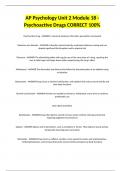
AP Psychology Unit 2 Module 18 -
Psychoactive Drugs CORRECT 100%
Psychoactive Drug - ANSWER A chemical substance that alters perceptions and moods
Substance use disorder - ANSWER A disorder characterized by continued substance craving and use
despite significant life disruption and/or physical risk
Tolerance - ANSWER The diminishing effect with regular use of the same dose of a drug, requiring the
user to take larger and larger doses before experiencing the drug's effect
Withdrawal - ANSWER The discomfort and distress that follow the discontinuation of an addictive drug
or behavior
Depressants - ANSWER Drugs (such as alcohol, barbiturates, and opiates) that reduce neural activity and
slow body functions
Alcohol Use Disorder - ANSWER Alcohol use marked by tolerance, withdrawal, and a drive to continue
problematic use
Also called alcoholism
Barbiturates - ANSWER Drugs that depress central nervous system activity, reducing anxiety but
impairing judgement and memory
Opiates - ANSWER Opium and its derivatives, such as morphine or heroin. They depress neural activity,
temporarily lessening pain and anxiety
Stimulants - ANSWER Drugs (such as caffeine, nicotine, more powerful cocaine and amphetamines,
methamphetamines, and ecstasy) that excite neural activity and speed up body functions
Psychoactive Drugs CORRECT 100%
Psychoactive Drug - ANSWER A chemical substance that alters perceptions and moods
Substance use disorder - ANSWER A disorder characterized by continued substance craving and use
despite significant life disruption and/or physical risk
Tolerance - ANSWER The diminishing effect with regular use of the same dose of a drug, requiring the
user to take larger and larger doses before experiencing the drug's effect
Withdrawal - ANSWER The discomfort and distress that follow the discontinuation of an addictive drug
or behavior
Depressants - ANSWER Drugs (such as alcohol, barbiturates, and opiates) that reduce neural activity and
slow body functions
Alcohol Use Disorder - ANSWER Alcohol use marked by tolerance, withdrawal, and a drive to continue
problematic use
Also called alcoholism
Barbiturates - ANSWER Drugs that depress central nervous system activity, reducing anxiety but
impairing judgement and memory
Opiates - ANSWER Opium and its derivatives, such as morphine or heroin. They depress neural activity,
temporarily lessening pain and anxiety
Stimulants - ANSWER Drugs (such as caffeine, nicotine, more powerful cocaine and amphetamines,
methamphetamines, and ecstasy) that excite neural activity and speed up body functions