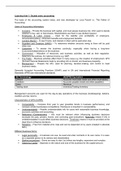
[LECTURE STUDY GUIDE] Unit 2
Unit Objectives:
• Describe the structure and function of the skeletal system and joints
• Describe the structure and function of the muscular system
• Describe the structure and function of the nervous system
Relevant Topics in Textbook:
Chapter 7 Skeletal System
Chapter 8 Muscular System
Chapter 9 Nervous System
Chapter 10 The Senses
Lecture Exam Review Questions: Lecture 14
Autonomic Nervous System
1. Describe the role of the Autonomic Nervous System (ANS) in regulating homeostasis.
• Autonomic division involuntary control of internal organs glands and smooth muscle
a. What organs (or tissues) do the ANS vs the Somatic Nervous System regulate?
• Autonomic NS – smooth muscle
• Somatic NS – skeletal muscle
2. What parts of the brain are important in regulating the ANS?
• Hypothalamus and medulla oblongta
3. Compare and contrast the effects of the sympathetic and parasympathetic divisions of the ANS on
the following organs:
• Sympathetic Nervous System (SNS) – Fight or flight
a. Heart – increases heart rate makes cardiac muscles cells contract with more force
b. Bladder – relaxes smooth muscle of the bladder wall
c. Digestive tract – decreases digestive activity
• Parasympathetic Nervous System (PSN) – Rest and digest
a. Heart – decreases heart rate
b. Bladder – causes contraction to urinate
c. Digestive tract – increases digestion
1
Unit Objectives:
• Describe the structure and function of the skeletal system and joints
• Describe the structure and function of the muscular system
• Describe the structure and function of the nervous system
Relevant Topics in Textbook:
Chapter 7 Skeletal System
Chapter 8 Muscular System
Chapter 9 Nervous System
Chapter 10 The Senses
Lecture Exam Review Questions: Lecture 14
Autonomic Nervous System
1. Describe the role of the Autonomic Nervous System (ANS) in regulating homeostasis.
• Autonomic division involuntary control of internal organs glands and smooth muscle
a. What organs (or tissues) do the ANS vs the Somatic Nervous System regulate?
• Autonomic NS – smooth muscle
• Somatic NS – skeletal muscle
2. What parts of the brain are important in regulating the ANS?
• Hypothalamus and medulla oblongta
3. Compare and contrast the effects of the sympathetic and parasympathetic divisions of the ANS on
the following organs:
• Sympathetic Nervous System (SNS) – Fight or flight
a. Heart – increases heart rate makes cardiac muscles cells contract with more force
b. Bladder – relaxes smooth muscle of the bladder wall
c. Digestive tract – decreases digestive activity
• Parasympathetic Nervous System (PSN) – Rest and digest
a. Heart – decreases heart rate
b. Bladder – causes contraction to urinate
c. Digestive tract – increases digestion
1