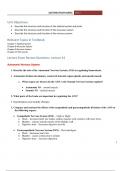
[LECTURE STUDY GUIDE]Unit 3
Unit Objectives:
Describe the structure and function of the cardiovascular system
Describe the structure and function of the lymphatic system and immunity
Describe the structure and function of the respiratory system
Relevant Topics in Textbook:
Chapter 12 Blood
Chapter 13 Cardiovascular System
Chapter 14 Lymphatic System and Immunity
Chapter 16 Respiratory System
Lecture Exam Review Questions: Lectures 15 ad 16
Blood Composition and Functions
1. Describe the major functions of blood.
Transportation, homeostasis, ph, ions and buffering, defenses, and body temperature
a. How does blood play a role in homeostasis?
Can cause clotting when needed
2. List the 2 fractions of blood and the relative proportions of their components.
55 percent plasma 45 percent cells
Plasma- 92 percent water 7 percent proteins 1 percent other solutes
Cells- 99.9 Percent red blood cells .1 percent white blood cells
a. What is the function of albumin in the blood? Helps keep fluid from leaking
b. Define blood hematocrit:
1
, [LECTURE STUDY GUIDE]Unit 3
Volume of red blood cells
3. Where are new blood cells made?
Bone marrow
a. What is the name of the stem cell that produces all blood cells?
Hematopoietic stem cells
4. What is the function of erythrocytes (aka red blood cells)?
Transport oxygen
5. What is hemoglobin?
A protein that carries out oxygen from lungs and returns carbon dioxide
How many oxygen molecules can each hemoglobin molecule bind?
Four
Why is the shape of a red blood cell important?
So it can change shape to move through capillary tubes
6. What is the name of the process that produces new red blood cells?
Erythropoiesis
a. What stimulates the production of new red blood cells?
Low oxygen
b. What is the name of the hormone released by the kidneys that stimulates the production of
new red blood cells? Erythropoietin epo
c. What happens to a red blood cell when it has reached the end of its lifespan? (what
components can we reuse?)
They are removed from the blood into the intestine then globin protein is reabsorbed
7. List some reasons why someone might develop anemia.
Low red blood cell count
2
Unit Objectives:
Describe the structure and function of the cardiovascular system
Describe the structure and function of the lymphatic system and immunity
Describe the structure and function of the respiratory system
Relevant Topics in Textbook:
Chapter 12 Blood
Chapter 13 Cardiovascular System
Chapter 14 Lymphatic System and Immunity
Chapter 16 Respiratory System
Lecture Exam Review Questions: Lectures 15 ad 16
Blood Composition and Functions
1. Describe the major functions of blood.
Transportation, homeostasis, ph, ions and buffering, defenses, and body temperature
a. How does blood play a role in homeostasis?
Can cause clotting when needed
2. List the 2 fractions of blood and the relative proportions of their components.
55 percent plasma 45 percent cells
Plasma- 92 percent water 7 percent proteins 1 percent other solutes
Cells- 99.9 Percent red blood cells .1 percent white blood cells
a. What is the function of albumin in the blood? Helps keep fluid from leaking
b. Define blood hematocrit:
1
, [LECTURE STUDY GUIDE]Unit 3
Volume of red blood cells
3. Where are new blood cells made?
Bone marrow
a. What is the name of the stem cell that produces all blood cells?
Hematopoietic stem cells
4. What is the function of erythrocytes (aka red blood cells)?
Transport oxygen
5. What is hemoglobin?
A protein that carries out oxygen from lungs and returns carbon dioxide
How many oxygen molecules can each hemoglobin molecule bind?
Four
Why is the shape of a red blood cell important?
So it can change shape to move through capillary tubes
6. What is the name of the process that produces new red blood cells?
Erythropoiesis
a. What stimulates the production of new red blood cells?
Low oxygen
b. What is the name of the hormone released by the kidneys that stimulates the production of
new red blood cells? Erythropoietin epo
c. What happens to a red blood cell when it has reached the end of its lifespan? (what
components can we reuse?)
They are removed from the blood into the intestine then globin protein is reabsorbed
7. List some reasons why someone might develop anemia.
Low red blood cell count
2