QUESTIONS UNDER (UNIT 3 &4)
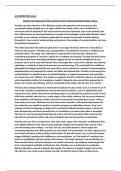
Multiple Choice Questions (MCQ):
Which of the following best describes the New Classical School's view on market
clearing?
A) Markets are always in equilibrium due to sticky prices
B) Prices adjust instantaneously, leading to continuous market equilibrium
C) Markets fail to clear in the short run but adjust in the long run
D) Prices and wages are sticky, preventing immediate market clearing
B) Prices adjust instantaneously, leading to continuous market equilibrium.
What is the primary goal of inflation targeting in South Africa?
A) To maintain high economic growth
B) To achieve price stability within a target range
C) To reduce unemployment through monetary policy
D) To manage government debt levels
B) To achieve price stability within a target range.
In New Keynesian models, why do firms and workers enter long-term wage
contracts despite macroeconomic instability?
A) It reduces menu costs
B) It provides a private advantage of lower negotiation costs
C) It increases worker productivity
D) It prevents rapid changes in demand
B) It provides a private advantage of lower negotiation costs.
, Which of the following factors could cause wages to become "sticky"?
A) Workers' preference for flexibility in wages
B) The presence of strong unions and minimum wage laws
C) Rapid price adjustments in the economy
D) Firms reacting quickly to changes in labor demand
B) The presence of strong unions and minimum wage laws.
Which of the following statements is true regarding New Keynesian Economics?
A) It emphasizes the neutrality of money in the short run
B) It assumes perfect competition in all markets
C) It supports the idea that wages and prices are sticky, explaining unemployment
D) It rejects the role of government intervention in the economy
C) It supports the idea that wages and prices are sticky, explaining unemployment.
Which of the following is a key assumption of the New Classical School?
• A. Prices adjust slowly
• B. Markets continuously clear
• C. Firms operate under monopolistic competition
• D. Government intervention is essential
B. Markets continuously clear
In the New Keynesian School, why do prices and wages tend to be "sticky"?
• A. Due to rational expectations
• B. Because of imperfect competition and nominal rigidities
• C. Markets always clear
Multiple Choice Questions (MCQ):
Which of the following best describes the New Classical School's view on market
clearing?
A) Markets are always in equilibrium due to sticky prices
B) Prices adjust instantaneously, leading to continuous market equilibrium
C) Markets fail to clear in the short run but adjust in the long run
D) Prices and wages are sticky, preventing immediate market clearing
B) Prices adjust instantaneously, leading to continuous market equilibrium.
What is the primary goal of inflation targeting in South Africa?
A) To maintain high economic growth
B) To achieve price stability within a target range
C) To reduce unemployment through monetary policy
D) To manage government debt levels
B) To achieve price stability within a target range.
In New Keynesian models, why do firms and workers enter long-term wage
contracts despite macroeconomic instability?
A) It reduces menu costs
B) It provides a private advantage of lower negotiation costs
C) It increases worker productivity
D) It prevents rapid changes in demand
B) It provides a private advantage of lower negotiation costs.
, Which of the following factors could cause wages to become "sticky"?
A) Workers' preference for flexibility in wages
B) The presence of strong unions and minimum wage laws
C) Rapid price adjustments in the economy
D) Firms reacting quickly to changes in labor demand
B) The presence of strong unions and minimum wage laws.
Which of the following statements is true regarding New Keynesian Economics?
A) It emphasizes the neutrality of money in the short run
B) It assumes perfect competition in all markets
C) It supports the idea that wages and prices are sticky, explaining unemployment
D) It rejects the role of government intervention in the economy
C) It supports the idea that wages and prices are sticky, explaining unemployment.
Which of the following is a key assumption of the New Classical School?
• A. Prices adjust slowly
• B. Markets continuously clear
• C. Firms operate under monopolistic competition
• D. Government intervention is essential
B. Markets continuously clear
In the New Keynesian School, why do prices and wages tend to be "sticky"?
• A. Due to rational expectations
• B. Because of imperfect competition and nominal rigidities
• C. Markets always clear