Gebouwuitrusting: ventilatie
1. Inleiding en normering
1.1 waarom ventileren
Hygiënische ventilatie
- zuurstof toevoeren
- vochtigheid afvoeren
- warmte afvoeren
- polluenten afvoeren
- partikels fijn stof (PM)
- fysische polluenten zoals vezels
- microbiologische contaminanten (virussen, bacteriën, …)
- gasvormige contaminanten (VOS = vluchtige organische stoffen)
- emissies van bouwmaterialen of meubilair
- geuren afvoeren
Risico’s van niet hygiënisch ventileren
- vocht dat wordt geproduceerd in het gebouw wordt niet (voldoende) afgevoerd
èrisico op te hoge vochtigheid (>70-80%)
- koudebruggen
- verborgen koude muren
- risico op ontwikkeling van schimmels
- schade aan het gebouw
- risico voor de gezondheid
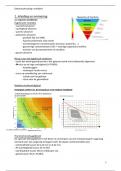
Relatieve luchtvochtigheid
Thermische behaaglijkheid
De optimale behaaglijkheid is het beste te omschrijven als een toestand waarin nagenoeg
niemand over zijn omgeving te klagen heeft. De ideale comfortcondities zijn:
- luchtsnelheid tussen de 0,13 m/s en 0,22 m/s
- RV (vochtigheid) tussen 35 en 65%
- luchtkwaliteit tussen 350 en 1500 ppm CO2
- geluid tussen 30 en 70 dB/A
1
, Gebouwuitrusting: ventilatie
Thermische behaaglijkheid: comfortvergelijking van Fanger
Fanger legde een index vast om te kunnen vastleggen hoe een groep waarnemers het
(binnen)klimaat waardeert. Deze voorspelde gemiddelde waardering (Predicted Mean Vote)
blijkt in relatie te staan tot het percentage te verwachten ontevreden waarnemers
(Predicted Percentage Dissatisfied)
PMV is een index die de gemiddelde score van
de stemmen van een grote groep mensen
voorspelt op een 7-puntige thermische schaal:
+3 = hot, +2 = warm, +1 = slightly warm, 0 =
neutral, -1 = slightly cold, -2 = cool, -3 = cold.
Hier zien we het verband tussen PMV en PPD.
1.2 Normatief kader
ARAB
= codex welzijn op het werk inzake de binnenluchtkwaliteit in werklokalen. We wensen een
CO2-concentratie lager dan 900 ppm of een minimaal ventilatiedebiet van 40 m3/u/persoon.
Dit geldt enkel voor werkplekken/kantoren.
Binnenmilieubesluit: GRO
Volgens normen EN 15251 en NBN EN 16798-3 worden 4 luchtcomfort-comfortklassen
gedefinieerd.
2
1. Inleiding en normering
1.1 waarom ventileren
Hygiënische ventilatie
- zuurstof toevoeren
- vochtigheid afvoeren
- warmte afvoeren
- polluenten afvoeren
- partikels fijn stof (PM)
- fysische polluenten zoals vezels
- microbiologische contaminanten (virussen, bacteriën, …)
- gasvormige contaminanten (VOS = vluchtige organische stoffen)
- emissies van bouwmaterialen of meubilair
- geuren afvoeren
Risico’s van niet hygiënisch ventileren
- vocht dat wordt geproduceerd in het gebouw wordt niet (voldoende) afgevoerd
èrisico op te hoge vochtigheid (>70-80%)
- koudebruggen
- verborgen koude muren
- risico op ontwikkeling van schimmels
- schade aan het gebouw
- risico voor de gezondheid
Relatieve luchtvochtigheid
Thermische behaaglijkheid
De optimale behaaglijkheid is het beste te omschrijven als een toestand waarin nagenoeg
niemand over zijn omgeving te klagen heeft. De ideale comfortcondities zijn:
- luchtsnelheid tussen de 0,13 m/s en 0,22 m/s
- RV (vochtigheid) tussen 35 en 65%
- luchtkwaliteit tussen 350 en 1500 ppm CO2
- geluid tussen 30 en 70 dB/A
1
, Gebouwuitrusting: ventilatie
Thermische behaaglijkheid: comfortvergelijking van Fanger
Fanger legde een index vast om te kunnen vastleggen hoe een groep waarnemers het
(binnen)klimaat waardeert. Deze voorspelde gemiddelde waardering (Predicted Mean Vote)
blijkt in relatie te staan tot het percentage te verwachten ontevreden waarnemers
(Predicted Percentage Dissatisfied)
PMV is een index die de gemiddelde score van
de stemmen van een grote groep mensen
voorspelt op een 7-puntige thermische schaal:
+3 = hot, +2 = warm, +1 = slightly warm, 0 =
neutral, -1 = slightly cold, -2 = cool, -3 = cold.
Hier zien we het verband tussen PMV en PPD.
1.2 Normatief kader
ARAB
= codex welzijn op het werk inzake de binnenluchtkwaliteit in werklokalen. We wensen een
CO2-concentratie lager dan 900 ppm of een minimaal ventilatiedebiet van 40 m3/u/persoon.
Dit geldt enkel voor werkplekken/kantoren.
Binnenmilieubesluit: GRO
Volgens normen EN 15251 en NBN EN 16798-3 worden 4 luchtcomfort-comfortklassen
gedefinieerd.
2