,TEST BANK FOR j j
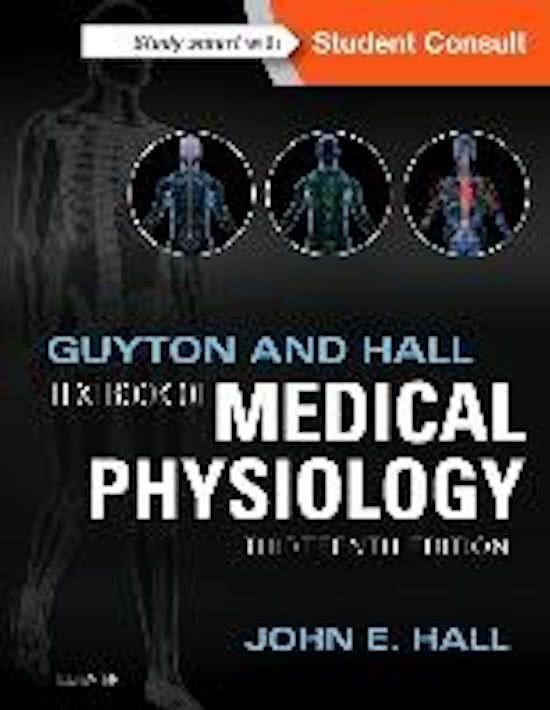
Guyton and Hall Textbook of Medical Physiology (Guyton Physiology) 14th
j j j j j j j j j
Edition
j
Chapter01:FunctionalOrganizationoftheHumanBodyandControlofthe―Internal Environment‖
j j j j j j j j j j j j j
Hall: Guyton and Hall Textbook of Medical Physiology, 14th Edition
j j j j j j j j j
MULTIPLE CHOICE j
1. Which of the following statements about homeostasis is incorrect?
j j j j j j j j
a. It refers to the maintenance of a stable internal environment for the body.
j j j j j j j j j j j j
b. Homeostatic mechanisms do not operate in diseases. j j j j j j
c. Homeostasis requires integrated actions of the cells, tissues, organs, and multiple j j j j j j j j j j
nervous, hormonal, and local control systems. j j j j j
d. Homeostatic compensations that begin after a major environmental challenge may j j j j j j j j j
contribute to abnormalities of body function. j j j j j
ANS: B j
2. What is the most abundant type of cell in the human body?
j j j j j j j j j j j
a. Neuron
b. Epithelial cell j
c. Red blood cell j j
d. White blood cell j j
e. Vascular smooth muscle cell j j j
f. Skeletal muscle cell j j
ANS: C j
3. The most abundant substance in the human body and the approximate percentage of that
j j j j j j j j j j j j j
j substance in the body is which of the following? j j j j j j j j
a. Protein, 30% j
b. Protein, 60% j
c. Water, 30% j
d. Water, 60% j
e. Carbohydrate, 30% j
f. Carbohydrate, 60% j
ANS: D j
4. If the feedback gain of a control system is
j j 2.0, this means that the system is j j j j j j j j j j j j j
a. a negative feedback system capable of correcting 1/2 of the initial disturbance to
j j j j j j j j j j j j
the system. j
b. a negative feedback system capable of correcting 2/3 of the initial disturbance to
j j j j j j j j j j j j
the system. j
c. a negative feedback system capable of correcting 3/4 of the initial disturbance to
j j j j j j j j j j j j
the system. j
, d. a positive feedback system capable of correcting 1/2 of the initial disturbance to
j j j j j j j j j j j j
the system. j
e. a positive feedback system capable of correcting 2/3 of the initial disturbance to
j j j j j j j j j j j j
the system. j
f. a positive feedback system capable of correcting 3/4 of the initial disturbance to
j j j j j j j j j j j j
the system. j
ANS: B j
5. Which of the following substances has the highest extracellular fluid to intracellular fluid
j j j j j j j j j j j j
j concentration ratio for most mammalian cells? j j j j j
a. Sodium ions j
b. Potassium ions j
c. Carbon dioxide j
d. Glucose
e. Protein
ANS: A j
6. Exchange of substances between the cardiovascular system and the interstitial fluid occurs
j j j j j j j j j j j
jmainly in which of the following?
j j j j j
a. Arteries
b. Arterioles
c. Capillaries
d. Venules
e. Veins
ANS: C j
7. What is the approximate distance from the capillaries to most cells of the body?
j j j j j j j j j j j j j
a. Less than 50 angstroms j j j
b. Less than 50 microns j j j
c. Less than 50 millimeters j j j
d. Less than 100 angstroms j j j
e. Less than 100 microns j j j
f. Less than 100 millimeters j j j
ANS: A j
8. When a person is at rest, how much time is required for the blood in the circulation to
j j j j j j j j j j j j j j j j j
jtraverse the entire circulatory circuit?
j j j j
a. 1 second j
b. 1 minute j
c. 3 minutes j
d. 4 minutes j
e. 5 minutes j
ANS: B j
9. The type of control system that can sometimes cause instability and vicious cycles is
j j j j j j j j j j j j j
j called
, a. negative feedback. j
b. feed-forward control. j
c. positive feedback. j
d. adaptive feedback. j
e. delayed negative feedback. j j
ANS: C j
10. Which of the following is an example of positive feedback in the body?
j j j j j j j j j j j j
a. Return of blood pressure toward normal after a hemorrhage
j j j j j j j j
b. Generation of action potentials in nerves j j j j j
c. Increased respiration rate caused by accumulation of carbon dioxide in the blood j j j j j j j j j j j
d. Decreased sympathetic nervous system activity that occurs in response to j j j j j j j j j
increased blood pressure j j
ANS: B j
11. Which of the following is an example of a ―feed-forward‖ control system?
j j j j j j j j j j j
a. The arterial baroreceptor system
j j j
b. The progressive nature of uterine contractions during childbirth
j j j j j j j
c. Control of skeletal muscle movements by the brain j j j j j j j
d. Generation of an action potential j j j j
ANS: C j
12. Which of the following is an example of negative feedback?
j j j j j j j j j
Example 1: Arterial baroreceptor control of blood pressure
j j j j j j j j
Example 2: Excitation of the respiratory center by increased blood carbon dioxide
j j j j j j j j j j j
concentration
j
Example 3: Hemorrhagic shock caused by severe blood loss
j j j j j j j j
a. Example 1 only j j
b. Example 2 only j j
c. Example 3 only j j
d. Examples 1 and 2, but not 3 j j j j j j
e. Examples 1, 2, and 3 j j j j
ANS: D j
Chapter 02: The Cell and Its Functions
j j j j j j
Hall: Guyton and Hall Textbook of Medical Physiology, 14th Edition
j j j j j j j j j
MULTIPLE CHOICE j
1. The most abundant cell membrane lipids are
j j j j j j
a. sphingolipids.
b. phospholipids.
c. cholesterol.
d. triglycerides.
e. sterols.
Guyton and Hall Textbook of Medical Physiology (Guyton Physiology) 14th
j j j j j j j j j
Edition
j
Chapter01:FunctionalOrganizationoftheHumanBodyandControlofthe―Internal Environment‖
j j j j j j j j j j j j j
Hall: Guyton and Hall Textbook of Medical Physiology, 14th Edition
j j j j j j j j j
MULTIPLE CHOICE j
1. Which of the following statements about homeostasis is incorrect?
j j j j j j j j
a. It refers to the maintenance of a stable internal environment for the body.
j j j j j j j j j j j j
b. Homeostatic mechanisms do not operate in diseases. j j j j j j
c. Homeostasis requires integrated actions of the cells, tissues, organs, and multiple j j j j j j j j j j
nervous, hormonal, and local control systems. j j j j j
d. Homeostatic compensations that begin after a major environmental challenge may j j j j j j j j j
contribute to abnormalities of body function. j j j j j
ANS: B j
2. What is the most abundant type of cell in the human body?
j j j j j j j j j j j
a. Neuron
b. Epithelial cell j
c. Red blood cell j j
d. White blood cell j j
e. Vascular smooth muscle cell j j j
f. Skeletal muscle cell j j
ANS: C j
3. The most abundant substance in the human body and the approximate percentage of that
j j j j j j j j j j j j j
j substance in the body is which of the following? j j j j j j j j
a. Protein, 30% j
b. Protein, 60% j
c. Water, 30% j
d. Water, 60% j
e. Carbohydrate, 30% j
f. Carbohydrate, 60% j
ANS: D j
4. If the feedback gain of a control system is
j j 2.0, this means that the system is j j j j j j j j j j j j j
a. a negative feedback system capable of correcting 1/2 of the initial disturbance to
j j j j j j j j j j j j
the system. j
b. a negative feedback system capable of correcting 2/3 of the initial disturbance to
j j j j j j j j j j j j
the system. j
c. a negative feedback system capable of correcting 3/4 of the initial disturbance to
j j j j j j j j j j j j
the system. j
, d. a positive feedback system capable of correcting 1/2 of the initial disturbance to
j j j j j j j j j j j j
the system. j
e. a positive feedback system capable of correcting 2/3 of the initial disturbance to
j j j j j j j j j j j j
the system. j
f. a positive feedback system capable of correcting 3/4 of the initial disturbance to
j j j j j j j j j j j j
the system. j
ANS: B j
5. Which of the following substances has the highest extracellular fluid to intracellular fluid
j j j j j j j j j j j j
j concentration ratio for most mammalian cells? j j j j j
a. Sodium ions j
b. Potassium ions j
c. Carbon dioxide j
d. Glucose
e. Protein
ANS: A j
6. Exchange of substances between the cardiovascular system and the interstitial fluid occurs
j j j j j j j j j j j
jmainly in which of the following?
j j j j j
a. Arteries
b. Arterioles
c. Capillaries
d. Venules
e. Veins
ANS: C j
7. What is the approximate distance from the capillaries to most cells of the body?
j j j j j j j j j j j j j
a. Less than 50 angstroms j j j
b. Less than 50 microns j j j
c. Less than 50 millimeters j j j
d. Less than 100 angstroms j j j
e. Less than 100 microns j j j
f. Less than 100 millimeters j j j
ANS: A j
8. When a person is at rest, how much time is required for the blood in the circulation to
j j j j j j j j j j j j j j j j j
jtraverse the entire circulatory circuit?
j j j j
a. 1 second j
b. 1 minute j
c. 3 minutes j
d. 4 minutes j
e. 5 minutes j
ANS: B j
9. The type of control system that can sometimes cause instability and vicious cycles is
j j j j j j j j j j j j j
j called
, a. negative feedback. j
b. feed-forward control. j
c. positive feedback. j
d. adaptive feedback. j
e. delayed negative feedback. j j
ANS: C j
10. Which of the following is an example of positive feedback in the body?
j j j j j j j j j j j j
a. Return of blood pressure toward normal after a hemorrhage
j j j j j j j j
b. Generation of action potentials in nerves j j j j j
c. Increased respiration rate caused by accumulation of carbon dioxide in the blood j j j j j j j j j j j
d. Decreased sympathetic nervous system activity that occurs in response to j j j j j j j j j
increased blood pressure j j
ANS: B j
11. Which of the following is an example of a ―feed-forward‖ control system?
j j j j j j j j j j j
a. The arterial baroreceptor system
j j j
b. The progressive nature of uterine contractions during childbirth
j j j j j j j
c. Control of skeletal muscle movements by the brain j j j j j j j
d. Generation of an action potential j j j j
ANS: C j
12. Which of the following is an example of negative feedback?
j j j j j j j j j
Example 1: Arterial baroreceptor control of blood pressure
j j j j j j j j
Example 2: Excitation of the respiratory center by increased blood carbon dioxide
j j j j j j j j j j j
concentration
j
Example 3: Hemorrhagic shock caused by severe blood loss
j j j j j j j j
a. Example 1 only j j
b. Example 2 only j j
c. Example 3 only j j
d. Examples 1 and 2, but not 3 j j j j j j
e. Examples 1, 2, and 3 j j j j
ANS: D j
Chapter 02: The Cell and Its Functions
j j j j j j
Hall: Guyton and Hall Textbook of Medical Physiology, 14th Edition
j j j j j j j j j
MULTIPLE CHOICE j
1. The most abundant cell membrane lipids are
j j j j j j
a. sphingolipids.
b. phospholipids.
c. cholesterol.
d. triglycerides.
e. sterols.