Name Clas Dat
: s: e:
Chapter 02_Religion and Global Ethics
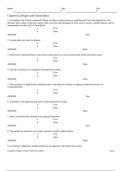
1. According to the “divine command” theory of ethics, certain actions are right because God wills them for us. We
therefore have a duty to find out exactly what God wills and distinguish it from what is merely a fallible human wish or
interpretation of what God’s will might be.
a. True
b. False
ANSWER: True
2. Secular ethics are only for atheists.
a. True
b. False
ANSWER: False
3. The Divine Command Theory states that certain actions are sins, based on their moral and ethical value.
a. True
b. False
ANSWER: False
4. The idea of ahisma was originally developed by Aristotle.
a. True
b. False
ANSWER: False
5. The concept of a single moral community that is not bound to cultural or religious traditions is known as
cosmopolitanism.
a. True
b. False
ANSWER: True
6. A theodicy is an argument that seeks to discredit belief in a deity.
a. True
b. False
ANSWER: False
7. John Locke believed in toleration of religious dissenters.
a. True
b. False
ANSWER: True
8. The paradox of toleration is no longer relevant to today's global culture.
a. True
b. False
ANSWER: False
9. According to Habermas, fundamentalism is incongruous with democratic society.
Copyright Cengage Learning. Powered by Cognero. Page 1
: s: e:
Chapter 02_Religion and Global Ethics
1. According to the “divine command” theory of ethics, certain actions are right because God wills them for us. We
therefore have a duty to find out exactly what God wills and distinguish it from what is merely a fallible human wish or
interpretation of what God’s will might be.
a. True
b. False
ANSWER: True
2. Secular ethics are only for atheists.
a. True
b. False
ANSWER: False
3. The Divine Command Theory states that certain actions are sins, based on their moral and ethical value.
a. True
b. False
ANSWER: False
4. The idea of ahisma was originally developed by Aristotle.
a. True
b. False
ANSWER: False
5. The concept of a single moral community that is not bound to cultural or religious traditions is known as
cosmopolitanism.
a. True
b. False
ANSWER: True
6. A theodicy is an argument that seeks to discredit belief in a deity.
a. True
b. False
ANSWER: False
7. John Locke believed in toleration of religious dissenters.
a. True
b. False
ANSWER: True
8. The paradox of toleration is no longer relevant to today's global culture.
a. True
b. False
ANSWER: False
9. According to Habermas, fundamentalism is incongruous with democratic society.
Copyright Cengage Learning. Powered by Cognero. Page 1