Study unit 7: Impairment
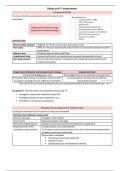
Purpose of IAS 36
To ensure that the carrying amount of an asset is not Not applicable to:
overstated Inventory (IAS 2) – NRV
IFRS 15 (Revenue)
Deferred tax
Depreciation reflects usage Employee benefits (IAS 19)
Financial instruments (IFRS 9)
Impairment reflects damage
Investment property on FV (IAS 40)
IAS 41 FV less cost to sell
Insurance contracts
IFRS 5
DEFINITIONS:
Recoverable amount Highest of: FV less cost to sell, and value in use
Fair value IFRS 13 - Amount received for sale of asset in transaction between market
participants
Value in use Present value of future cash flow
Impairment loss Amount with which carrying amount exceeds recoverable amount.
Carrying amount Amount @ which asset is recognized after deducting depreciation and
impairment losses
Impairment indicator test (impairment review) Impairment test
Conducted @ every year end Done only if there is an indicator of impairment
Procedure that involves looking for evidence that Comparing the carrying amount with the
an asset’s carrying amount might be overstated recoverable amount
Test can be done anytime during the year, but at approximately the same time each year
Exceptions: Must be tested for impairment every year
Intangible assets with indefinite useful life
Intangible assets not yet available for use
Goodwill in a business combination
Indicator review (impairment indicator test)
Looking for evidence that an asset’s CA may be overstated.
Factors of an indicator review test
External changes Changes in the market
Internal info Planned changes, damage)
Materiality (significance) Always assume that potential impairment is significant
Reassessment of the (is depreciation not understated?)
variables of depreciation If CA seems to be overestimated, first check whether the depreciation
variables must be re-estimated.
Depreciation variables:
Estimated remaining useful life
Residual value
Depreciation (or amortization) method
Purpose of IAS 36
To ensure that the carrying amount of an asset is not Not applicable to:
overstated Inventory (IAS 2) – NRV
IFRS 15 (Revenue)
Deferred tax
Depreciation reflects usage Employee benefits (IAS 19)
Financial instruments (IFRS 9)
Impairment reflects damage
Investment property on FV (IAS 40)
IAS 41 FV less cost to sell
Insurance contracts
IFRS 5
DEFINITIONS:
Recoverable amount Highest of: FV less cost to sell, and value in use
Fair value IFRS 13 - Amount received for sale of asset in transaction between market
participants
Value in use Present value of future cash flow
Impairment loss Amount with which carrying amount exceeds recoverable amount.
Carrying amount Amount @ which asset is recognized after deducting depreciation and
impairment losses
Impairment indicator test (impairment review) Impairment test
Conducted @ every year end Done only if there is an indicator of impairment
Procedure that involves looking for evidence that Comparing the carrying amount with the
an asset’s carrying amount might be overstated recoverable amount
Test can be done anytime during the year, but at approximately the same time each year
Exceptions: Must be tested for impairment every year
Intangible assets with indefinite useful life
Intangible assets not yet available for use
Goodwill in a business combination
Indicator review (impairment indicator test)
Looking for evidence that an asset’s CA may be overstated.
Factors of an indicator review test
External changes Changes in the market
Internal info Planned changes, damage)
Materiality (significance) Always assume that potential impairment is significant
Reassessment of the (is depreciation not understated?)
variables of depreciation If CA seems to be overestimated, first check whether the depreciation
variables must be re-estimated.
Depreciation variables:
Estimated remaining useful life
Residual value
Depreciation (or amortization) method