2/26/25 ACCT 4290 – Auditing Smith
Chapter 5
Learning objectives 6-8
PowerPoint Slides 23-
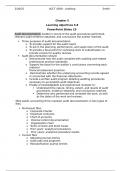
Audit documentation: Auditor’s record of the audit procedures performed,
relevant audit evidence obtained, and conclusions the auditor reached.
Three purposes of audit documentation:
o To provide support for the audit report.
o To aid in the planning, performance, and supervision of the audit.
o To provide a focal point for reviewing work of subordinates; to
provide a basis for quality reviews.
Audit documentation should:
o Demonstrate how the audit complied with auditing and related
professional practice standards.
o Support the basis for the auditor’s conclusions concerning each
material
financial statement assertion.
o Demonstrate whether the underlying accounting records agreed
or reconciled with the financial statements.
o Include a written audit program detailing auditing procedures
necessary to accomplish audit objectives.
o Enable a knowledgeable and experienced reviewer to:
Understand the nature, timing, extent, and results of audit
procedures, evidence obtained, and conclusions reached.
Determine who performed and reviewed the work, as well
as the dates of the work and reviews.
Most public accounting firms maintain audit documentation in two types of
files:
Permanent files:
o Corporate Charter
o Important contracts
o Chart of accounts
o Internal control documentation
o Organization chart
o Terms of stock and bond issues
o Prior years’ analytical procedures
o Prior years’ analytical procedure results
Current files
o Adjusting journal entries
o Audit plan and programs
o Reclassification journal entries
Chapter 5
Learning objectives 6-8
PowerPoint Slides 23-
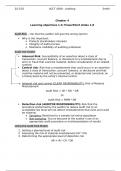
Audit documentation: Auditor’s record of the audit procedures performed,
relevant audit evidence obtained, and conclusions the auditor reached.
Three purposes of audit documentation:
o To provide support for the audit report.
o To aid in the planning, performance, and supervision of the audit.
o To provide a focal point for reviewing work of subordinates; to
provide a basis for quality reviews.
Audit documentation should:
o Demonstrate how the audit complied with auditing and related
professional practice standards.
o Support the basis for the auditor’s conclusions concerning each
material
financial statement assertion.
o Demonstrate whether the underlying accounting records agreed
or reconciled with the financial statements.
o Include a written audit program detailing auditing procedures
necessary to accomplish audit objectives.
o Enable a knowledgeable and experienced reviewer to:
Understand the nature, timing, extent, and results of audit
procedures, evidence obtained, and conclusions reached.
Determine who performed and reviewed the work, as well
as the dates of the work and reviews.
Most public accounting firms maintain audit documentation in two types of
files:
Permanent files:
o Corporate Charter
o Important contracts
o Chart of accounts
o Internal control documentation
o Organization chart
o Terms of stock and bond issues
o Prior years’ analytical procedures
o Prior years’ analytical procedure results
Current files
o Adjusting journal entries
o Audit plan and programs
o Reclassification journal entries