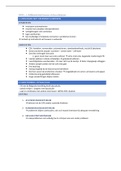
PSYC 3230 Exam 2
Psychophysiological Assessment: methods used to assess ___ structure, f___, and
a____ of the nervous system
methods used to assess brain structure, function, and activity of the nervous system
Psychophysiological Assessment Domains
- Electroencephalogram (EEG): _____ ____ activity
- Heart rate and respiration: _____ activity
- Electrodermal response and levels: _____ gland activity
- Electromyography (EMG): _____ tension
- Plethysmograph: _____ arousal
- Electroencephalogram (EEG): brain wave activity
- Heart rate and respiration: cardiorespiratory activity
- Electrodermal response and levels: sweat gland activity
- Electromyography (EMG): muscle tension
- Plethysmograph: sexual arousal
Diagnosing Psychological Disorders: Foundations in Classification
- Assessment (____ approach) what is ____ to this person (_____ traits, ____
background, culture, other circumstances)
- Assessment (idiographic approach) what is unique to this person (personality traits,
family background, culture, other circumstances)
Diagnosing Psychological Disorders: Foundations in Classification
- Diagnosis (____ approach) applying what we ____ about a person to what we know
about ____ more ____. Seeing if specific problems fit with a ____ class of problems
- Diagnosis (nomothetic approach) applying what we know about a person to what we
know about people more broadly. Seeing if specific problems fit with a general class of
problems
Diagnosing Psychological Disorders: Foundations in Classification
Diagnostic Classification
- ____ is central to all sciences
- ____ categories based on shared attributes
- Classification is central to all sciences
- Develop categories based on shared attributes
Taxonomy: classification in a ____ context
classification in a scientific context
Nosology: taxonomy in ____/____ context
,taxonomy in psychological/medical context
Nomenclature: ____labels (e.g. panic disorder)
nosological labels (e.g. panic disorder)
International Classification of Diseases and Health Related Problems (ICD-11):
published by the ___ ___ ____
published by the World Health Organization
The classification system ICD-11 matters more than DSM-5 (T/F)
true, ICD-11 matters more
Diagnostic and Statistical Manual of Mental Disorders (DSM):
- published by the ___ ___ Association
- controlled by ____ rather than psychologists
- published by the American Psychiatric Association
- controlled by psychiatrists rather than psychologists
The Nature and Forms of Classification Systems
- ___/___ decisions, each disorder is viewed as fundamentally ___ from others. Clear
___ cause. Individuals required to meet ___ requirements for classification
- Useful in ___. Know diagnosis, know ____
- Viewed as ___ to complexity of psychological disorders
- Yes/No decisions, each disorder is viewed as fundamentally different from others.
Clear underlying cause. Individuals required to meet all requirements for classification
- Useful in medicine. Know diagnosis, know treatment
- Viewed as inappropriate to complexity of psychological disorders
Dimensional approach: Classification Along Dimensions
- Symptoms or disorders existing on a ___ (e.g. 0 to 100)
- Patient might be mildly ___ (60) and ___ anxious (70). Create a profile to represent
persons ___
- No agreement on ___ of dimensions or ___ dimensions required
- Symptoms or disorders existing on a continuum (e.g. 0 to 100)
- Patient might be mildly depressed (60) and moderately anxious (70). Create a profile
to represent persons functioning
- No agreement on number of dimensions or which dimensions required
Prototypical approach: Both Classical and Dimensional
- ___ (yes/no decisions) but individual does not have to fit ___ symptom. Rather, patient
must meet some ___ number of prototypical criteria (e.g. 5 of 9 depression symptoms)
- Creates ___ category heterogeneity
- Presumes ____ within the yes or no group
- Categorical (yes/no decisions) but individual does not have to fit every symptom.
Rather, patient must meet some minimal number of prototypical criteria (e.g. 5 of 9
depression symptoms)
,- Creates within category heterogeneity
- Presumes homogeneity within the yes or no group
Purposes of the DSM System
- Aid ____
- Evaluate ___ and ___ for treatment
- ____ planning
- Aid communication
- Evaluate prognosis and need for treatment
- Treatment planning
DSM-I (1952) and DSM-II (1968)
- Both relied on ___ theories and were ____
- Revised every ____-18 years
DSM-I (1952) and DSM-II (1968)
- Both relied on unproven theories and were unreliable
- Revised every 16-18 years
DMS-III (1980) through IV (2000)
- Atheoretical, emphasizing ___ description not underlying ___
- Detailed ___ sets for disorders
- Emphasis on ____ (inter-rater; test-retest)
- Questions about ___
- Many decisions were not ___ (why have to have 4 panic attacks in a 4 ____ period;
why have to be ____ for 2 weeks; why 5 of 9 depression symptoms)
- Atheoretical, emphasizing clinical description not underlying etiology
- Detailed criterion sets for disorders
- Emphasis on reliability (inter-rater; test-retest)
- Questions about validity
- Many decisions were not empirical (why have to have 4 panic attacks in a 4 week
period; why have to be depressed for 2 weeks; why 5 of 9 depression symptoms)
DSM 2013
- Emphasis on understanding that many (most) symptoms aren't s___ to a s___
disorder but cut across m___ disorders (e.g. anxiety, depression, suicidal ideation)
- Introduction of new d____ measures that exist across
- Start to put s___ on how severe disorder is
- Emphasis on understanding that many (most) symptoms aren't specific to a single
disorder but cut across many disorders (e.g. anxiety, depression, suicidal ideation)
- Introduction of new dimensional measures that exist across
- Start to put specifiers on how severe disorder is
Basic Components of Research
- Starts with a ____ or "__ __"
- ___ Design
, - Starts with a hypothesis or "educated guess"
- Research Design
Basic Components of Research
- Starts with a ____ or "Educated Guess"
- Not all hypotheses are ___
- Scientific hypotheses must be ____
- Can be ___or accepted (only trying to fully ____ hypotheses)
- Starts with a Hypothesis or "Educated Guess"
- Not all hypotheses are testable
- Scientific hypotheses must be testable
- Can be rejected or accepted (only trying to fully reject hypotheses)
Basic Components of Research
Research Design
- A method to test ____
- Independent variable: the variable that ___ or ____behavior
- Dependent variable: the behavior ____ by the independent variable
- A method to test hypotheses
- Independent variable: the variable that causes or influence behavior
- Dependent variable: the behavior influenced by the independent variable
Example: "exercise reduces depression"
- Independent variable: ____
- Dependent variable: ___ of ____
- Independent variable: exercise
- Dependent variable: ratings of depression
____ validity: did the independent variable produce the outcomes?
Internal
____ validity: are the findings generalizable (e.g. to other settings, other locations, other
types of samples, other problems)
External
Increases Internal Validity by Minimizing Confounds
- Use of ___ groups (individuals not exposed to I.V. but like the experimental group in
___ ___way)
- Use of ___ assignment procedures (individuals assigned to either experimental group
or control group ____; avoid some ____ bias)
- Use of ____ models (study related phenomenon in controlled conditions of _____
setting; alcohol)
- Use of control groups (individuals not exposed to I.V. but like the experimental group
in every other way)
- Use of random assignment procedures (individuals assigned to either experimental
group or control group randomly; avoid some systematic bias)
Psychophysiological Assessment: methods used to assess ___ structure, f___, and
a____ of the nervous system
methods used to assess brain structure, function, and activity of the nervous system
Psychophysiological Assessment Domains
- Electroencephalogram (EEG): _____ ____ activity
- Heart rate and respiration: _____ activity
- Electrodermal response and levels: _____ gland activity
- Electromyography (EMG): _____ tension
- Plethysmograph: _____ arousal
- Electroencephalogram (EEG): brain wave activity
- Heart rate and respiration: cardiorespiratory activity
- Electrodermal response and levels: sweat gland activity
- Electromyography (EMG): muscle tension
- Plethysmograph: sexual arousal
Diagnosing Psychological Disorders: Foundations in Classification
- Assessment (____ approach) what is ____ to this person (_____ traits, ____
background, culture, other circumstances)
- Assessment (idiographic approach) what is unique to this person (personality traits,
family background, culture, other circumstances)
Diagnosing Psychological Disorders: Foundations in Classification
- Diagnosis (____ approach) applying what we ____ about a person to what we know
about ____ more ____. Seeing if specific problems fit with a ____ class of problems
- Diagnosis (nomothetic approach) applying what we know about a person to what we
know about people more broadly. Seeing if specific problems fit with a general class of
problems
Diagnosing Psychological Disorders: Foundations in Classification
Diagnostic Classification
- ____ is central to all sciences
- ____ categories based on shared attributes
- Classification is central to all sciences
- Develop categories based on shared attributes
Taxonomy: classification in a ____ context
classification in a scientific context
Nosology: taxonomy in ____/____ context
,taxonomy in psychological/medical context
Nomenclature: ____labels (e.g. panic disorder)
nosological labels (e.g. panic disorder)
International Classification of Diseases and Health Related Problems (ICD-11):
published by the ___ ___ ____
published by the World Health Organization
The classification system ICD-11 matters more than DSM-5 (T/F)
true, ICD-11 matters more
Diagnostic and Statistical Manual of Mental Disorders (DSM):
- published by the ___ ___ Association
- controlled by ____ rather than psychologists
- published by the American Psychiatric Association
- controlled by psychiatrists rather than psychologists
The Nature and Forms of Classification Systems
- ___/___ decisions, each disorder is viewed as fundamentally ___ from others. Clear
___ cause. Individuals required to meet ___ requirements for classification
- Useful in ___. Know diagnosis, know ____
- Viewed as ___ to complexity of psychological disorders
- Yes/No decisions, each disorder is viewed as fundamentally different from others.
Clear underlying cause. Individuals required to meet all requirements for classification
- Useful in medicine. Know diagnosis, know treatment
- Viewed as inappropriate to complexity of psychological disorders
Dimensional approach: Classification Along Dimensions
- Symptoms or disorders existing on a ___ (e.g. 0 to 100)
- Patient might be mildly ___ (60) and ___ anxious (70). Create a profile to represent
persons ___
- No agreement on ___ of dimensions or ___ dimensions required
- Symptoms or disorders existing on a continuum (e.g. 0 to 100)
- Patient might be mildly depressed (60) and moderately anxious (70). Create a profile
to represent persons functioning
- No agreement on number of dimensions or which dimensions required
Prototypical approach: Both Classical and Dimensional
- ___ (yes/no decisions) but individual does not have to fit ___ symptom. Rather, patient
must meet some ___ number of prototypical criteria (e.g. 5 of 9 depression symptoms)
- Creates ___ category heterogeneity
- Presumes ____ within the yes or no group
- Categorical (yes/no decisions) but individual does not have to fit every symptom.
Rather, patient must meet some minimal number of prototypical criteria (e.g. 5 of 9
depression symptoms)
,- Creates within category heterogeneity
- Presumes homogeneity within the yes or no group
Purposes of the DSM System
- Aid ____
- Evaluate ___ and ___ for treatment
- ____ planning
- Aid communication
- Evaluate prognosis and need for treatment
- Treatment planning
DSM-I (1952) and DSM-II (1968)
- Both relied on ___ theories and were ____
- Revised every ____-18 years
DSM-I (1952) and DSM-II (1968)
- Both relied on unproven theories and were unreliable
- Revised every 16-18 years
DMS-III (1980) through IV (2000)
- Atheoretical, emphasizing ___ description not underlying ___
- Detailed ___ sets for disorders
- Emphasis on ____ (inter-rater; test-retest)
- Questions about ___
- Many decisions were not ___ (why have to have 4 panic attacks in a 4 ____ period;
why have to be ____ for 2 weeks; why 5 of 9 depression symptoms)
- Atheoretical, emphasizing clinical description not underlying etiology
- Detailed criterion sets for disorders
- Emphasis on reliability (inter-rater; test-retest)
- Questions about validity
- Many decisions were not empirical (why have to have 4 panic attacks in a 4 week
period; why have to be depressed for 2 weeks; why 5 of 9 depression symptoms)
DSM 2013
- Emphasis on understanding that many (most) symptoms aren't s___ to a s___
disorder but cut across m___ disorders (e.g. anxiety, depression, suicidal ideation)
- Introduction of new d____ measures that exist across
- Start to put s___ on how severe disorder is
- Emphasis on understanding that many (most) symptoms aren't specific to a single
disorder but cut across many disorders (e.g. anxiety, depression, suicidal ideation)
- Introduction of new dimensional measures that exist across
- Start to put specifiers on how severe disorder is
Basic Components of Research
- Starts with a ____ or "__ __"
- ___ Design
, - Starts with a hypothesis or "educated guess"
- Research Design
Basic Components of Research
- Starts with a ____ or "Educated Guess"
- Not all hypotheses are ___
- Scientific hypotheses must be ____
- Can be ___or accepted (only trying to fully ____ hypotheses)
- Starts with a Hypothesis or "Educated Guess"
- Not all hypotheses are testable
- Scientific hypotheses must be testable
- Can be rejected or accepted (only trying to fully reject hypotheses)
Basic Components of Research
Research Design
- A method to test ____
- Independent variable: the variable that ___ or ____behavior
- Dependent variable: the behavior ____ by the independent variable
- A method to test hypotheses
- Independent variable: the variable that causes or influence behavior
- Dependent variable: the behavior influenced by the independent variable
Example: "exercise reduces depression"
- Independent variable: ____
- Dependent variable: ___ of ____
- Independent variable: exercise
- Dependent variable: ratings of depression
____ validity: did the independent variable produce the outcomes?
Internal
____ validity: are the findings generalizable (e.g. to other settings, other locations, other
types of samples, other problems)
External
Increases Internal Validity by Minimizing Confounds
- Use of ___ groups (individuals not exposed to I.V. but like the experimental group in
___ ___way)
- Use of ___ assignment procedures (individuals assigned to either experimental group
or control group ____; avoid some ____ bias)
- Use of ____ models (study related phenomenon in controlled conditions of _____
setting; alcohol)
- Use of control groups (individuals not exposed to I.V. but like the experimental group
in every other way)
- Use of random assignment procedures (individuals assigned to either experimental
group or control group randomly; avoid some systematic bias)