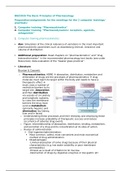
BGZ2026 The Basic Principles of Pharmacology
Preparation/assignments for the meetings for the 2 computer trainings/
practicals:
1. Computer training ‘’Pharmacokinetics’’
2. Computer training ‘’Pharmacodynamics: receptors, agonists,
antagonists’’
1. Computer training pharmacokinetics
Aim: Simulation of the clinical relevance of variations in the most important
pharmacokinetic parameters such as dose/dosing interval, clearance and
volume of distribution
Additional preparation: Read chapters on “pharmacokinetics” and “drug
biotransformation” in the recommended pharmacology text books (see under
Resources); data evaluation of the “beaker glass practical”.
Literature
Brunton & Casarett
o Pharmacokinetics: ADME absorption, distribution, metabolism and
elimination of drugs are the processes of pharmacokinetics drug
molecule must reach its target within the body and needs to have a
therapeutic effect
must cross a number of
restrictive barriers to its
target site. Absorption
and then distribution
via vessels of circulatory
and lymphatic systems,
to cross the membrane
barriers the drug must
survive metabolism
(primarily hepatic) and
elimination (by kidney,
liver and in feces)
o Understanding these processes and their interplay and employing these
principles increase probability of therapeutic success and reduce
occurrence of adverse drug events
o Figure: interrelationship of absorption, distribution, binding, metabolism,
and excretion of a drug and its concentration at its sites of action.
o Routes of administration:
Oral ingestion/administration:
Most common, safest, most convenient and most economical
method of drug administration.
Disadvantages:
-Limited absorption of some drugs because of their physical
characteristics (e.g. low water solubility or poor membrane
permeability)
-Emesis as a result of irritation to GI mucosa
-Destruction of drugs by digestive enzymes or low gastric pH
Preparation/assignments for the meetings for the 2 computer trainings/
practicals:
1. Computer training ‘’Pharmacokinetics’’
2. Computer training ‘’Pharmacodynamics: receptors, agonists,
antagonists’’
1. Computer training pharmacokinetics
Aim: Simulation of the clinical relevance of variations in the most important
pharmacokinetic parameters such as dose/dosing interval, clearance and
volume of distribution
Additional preparation: Read chapters on “pharmacokinetics” and “drug
biotransformation” in the recommended pharmacology text books (see under
Resources); data evaluation of the “beaker glass practical”.
Literature
Brunton & Casarett
o Pharmacokinetics: ADME absorption, distribution, metabolism and
elimination of drugs are the processes of pharmacokinetics drug
molecule must reach its target within the body and needs to have a
therapeutic effect
must cross a number of
restrictive barriers to its
target site. Absorption
and then distribution
via vessels of circulatory
and lymphatic systems,
to cross the membrane
barriers the drug must
survive metabolism
(primarily hepatic) and
elimination (by kidney,
liver and in feces)
o Understanding these processes and their interplay and employing these
principles increase probability of therapeutic success and reduce
occurrence of adverse drug events
o Figure: interrelationship of absorption, distribution, binding, metabolism,
and excretion of a drug and its concentration at its sites of action.
o Routes of administration:
Oral ingestion/administration:
Most common, safest, most convenient and most economical
method of drug administration.
Disadvantages:
-Limited absorption of some drugs because of their physical
characteristics (e.g. low water solubility or poor membrane
permeability)
-Emesis as a result of irritation to GI mucosa
-Destruction of drugs by digestive enzymes or low gastric pH