NR 565/NR565 WEEK 7 & 8 FINAL EXAM STUDY GUIDE, CHAMBERLAIN(latest)
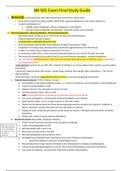
NR 565 Exam Final Study Guide Antacids: weak bases that react with hydrochloric acid to form salt & water. o Used in the treatment of Hyperacidity, GERD, PUD, hyperphosphatemia, and calcium deficiency o Contain combinations of metallic cation (aluminum, calcium, magnesium, and sodium) and basic anion (hydroxide, bicarbonate, carbonate, citrate, and trisilicate) Pharmacodynamics, Pharmacokinetics, Pharmacotherapeutics o Neutralize Gastric Acidity (causes ^pH of the stomach and duodenal bulb) o Inhibit proteolytic activity of pepsin o Increase lower esophageal sphincter tone o Acid-neutralizing capacity ANC varies between products expressed in mEqs o If ingested in a fasting state, antacids reduce acidity for approximately 20 to 40 minutes o If taken 1 hr after a meal, acidity is reduced for 2 to 3 hrs o A second dose taken after a meal maintains reduced acidity for more than 4 hrs after the meal o The action of antacids occurs locally in the GI tract with minimal absorption, minimal metabolism o ALL antacids are contraindicated in the presence of severe abdominal pain of unknown cause, especially if accompanied by fever -HIGH SODIUM content: pts w/ HTN, CHF, marked renal failure, or on low-sodium diets need to use low sodium preparation -Concurrent administration with enteric-coated drugs, destroys the coating= alters absorption, ^ the risk for adverse effects -Administrations should be separated by at least 2 hours to decrease drug/drug interactions 1. Calcium based antacids: TUMS, Caltrate, Calcarb • Prescribed to treat calcium deficient states, i.e. chronic renal failure, post-menopause, and osteoporosis • Used to bind phosphates in CRF • Require Vitamin D for absorption from the GI tract • Excreted mainly in feces, 20% in urine • ADR: Contraindicated in the presence of hypercalcemia and renal calculi • Can cause constipation- increase bulk, fluids and mobility, stool softener • Administered 30min- 1hr on empty stomach or 3hr after meals • Should not be administered with food containing large amounts of oxalic acid (spinach, rhubarb), or phytic acid (bran, cereals), they decrease the absorption of calcium • Taking w/ foods containing phosphorus (milk, dairy) can lead to milk-alkali syndrome (N/V, confusion, headache). • Taking with acidic fruit juice improve absorption 2. Aluminum based: AlternaGEL, Amphojel, Mylanta • Inhibit smooth muscle contraction and slow gastric emptying • Used to bind phosphates in CRF • Not absorbable with routine use • Aluminum concentrated in the CNS • Bind with phosphate and excreted in feces • Prolonged use in patients with renal failure may result in dialysis osteomalacia o Aluminum deposits in bone and osteomalacia occurs • Elevated aluminum tissue levels contribute to the development of dialysis encephalopathy • Used to treat hyperphosphatemia in pts w/ renal failure & phosphate renal stone prevention • Can cause constipation- increase bulk, fluids and mobility, stool softener 3. Magnesium based: Milk of mag, Maalox, Mylanta • Can be used to treat magnesium deficiencies from malnutrition, alcoholism, or mag-depleting drugs • Contraindicated in patients with renal failure & used with caution in pts with renal insufficiency • Not absorbable with routine use • Excreted in the urine • Contraindicated in patients with renal failure, use with caution for patients with any degree of renal insufficiency o Malfunctioning kidney is unable to excrete magnesium and hypermagnesemia may result • Can cause diarrhea- increase fiber intake (Alkalosis may occur in renal impairment) Clinical Use and Dosing
Written for
- Institution
-
Chamberlain College Of Nursing
- Course
-
NR 565 (NR565)
Document information
- Uploaded on
- October 29, 2020
- Number of pages
- 37
- Written in
- 2020/2021
- Type
- Study guide
Subjects
- nr 565
- nr565
- nr565 study guide
- nr 565
-
nr 565nr565 week 7 8 final exam study guide
-
chamberlainlatest
-
week 7 8 final exam study guide
-
nr 565 week 7 8