Midterm 2
Friday, March 18, 2016 12:45 PM
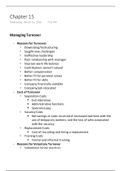
Chapter 10
The Performance Management Process
1. Defining performance expectations and goals
- Task performance
○ Reflects an individuals direct contribution to their job-related
processes
○ Performance expectations are grounded in realistic job demands
and align with the organizations strategic objectives and
implementation plans
- Contextual performance
○ Reflects an individuals indirect contribution to the organization by
improving the organizational, social, and psychological behaviours
that contribute to organizational effectiveness beyond those
specified for the job
○ "demonstrates positive attitude"
2. Providing ongoing feedback and coaching
- Performance Improvement Plans
Conducting performance appraisal and evaluation discussions
- Formal Appraisal Methods
○ Graphic rating scale
○ Alternation ranking method
○ Paired Comparison method
○ Forced distribution method
○ Critical Incident Method
○ Narrative Forms
○ Behaviourally Anchored Rating Scales
§ More accurate measure
§ Clearer standards
§ Feedback
§ Independent dimensions
,
, ○ Critical Incident Method
○ Narrative Forms
○ Behaviourally Anchored Rating Scales
§ More accurate measure
§ Clearer standards
§ Feedback
§ Independent dimensions
§ Consistency
○ Management by Objectives
§ Set organizational goals
§ Set departmental goals
§ Discuss departmental goals
§ Define expected results
§ Performance reviews
§ Provide feedback
§ Problems to avoid
□ Setting unclear, unmeasurable objectives
□ Time-consuming
□ Tug-of-war
○ Mixing the methods
○ The use of Technology in Performance Appraisals
§ Electronic performance monitoring
○ Performance Appraisal Problems
§ Validity and Reliability
§ Rating Scale Problems
□ Unclear performance standards
□ Halo effect
□ Central tendency
□ Strictness/ leniency
□ Most of rating is done on idiosyncratic factors
® Appraisal bias
□ Recency effect
□ Similar-to-me bias
○ How to avoid Appraisal Problems
§ Be familiar with the problems
§ Training supervisors on how to eliminate rating errors
§ Choose the right appraisal tool
§ Use multiple raters
Formal Appraisal Discussions
- Satisfactory performance - Promotable employee
○ Make development plans
- Satisfactory performance- Non-promotable employee
,
Friday, March 18, 2016 12:45 PM
Chapter 10
The Performance Management Process
1. Defining performance expectations and goals
- Task performance
○ Reflects an individuals direct contribution to their job-related
processes
○ Performance expectations are grounded in realistic job demands
and align with the organizations strategic objectives and
implementation plans
- Contextual performance
○ Reflects an individuals indirect contribution to the organization by
improving the organizational, social, and psychological behaviours
that contribute to organizational effectiveness beyond those
specified for the job
○ "demonstrates positive attitude"
2. Providing ongoing feedback and coaching
- Performance Improvement Plans
Conducting performance appraisal and evaluation discussions
- Formal Appraisal Methods
○ Graphic rating scale
○ Alternation ranking method
○ Paired Comparison method
○ Forced distribution method
○ Critical Incident Method
○ Narrative Forms
○ Behaviourally Anchored Rating Scales
§ More accurate measure
§ Clearer standards
§ Feedback
§ Independent dimensions
,
, ○ Critical Incident Method
○ Narrative Forms
○ Behaviourally Anchored Rating Scales
§ More accurate measure
§ Clearer standards
§ Feedback
§ Independent dimensions
§ Consistency
○ Management by Objectives
§ Set organizational goals
§ Set departmental goals
§ Discuss departmental goals
§ Define expected results
§ Performance reviews
§ Provide feedback
§ Problems to avoid
□ Setting unclear, unmeasurable objectives
□ Time-consuming
□ Tug-of-war
○ Mixing the methods
○ The use of Technology in Performance Appraisals
§ Electronic performance monitoring
○ Performance Appraisal Problems
§ Validity and Reliability
§ Rating Scale Problems
□ Unclear performance standards
□ Halo effect
□ Central tendency
□ Strictness/ leniency
□ Most of rating is done on idiosyncratic factors
® Appraisal bias
□ Recency effect
□ Similar-to-me bias
○ How to avoid Appraisal Problems
§ Be familiar with the problems
§ Training supervisors on how to eliminate rating errors
§ Choose the right appraisal tool
§ Use multiple raters
Formal Appraisal Discussions
- Satisfactory performance - Promotable employee
○ Make development plans
- Satisfactory performance- Non-promotable employee
,