Summary NUR 280 Comp Review- comp 1, comp 2, comp 3 -STUDY GUIDE 2021
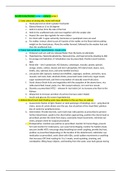
NUR 280 Comp Review- comp 1, comp 2, comp 3 -2021/NUR 280 Comp Review- comp 1, comp 2, comp 3 -2021. Cane- place on strong side, move with weak Tumor lysis syndrome- hyperkalemia; cloudy urine Retinal detachment-dark floating spots (pay attention to the eye they are asking) Nur280 Comp Review- comp 1, comp 2, comp 3 1. Cane- place on strong side, move with weak a. Hand grip level at client’s greater trochanter b. Elbows flexed at 15 to 30 degrees c. Hold 4-6 inches from the side of the foot d. Hold in the unaffected side and move together with the weaker side e. Inspect the cane tips regularly for worn rubber f. For client with 1 upper extremity, hemicanes or quadripod canes are used g. For walker, instruct client to put all 4 points of the walker on the floow before putting weight on the hand pieces. Move the walker forward, followed by the weaker foot and then the unaffected foot. 2. Tumor lysis syndrome- hyperkalemia; cloudy urine a. Potassium and uric acid are released faster than the body can eliminate b. Hyperkalemia, Hyperphosphatemia, Hypocalcemia, and hyperuricemia (leading to AKI) c. Encourage oral hydration; IV rehydration may be prescribed; Monitor renal function; I&O; d. Renal diet – low in potassium; NO (banana, cantaloupe, avocado, potato, spinach, orange, raisins, salmon, beans) and low in phosphate; NO (dairy foods, beans, nuts, lentils, cola, oatmeal, bran, and some bottled iced tea) e. Low purine diet (spinach, seafood and shellfish, asparagus, sardines, anchovies, tuna, mussels, red meat, duck, alcoholic drinks, preserved meats (cold cuts), organ meats, sugar sweetened foods, and limit consumption of naturally sweet fruit juices. f. Good choices (fresh fruits and vegetables with the exception of the above items, rice milk-unenriched, bread, pasta, rice, fish (except salmon), corn and rice cereals g. Diuretics as prescribed (HTCZ – releases K+ but holds Ca+) to increase urine flow to the kidneys h. Allopurinol to increase secretion of purines (increase water intake) i. Insulin and glucose (for severe hyperkalemia) 3. Retinal detachment-dark floating spots (pay attention to the eye they are asking) a. Assessment: flashes of light, floaters or dark spots(sign of bleeding), incre - asing blurred vision, sense of curtain drawn over the eye, loss of portion of the visual field, painless loss of central or peripheral vision. b. Intervention: Provide bed rest, cover both eyes with patches as prescribed to prevent further detachment, speak to the client before approaching, position the clients head as prescribed, protect the client from injury, avoid jerky head movements, minimize eye stress, prepare client for surgical procedures c. Postoperative: maintain eye patches as prescribed, monitor for hemorrhage, prevent N/V and monitor for restlessness, can cause hemorrhaging, monitor for Sudden sharp eye pain (notify HCP), encourage deep breathing but avoid coughing, provide bed rest, position as prescribed (depending on the location of the detachment), administer eye medication as prescribed, assist client with ADLs, avoid sudden movements or anything that increases IOP, limit reading for 3 to 5 weeks, avoid squinting, straining, and constipation, lifting heavy objects, and bending from the waist, wear dark glasses during
Written for
- Institution
-
Galen College Of Nursing
- Course
-
NUR 280 (NUR280(NUR280))
Document information
- Uploaded on
- March 14, 2021
- Number of pages
- 14
- Written in
- 2020/2021
- Type
- Summary
Subjects
- comp 2
- comp 3 study guide 2021
- comp 2
- comp 2
-
nur 280 nur280
-
nur 280 comp review comp 1
-
nur 280 comp review comp 1
-
comp 3 2020nur 280 comp review comp 1
-
comp 3 2020 cane place on stron

Also available in package deal