NCLEX-RN Practice Questions Set 11 (75 Questions)
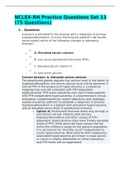
NCLEX-RN Practice Questions Set 11 (75 Questions)1. . Question A patient is admitted to the hospital with a diagnosis of primary hyperparathyroidism. A nurse checking the patient’s lab results would expect which of the following changes in laboratory findings? o A. Elevated serum calcium o B. Low serum parathyroid hormone (PTH) o C. Elevated serum vitamin D o D. Low urine calcium Correct Answer: A. Elevated serum calcium The parathyroid glands regulate the calcium level in the blood. In hyperparathyroidism, the serum calcium level will be elevated. A normal PTH in the presence of hypercalcemia is considered inappropriate and still consistent with PTH-dependent hypercalcemia. PTH levels should be very low in those patients with PTH-independent hypercalcemia. A comprehensive clinical evaluation complemented by routine laboratory and radiologic studies should be sufficient to establish a diagnosis of primary hyperparathyroidism in a patient with persistent hypercalcemia and an elevated serum level of parathyroid hormone. • Option B: Parathyroid hormone levels may be high or normal but not low. Patients with primary hyperparathyroidism and other causes of PTH-dependent hypercalcemia often have frankly elevated levels of PTH, while some will have values that fall within the reference range for the general population. It is uncommon for clinically occult malignancies to cause hypercalcemia. Most patients with malignancy-associated hypercalcemia are known to have cancer, or cancer is readily detectable on initial evaluation, and PTH levels will be suppressed. • Option C: Parathyroid hormone levels may be high or normal but not low. The body will lower the level of vitamin D in an attempt to lower calcium. • Option D: Urine calcium may be elevated, with calcium spilling over from elevated serum levels. This may cause renal stones. A review of previous medical records can often be of significant value in establishing the cause of hypercalcemia. Most patients with hyperparathyroidism have persistent or intermittent hypercalcemia for many years before a definitive diagnosis is established. 2. 2. Question A patient with Addison’s disease asks a nurse for nutrition and diet advice. Which of the following diet modifications is not recommended? • A. A diet high in grains. • B. A diet with adequate caloric intake. • C. A high protein diet. • D. A restricted sodium diet. Correct Answer: D. A restricted sodium diet. A patient with Addison’s disease requires normal dietary sodium to prevent excess fluid loss. Do not reduce salt in the diet. The client may need to add extra salt to his food during hot and humid weather or after exercise to replace salt lost through sweating. Do not use salt substitutes. • Option A: Addison’s disease is a rare condition. It develops when the adrenal glands, which are located above the kidneys, do not make enough of certain hormones. These hormones are important for normal body function. They help the body cope with stress, hold salt and water, and maintain blood pressure. The client should include complex carbohydrates in his diet, including grains. • Option B: A high protein diet is recommended for the client with Addison’s disease. The adrenal fatigue diet aims to stabilize blood sugar and balance cortisol levels by limiting sugar while increasing the intake of protein, healthy fats,
Written for
- Institution
- NCLEX-RN Practice Questions Set 11
- Course
- NCLEX-RN Practice Questions Set 11
Document information
- Uploaded on
- December 13, 2021
- Number of pages
- 93
- Written in
- 2021/2022
- Type
- Exam (elaborations)
- Contains
- Questions & answers
Subjects
-
nclex rn practice questions set 11 75 questions 1 question a patient is admitted to the hospital with a diagnosis of primary hyperparathyroidism a nurse checking the patient’s lab results would

Also available in package deal