THE DOCTRINE
OF PRECEDENT
1. INTRODUCTION
In your Contract lectures you will be looking at Carlill v The Carbolic Smoke
Ball Company 1 QB 256 [1893]. This case will help to explain what a case
looks like and how common law principles are contained within judgments.
Carlill draws on earlier cases such as Williams v Carwardine 4 B &Ad 621,
rationalising and applying that law alongside the evolution of newer legal ideas
about formation of contract. The counsel in Carlill cited other cases that the
judges chose not to apply, such as Harris v Nickerson Law Rep. 8 QB 286.
This lecture is concerned with understanding the legal mechanism by which the
common law evolves in this way as a continuum, meaning by following or
avoiding established principles in existing cases, and developing new ones in
the instant case.
2. THE COMMON LAW WORKS THOUGH THE DOCTRINE OF BINDING
PRECEDENT
The mechanism by which the common law evolves is called the doctrine of
binding precedent, or the doctrine of stare decisis, This means to stand by what
has been established and do not unsettle what has previously been decided.
The doctrine states that principles of law set down in decided cases constitute
binding rules of law which judges are bound to follow in later cases. It requires
that later cases be decided in the same way as earlier ones where the material
(legally relevant) facts are the same. In practice, the material facts will rarely be
exactly the same, so the practice of precedent incorporates all the features
seen in Carlill of following, establishing and avoiding precedents.
3. WHY DOES ENGLISH LAW HAVE THE DOCTRINE OF PRECEDENT?
The objective is to ensure fundamental legal values: certainty, equality,
consistency, uniformity.
4. THE DEVELOPMENT OF THE DOCTRINE OF BINDING PRECEDENT
Parke J in Mirehouse v Rennell (1833) 1 Cl and F.527, 546:
1
, “Our common law system consists in applying to new combinations of
circumstances those rules of law which we derive from legal principles and
judicial precedents; and for the sake of attaining uniformity, consistency
and certainty, we must apply those rules….to all cases which arise: and we
are not at liberty to reject them, and to abandon all analogy to
them….because we think that the rules are not as convenient and
reasonable as we ourselves could have devised.”
5. PRECEDENT AS A DISTINGUISHING FEATURE OF ENGLISH LAW
Most legal systems use precedent to some extent, but English law, or the
common law jurisdiction, is distinguished from civil law jurisdictions by its
predominant use of cases and of the doctrine of precedent. Civil law begins
with a general statement set out in a Code which is then developed into the
specific i.e. the general statement is applied to a particular set of facts. English
case law works the other way around. It begins with a specific decision arising
from the facts of particular facts of a case and develops it into a broad legal
principle, or precedent which can be applied in later cases. Unilateral contracts,
for example, do not depend for their existence on buying a smoke ball.
6. HOW DOES THE DOCTRINE OF PRECEDENT WORK?
The doctrine requires three essential components in the legal system:
a) An efficient system of law reports that contain the judgments in
leading cases,
b) Binding decisions; and
c) A court hierarchy.
7. JUDGMENTS
7.1 The binding effect of judgments
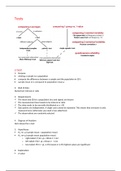
● Res judicata
● Ratio decidendi
7.2 The content
i) Statement of facts
2
OF PRECEDENT
1. INTRODUCTION
In your Contract lectures you will be looking at Carlill v The Carbolic Smoke
Ball Company 1 QB 256 [1893]. This case will help to explain what a case
looks like and how common law principles are contained within judgments.
Carlill draws on earlier cases such as Williams v Carwardine 4 B &Ad 621,
rationalising and applying that law alongside the evolution of newer legal ideas
about formation of contract. The counsel in Carlill cited other cases that the
judges chose not to apply, such as Harris v Nickerson Law Rep. 8 QB 286.
This lecture is concerned with understanding the legal mechanism by which the
common law evolves in this way as a continuum, meaning by following or
avoiding established principles in existing cases, and developing new ones in
the instant case.
2. THE COMMON LAW WORKS THOUGH THE DOCTRINE OF BINDING
PRECEDENT
The mechanism by which the common law evolves is called the doctrine of
binding precedent, or the doctrine of stare decisis, This means to stand by what
has been established and do not unsettle what has previously been decided.
The doctrine states that principles of law set down in decided cases constitute
binding rules of law which judges are bound to follow in later cases. It requires
that later cases be decided in the same way as earlier ones where the material
(legally relevant) facts are the same. In practice, the material facts will rarely be
exactly the same, so the practice of precedent incorporates all the features
seen in Carlill of following, establishing and avoiding precedents.
3. WHY DOES ENGLISH LAW HAVE THE DOCTRINE OF PRECEDENT?
The objective is to ensure fundamental legal values: certainty, equality,
consistency, uniformity.
4. THE DEVELOPMENT OF THE DOCTRINE OF BINDING PRECEDENT
Parke J in Mirehouse v Rennell (1833) 1 Cl and F.527, 546:
1
, “Our common law system consists in applying to new combinations of
circumstances those rules of law which we derive from legal principles and
judicial precedents; and for the sake of attaining uniformity, consistency
and certainty, we must apply those rules….to all cases which arise: and we
are not at liberty to reject them, and to abandon all analogy to
them….because we think that the rules are not as convenient and
reasonable as we ourselves could have devised.”
5. PRECEDENT AS A DISTINGUISHING FEATURE OF ENGLISH LAW
Most legal systems use precedent to some extent, but English law, or the
common law jurisdiction, is distinguished from civil law jurisdictions by its
predominant use of cases and of the doctrine of precedent. Civil law begins
with a general statement set out in a Code which is then developed into the
specific i.e. the general statement is applied to a particular set of facts. English
case law works the other way around. It begins with a specific decision arising
from the facts of particular facts of a case and develops it into a broad legal
principle, or precedent which can be applied in later cases. Unilateral contracts,
for example, do not depend for their existence on buying a smoke ball.
6. HOW DOES THE DOCTRINE OF PRECEDENT WORK?
The doctrine requires three essential components in the legal system:
a) An efficient system of law reports that contain the judgments in
leading cases,
b) Binding decisions; and
c) A court hierarchy.
7. JUDGMENTS
7.1 The binding effect of judgments
● Res judicata
● Ratio decidendi
7.2 The content
i) Statement of facts
2