LME 3701 - Final Portfolio - Exam.
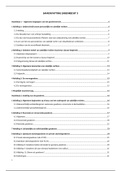
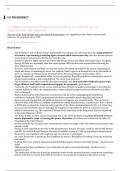
HISTORICAL DEVELOPMENT OF THE LAW PERTAINING TO THE CHASTISEMENT OF CHILDREN BY THEIR PARENTS AND THE ABOLITION OF CORPORAL PUNISHMENT IN SOUTH AFRICA By ALBERT GARRETT BARNARD () Submitted in partial fulfilment of the requirements for the degree. LLB In the SCHOOL OF LAW UNIVERSITY OF SOUTH AFRICA SUPERVISOR: PROF. L PIENAAR (PORTFOLIO / ASSIGNMENT 03: ) 2021 1 | P a g e Table of contents. 1. Introduction………………………………………………………………...............3 2. Problem statement………………………………………………………..............4 3. Hypothesis/ aim of research……………………………………………………...5 4. Points of departure and assumptions………………………………………….6 5. Conceptualization of central research themes……………………………….7 6. Proposed chapter outlay………………………………………………………….8 7. Projected timeframe……………………………………………………………...13 8. Description of research methodology…….………………………………….14 9. Conclusion…………………………………………………………………………14 10. Bibliography……………………………………………………………………….15 2 | P a g e 1. Introduction. ‘The use of physical force upon a child as a means of corrective educational discipline is a longestablished part of civilisation…For this reason, the state did not interfere in the exercise of the rights, duties, and responsibilities of parents in the upbringing of their children.’1 This research investigates the historical origin of the chastisement of children, the evolution of legislation in South Africa by case law, the international obligations placed on South Africa and the final abolition of this practice through the Constitutional judgement in Freedom of Religion South Africa v Minister of Justice and Constitutional Development and Others.2 Chastisement or corporal punishment of children by parents is still an accepted form of discipline of children in South Africa, either socially or as part of their culture. However, Section 12(1)(c) of the Constitution provides for ‘everyone has the right to freedom and security of the person’, including ‘free from all forms of violence...’.3 In addition, Section 28 provides additional rights to children to be protected, including ‘maltreatment, neglect, abuse or degradation’. 4 Since the time of Roman Family Law, domestic punishment of family members, including children resided with the ‘paterfamilias’, called ‘Patria potestas’5 , meaning ‘power of a father’. 6 Several historical and comparative studies found that parents use corporal punishment to “keep discipline” at home.7 South Africa ratified the UN Convention on the Rights of the Child8 in 1995 and the African Charter on the Rights and Welfare of the Child 1990, in 20009 , thus have a 1 Burchell JM, Milton J, ‘Principles of Criminal Law’, (Juta 1991), 159 to 161. 2 Freedom of Religion South Africa v Minister of Justice and Constitutional Development and Others [2019] ZACC 34. 3 The Constitution of the Republic of South Africa, 1996. 4 The Constitution of the Republic of South Africa, 1996. 5 Kruger H, ‘The legal nature and development of parental authority in Roman, Germanic and Roman Dutch law - a historical overview’ (2004) Fundamina Vol. 10, 84. 6 7 Morrell R, ‘Corporal punishment in South African schools: a neglected explanation for its persistence’ (2001) South African Journal of Education Vol. 21, No. 4, 294. 8 UN General Assembly, ‘Convention on the Rights of the Child’, 20 November 1989, United Nations, Treaty Series, vol. 1577. 9 Organization of African Unity (OAU), ‘African Charter on the Rights and Welfare of the Child’ 11 July 1990, CAB/LEG/24.9/49 (1990)
Written for
- Institution
- University of South Africa
- Course
- LME3701 - Legal Research Methodology
Document information
- Uploaded on
- February 2, 2022
- Number of pages
- 18
- Written in
- 2021/2022
- Type
- Exam (elaborations)
- Contains
- Questions & answers
Subjects
- lme 3701
-
lme 3701 final portfolio exam