Maternity & Child Exam 8
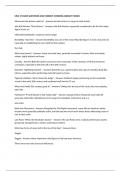
Maternity & Child Exam 8 A pregnant client in the last trimester has been admitted to the hospital with a diagnosis of severe preeclampsia. A nurse monitors for complications associated with the diagnosis and assesses the client for: A Enlargement of the breasts B Complaints of feeling hot when the room is cool C Any bleeding, such as in the gums, petechiae, and purpura. D Periods of fetal movement followed by quiet periods Severe Preeclampsia can trigger disseminated intravascular coagulation because of the widespread damage to vascular integrity. Bleeding is an early sign of DIC and should be reported to the M.D. A nurse is monitoring a pregnant client with pregnancy induced hypertension who is at risk for Preeclampsia. The nurse checks the client for which specific signs of Preeclampsia (select all that apply)? A Facial edema B Increased respirations C Negative urinary protein D Elevated blood pressure The three classic signs of preeclampsia are hypertension, generalized edema, and proteinuria. Increased respirations are not a sign of preeclampsia Which of the following terms applies to the tiny, blanched, slightly raised end arterioles found on the face, neck, arms, and chest during pregnancy? A Linea nigra B Epulis C Striae gravidarum D Telangiectasias The dilated arterioles that occur during pregnancy are due to the elevated level of circulating estrogen. The linea nigra is a pigmented line extending from the symphysis pubis to the top of the fundus during pregnancy. A nurse is caring for a pregnant client with Preeclampsia. The nurse prepares a plan of care for the client and documents in the plan that if the client progresses from Preeclampsia to eclampsia, the nurse's first action is to: A Administer oxygen by face mask B Administer magnesium sulfate intravenously C Assess the blood pressure and fetal heart rate D Clean and maintain an open airway The immediate care during a seizure (eclampsia) is to ensure a patent airway. The other options are actions that follow or will be implemented after the seizure has ceased. A nurse is performing an assessment of a primipara who is being evaluated in a clinic during her second trimester of pregnancy. Which of the following indicates an abnormal physical finding necessitating further testing? A Braxton hicks contractions B Fetal heart rate of 180 BPM C Consistent increase in fundal height D Quickening The normal range of the fetal heart rate depends on gestational age. The heart rate is usually 160-170 BPM in the first trimester and slows with fetal growth, near and at term, the fetal heart rate ranges from 120-160 BPM. The other options are expected A primigravida is receiving magnesium sulfate for the treatment of pregnancy induced hypertension (PIH). The nurse who is caring for the client is performing assessments every 30 minutes. Which assessment finding would be of most concern to the nurse? A Respiratory rate of 10 BPM B Deep tendon reflexes of 2+ C Urinary output of 20 ml since the previous assessment D Fetal heart rate of 120 BPM Magnesium sulfate depresses the respiratory rate. If the respiratory rate is less than 12 breaths per minute, the physician or other health care provider needs to be notified, and continuation of the medication needs to be reassessed. A urinary output of 20 ml in a 30 minute period is adequate; less than 30 ml in one hour needs to be reported. Deep tendon reflexes of 2+ are normal. The fetal heart rate is WNL for a resting fetus. A homecare nurse visits a pregnant client who has a diagnosis of mild Preeclampsia and who is being monitored for pregnancy induced hypertension (PIH). Which assessment finding indicates a worsening of the Preeclampsia and the need to notify the physician? A Dependent edema has resolved B The client complains of a headache and blurred vision C Urinary output has increased D Blood pressure reading is at the prenatal baseline If the client complains of a headache and blurred vision, the physician should be notified because these are signs of worsening Preeclampsia. At a prenatal visit at 36 weeks' gestation, a client complains of discomfort with irregularly occurring contractions. The nurse instructs the client to: A Take 10 grains of aspirin for the discomfort Walk around until they subside C Time contraction for 30 minutes Lie down until they stop Rationale: Ambulation relieves Braxton Hicks A pregnant client is receiving magnesium sulfate for the management of preeclampsia. A nurse determines the client is experiencing toxicity from the medication if which of the following is noted on assessment? A Proteinuria of +3 B Respirations of 10 per minute C Presence of deep tendon reflexes D Serum magnesium level of 6 mEq/L - Respirations of 10 per minute Rationale: Magnesium toxicity can occur from magnesium sulfate therapy. Signs of toxicity relate to the central nervous system depressant effects of the medication and include respiratory depression, loss of deep tendon reflexes, and a sudden drop in the fetal heart rate and maternal heart rate and blood pressure. Therapeutic levels of magnesium are 4-7 mEq/L. Proteinuria of +3 would be noted in a client with preeclampsia. A nurse is assisting in performing an assessment on a client who suspects that she is pregnant and is checking the client for probable signs of pregnancy. Select all probable signs of pregnancy. A Fetal heart rate detected by nonelectric device B Uterine enlargement C Braxton Hicks contractions D Ballottement E Chadwick's sign F Outline of the fetus via radiography or ultrasound - Uterine enlargement Braxton Hicks contractions Ballottement Chadwick's sign Rationale: The probable signs of pregnancy include: Uterine Enlargement
Written for
- Institution
-
Chamberlain College Of Nursing
- Course
-
NURSING...
Document information
- Uploaded on
- May 10, 2022
- Number of pages
- 13
- Written in
- 2021/2022
- Type
- Exam (elaborations)
- Contains
- Questions & answers
Subjects
-
maternity amp child exam 8

Also available in package deal