New Testament Final - Holly Beers (all correct)
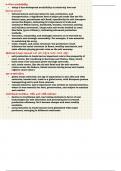
Hermeneutics correct answers The art and science of interpretation. It's about how we do it, our method/approach, what we prioritize. Epistemology correct answers how we know things/anything at all (There are 2 Popular Opposing views): Positivism and Phenomenalism Positivism correct answers we can definitely know some things because we can access reality directly (key: objective) What we know objectively is tested empirically Example: physical sciences Often described as "common sense" anything that cannot be tested and proven empirically is "subjective" or "relative" (Theology, aesthetics, ethics ...) (Two sides of the same coin: both positivism and phenomenalism say "objective knowledge or nothing!") Phenomenalism correct answers all I can know is subjective knowledge relative to my senses because I do not have access to reality (or, if I do, I can't prove it) Example: belief, Oprah Sounds humble, politically correct Example: the ethics of an atheist Example: knowing as looking through a telescope (Two sides of the same coin: both positivism and phenomenalism say "objective knowledge or nothing!") Order of The 2nd Temple Period Conquerors? correct answers The Persians (539-334 BC) Alexander the Great (334-323) & Hellenization Greece: the Ptolemies (323-198 BC) & Seleucids (198-166 BC) Antiochus IV and the "abomination of desolation" The Maccabees/Hasmoneans: Jewish Independence (166-63 BC) The Romans (63 BC-AD 135) Big (Babylon) People (Persians) Ate (Alenxander the Great/Greeks) Pteradactyls (Ptolemies) So (Seleucids) Many (Maccabees) Rebelled (Romans) Core Beliefs of 1st Century Judaism? correct answers 1) monotheism 2) election 3) temple is where God is present. 4) Synagogue- Jewish meeting place/satellites for temple Sadducees
Written for
- Institution
- Theology
- Course
- Theology
Document information
- Uploaded on
- January 30, 2023
- Number of pages
- 18
- Written in
- 2022/2023
- Type
- Exam (elaborations)
- Contains
- Questions & answers