CCRN- AACN Pediatric Practice Exam Questions
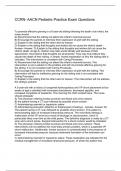
To promote effective grieving in a 6-year-old sibling following the death of an infant, the nurse should: A) Recommend that the sibling not attend the infant's memorial service B) Encourage the parents to minimize their expression of grief with the sibling C) Explain to the sibling that the infant went to heaven D) Explain to the sibling that thoughts and wishes did not cause the infant's death - Answer- Answer: D) Explain to the sibling that thoughts and wishes did not cause the infant's death: At age 6, children may take words literally and because of their egocentrism, they believe that thoughts are all-powerful. They may truly believe they caused the death of their sibling. A simple, honest explanation of why the sibling died is indicated. This intervention is consistent with Caring Processes. A) Recommend that the sibling not attend the infant's memorial service: This intervention is not a solution to the problem and will not promote effective grieving for the sibling. It is not consistent with Caring Processes. B) Encourage the parents to minimize their expression of grief with the sibling: This intervention will lead to ineffective grieving for the sibling and is not consistent with Caring Processes C) Explain to the sibling that the infant went to heaven: This intervention will not address the sibling's problem A 5-year-old with a history of congenital hydrocephalus and VP shunt placement at four weeks of age is admitted with increased somnolence, decreased appetite, and increased complaints of headache. This morning the child vomited twice. The nurse should anticipate: A) The physician ordering lumbar puncture and blood and urine cultures B) the patient having a CT scan followed by possible shunt revision C) Administering mannitol or hypertonic saline D) Administering phenytoin (Dilantin) or fosphenytoin (Cerebyx) - Answer- Answer: B) The patient having a CT scan followed by possible shunt revision: This patient is demonstrating signs of increased intracranial pressure. The most likely etiology is malfunction of the VP shunt as a result of blockage or disconnection, which is particularly likely over time as the child grows. The definitive diagnosis is made by a CT scan and a shunt series. Surgical intervention for a shunt revision would be indicated. A) The physician ordering lumbar puncture and blood and urine cultures: These interventions will not address the most likely primary problem, which is suspected VP shunt malfunction. Additionally, lumbar puncture is contraindicated in the presence of increased intracranial pressure, because downward herniation of the brainstem can occur. C) Administering mannitol or hypertonic saline: These medication are indicated for the medical management of increased intracranial pressure, of which this patient has symptoms. Howev
Written for
- Institution
- CCRN- AACN
- Course
- CCRN- AACN
Document information
- Uploaded on
- May 27, 2023
- Number of pages
- 24
- Written in
- 2022/2023
- Type
- Exam (elaborations)
- Contains
- Questions & answers
Subjects
- the nurse should
-
ccrn aacn pediatric practice exam questions
-
to promote effective grieving in a 6 year old sibling following the death of an infant
-
a 5 year old with a history of congenital hydrocep

Also available in package deal