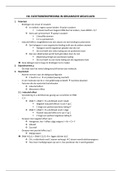
Child Caring Exam #3 Study Guide
Nur-254 Pediatric Exam 3
Galen College of Nursing
Unit 6: Growth & Development
Growth and development
o Growth: physical “stuff”
Height, weight, size
Remember: * weight 2x birth weight @6 months; 3x birth weight @12m; 4x birth weight @ 30month aka 1.5 years
o Development: “skills”
How mature the neuro-system is
Learning and functioning
Nursing management
o Knowing if interventions are effective based on age-appropriate assessment tools
Pain management – based on both age and cognition
Pain scales
o NIPS (neonatal infant pain scale) less than 2 months
Gives scores according to the following: facial expression, cry, breathing pattern, arms
and legs, state of arousal
Used for neonates under 2 months old
o FLACC- more than 2month (to 7 years old)
Assesses face, lets, activity, cry, consolability
Used for infant older than 2 months
o Wong-Baker Faces (3-4 year old) preschooler
Used for 3 to 4 year olds
o Numeric scale (0-10)
8 years and older ( as young as 5 if they understand value of #)
Can be used earlier ONLY if the child can count and actually understand the value of
numbers
Non-pharmacological- USE first
o Containment – blanket (nest)
o Positioning- swaddle
o Sucking- pacifier
o Kangaroo care- skin to skin
o Distraction, relaxation,
o Music, pet, art therapy
Pharmaceutical
o Mild/ Moderate= acetaminophen, NSAIDS
o Moderate/ Severe= Opioids (morphine, diaudid, fentanyl)
o Adjuvant- OTC and lower dose of opioids ( premee)
o Age-appropriate plan of care development
Nursing considerations
0-2 years old mouth breathers; 2 and older nose breathers
Infants (0-1)– can recognize faces – use same nurse
Preschooler- (3-6)- Magical thinking= PAIN is punishment, others fault, disappear magically
School-age (6-12) WHY?
o Ask a lot of questions and want to be involved; WHY?
o Get their input when making a plan of care
o They WANT to make contributions
o Understand cause and effect
Adolescents-(12-18)- privacy, confidentiality encourage friends to come visit, establishing Identity
o Exceptions for visits – post op; immunocompromised; contagious
o Priority
Priority actions
1
, Interventions based on patient signs/symptoms
o RED FLAGS tell HCP
Posterior fontanelle open (triangle shaped) after 2m RED FLAG
Anterior Fontanelle open (diamond shape) after 18m Red flag
Weight gain at 6m should 2xbirth weight= if NOT red flag
Weight gain at12m should 4x birth weight= if NOT red flag
Should babble at 9m= if NOT red flag
If Fontanelles are bulging sign of menigitis, ICP= Tell HCP
If fontanelles sunken in= dehydration FVD= Tell HCP
o Patient care
Peds Assessment – 1. interact w/parents 2. sit on parent lap 3. equipment out of sight; 4. invasive LAST (BP, oral temp
ear exam)
Ear assessment-anatomy of Eustachian tube - UNDER 3= pinna down and back; 3 and OLDER- Pinna up & back
Age-appropriate nursing assessment
Infant-(0-1) recognize faces – use same NURSE
Toddler(1-3) Egocentric; least to most intrusive; (observe, auscultate, use parent lap)
Preschooler- (3-6)- magical thinking; Pain is punishment;
o Coloring, finger painting
School-age-(6-12) WHY?, explain
o puzzle
Adolescents (12-18)- (body image; ask patient) ; when asking separate from parents; invite friends to visit
o Psychosocial development
Identity vs role confusion
They are trying to figure out who they are – parents need to “back off”
o Nutritional assessment
Concerned with body image and possible eating disorders
Ask the patient specifically, what do you eat in a day?
Type of play being observed
o Unoccupied: infant; not mobile and has random movements; no purpose
o Solitary play – infant/toddler: play alone with their interest focused on their own activity
o Onlooker play – infant/toddler: watch what other children are doing but do not make any
attempt to enter the play
o Parallel play – toddler (1-3): play independently but next to each other
o Associative play – preschooler (3-6): children play together but with no group goal; kick ball
around
o Cooperative play – school-age (6-12): play is organized, play in a group with other children
working to complete a specific goal; soccer basketball; SPORTS
o Erikson’s Psychosocial Theories
Infants (birth – 1 year) Trust vs mistrust= = faith & optimism
o Cooing and crying ; respond to non verbal cues
o If not attained – not able to trust others
o Toys- rattle; small toy go in mouth
Early Childhood/ Toddlers-(1-3) autonomy vs shame = learn self control; will power vs impulse;
o a. EGOCENTRIC ; discuss how they will be effected
o b. Teach parents: Allow toddler to explore; NO!, give choices; impressionable
o c. Toys - vacuum
Preschool (3-6) initiative vs guilt= direction and purpose; Right vs wrong; start lying; imaginary friend
o Imaginary friends, coloring, finger painting
o Teach parents – give tasks they can actually accomplish
o If not accomplished tasks=Guilt – second guess themselves
School age ( 6-12) industry vs inferiority= Competence, contribute
o Engage in tasks that they can fully accomplish, understand cause and effect; Want explanations
WHY?; Puberty ; want to feel needed
o Community service; sports; friends' matter, peer pressure, bullying
2
Nur-254 Pediatric Exam 3
Galen College of Nursing
Unit 6: Growth & Development
Growth and development
o Growth: physical “stuff”
Height, weight, size
Remember: * weight 2x birth weight @6 months; 3x birth weight @12m; 4x birth weight @ 30month aka 1.5 years
o Development: “skills”
How mature the neuro-system is
Learning and functioning
Nursing management
o Knowing if interventions are effective based on age-appropriate assessment tools
Pain management – based on both age and cognition
Pain scales
o NIPS (neonatal infant pain scale) less than 2 months
Gives scores according to the following: facial expression, cry, breathing pattern, arms
and legs, state of arousal
Used for neonates under 2 months old
o FLACC- more than 2month (to 7 years old)
Assesses face, lets, activity, cry, consolability
Used for infant older than 2 months
o Wong-Baker Faces (3-4 year old) preschooler
Used for 3 to 4 year olds
o Numeric scale (0-10)
8 years and older ( as young as 5 if they understand value of #)
Can be used earlier ONLY if the child can count and actually understand the value of
numbers
Non-pharmacological- USE first
o Containment – blanket (nest)
o Positioning- swaddle
o Sucking- pacifier
o Kangaroo care- skin to skin
o Distraction, relaxation,
o Music, pet, art therapy
Pharmaceutical
o Mild/ Moderate= acetaminophen, NSAIDS
o Moderate/ Severe= Opioids (morphine, diaudid, fentanyl)
o Adjuvant- OTC and lower dose of opioids ( premee)
o Age-appropriate plan of care development
Nursing considerations
0-2 years old mouth breathers; 2 and older nose breathers
Infants (0-1)– can recognize faces – use same nurse
Preschooler- (3-6)- Magical thinking= PAIN is punishment, others fault, disappear magically
School-age (6-12) WHY?
o Ask a lot of questions and want to be involved; WHY?
o Get their input when making a plan of care
o They WANT to make contributions
o Understand cause and effect
Adolescents-(12-18)- privacy, confidentiality encourage friends to come visit, establishing Identity
o Exceptions for visits – post op; immunocompromised; contagious
o Priority
Priority actions
1
, Interventions based on patient signs/symptoms
o RED FLAGS tell HCP
Posterior fontanelle open (triangle shaped) after 2m RED FLAG
Anterior Fontanelle open (diamond shape) after 18m Red flag
Weight gain at 6m should 2xbirth weight= if NOT red flag
Weight gain at12m should 4x birth weight= if NOT red flag
Should babble at 9m= if NOT red flag
If Fontanelles are bulging sign of menigitis, ICP= Tell HCP
If fontanelles sunken in= dehydration FVD= Tell HCP
o Patient care
Peds Assessment – 1. interact w/parents 2. sit on parent lap 3. equipment out of sight; 4. invasive LAST (BP, oral temp
ear exam)
Ear assessment-anatomy of Eustachian tube - UNDER 3= pinna down and back; 3 and OLDER- Pinna up & back
Age-appropriate nursing assessment
Infant-(0-1) recognize faces – use same NURSE
Toddler(1-3) Egocentric; least to most intrusive; (observe, auscultate, use parent lap)
Preschooler- (3-6)- magical thinking; Pain is punishment;
o Coloring, finger painting
School-age-(6-12) WHY?, explain
o puzzle
Adolescents (12-18)- (body image; ask patient) ; when asking separate from parents; invite friends to visit
o Psychosocial development
Identity vs role confusion
They are trying to figure out who they are – parents need to “back off”
o Nutritional assessment
Concerned with body image and possible eating disorders
Ask the patient specifically, what do you eat in a day?
Type of play being observed
o Unoccupied: infant; not mobile and has random movements; no purpose
o Solitary play – infant/toddler: play alone with their interest focused on their own activity
o Onlooker play – infant/toddler: watch what other children are doing but do not make any
attempt to enter the play
o Parallel play – toddler (1-3): play independently but next to each other
o Associative play – preschooler (3-6): children play together but with no group goal; kick ball
around
o Cooperative play – school-age (6-12): play is organized, play in a group with other children
working to complete a specific goal; soccer basketball; SPORTS
o Erikson’s Psychosocial Theories
Infants (birth – 1 year) Trust vs mistrust= = faith & optimism
o Cooing and crying ; respond to non verbal cues
o If not attained – not able to trust others
o Toys- rattle; small toy go in mouth
Early Childhood/ Toddlers-(1-3) autonomy vs shame = learn self control; will power vs impulse;
o a. EGOCENTRIC ; discuss how they will be effected
o b. Teach parents: Allow toddler to explore; NO!, give choices; impressionable
o c. Toys - vacuum
Preschool (3-6) initiative vs guilt= direction and purpose; Right vs wrong; start lying; imaginary friend
o Imaginary friends, coloring, finger painting
o Teach parents – give tasks they can actually accomplish
o If not accomplished tasks=Guilt – second guess themselves
School age ( 6-12) industry vs inferiority= Competence, contribute
o Engage in tasks that they can fully accomplish, understand cause and effect; Want explanations
WHY?; Puberty ; want to feel needed
o Community service; sports; friends' matter, peer pressure, bullying
2