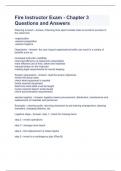
Fire Instructor Exam - Chapter 3 Questions and Answers
Planning to teach - Answer- Planning time spent outside class is crucial to success in the classroom -organization -session preparation -session logistics Organiztion - Answer- the use of good organizational skills can result in a variety of benefits such as: increased instructor credibility improved efficiency of classroom presentation more effective use of time, talent and materials reduced stress on the instructor meeting legal requirements for record keeping Session preparation - Answer- read the lesson objectives review the lesson plan check what equipment is needed locate required equipment determine what skills must be taught review required lesson audiovisuals check documentation requirements session logistics - Answer- logistics means procurement, distribution, maintenance and replacement of materials and personnel Examples - cleaning spills, returning classroom to pre-training arrangement, cleaning manakins, charging batteries, etc. Logistics steps - Answer- step 1 - check for missing items step 2 - review operations step 3 - arrange room layout step 4 - find replacement or make repairs step 5 - revert to a contingency plan (Plan B) Training Aid Selection - Answer- any audiovisual aids, reprinted materials, training props or equipment used to supplement instruction factors to consider: -learning objectives and lesson content -required student performance -class size and interaction -pace of learning -practice factors -evaluative factors -budget limitations learning objectives and lesson content - Answer- any training aids that an instructor uses must reinforce the desired learning objectives and lesson content required student performance - Answer- an instructor should select training aids that most appropriately illustrate or demonstrate the knowledge that the student must possess when the course is completed class size and interaction - Answer- the size and set up of the class may have different impacts on the training aids to be used pace of learning - Answer- different training aids can be effective when applied in different instructional environments (unfamiliar students - will the training aid allow for a slower pace) practice factors - Answer- practice time should be included in the lesson plan evaluative factors - Answer- a consideration when selecting the appropriate training aid is how a student's knowledge will be evaluated at the end of the course. using the same training aid throughout the course ensures that the student is familiar with the prop or item during the skills evaluation budget limitations - Answer- training aids should be cost-effective the benefit to the student and instructor must be greater than the purchase cost of the device, cost of upkeep and storage, and cost in time to develop the training aid. Class Contintuity - Answer- principle of instruction that states that all information throughout a course should be presented in a logical, understandable pattern Many factors can affect class continuity - Answer- - instructor changes (prepare for times when an instructor is not available to teach a course or different instructors for different lessons) -know fellow instructors so that you are aware of their teaching style, lesson plans, etc. - prepare the students for change -meet with substitute instructors or assistants to prepare for the class Weather variations - Answer- weather changes can have an adverse effect on training activities and schedules, so build in flexibility do not expect students to learn skills in extreme weather conditions above all safety first Equipment and material variation - Answer- an important factor in maintaining the continuity of the course is using the same type of equipment in the learning sessions that is used in the testing session Instructional resource variation - Answer- instructional resources used in training include the information, product data, skills sheets and references required to meet the lesson plan requirements. instructors can maintain continuity when this information is available to all course instructors during the planning of their course presentations differences in learning styles - Answer- to maintain continuity, an instructor has to be flexible and adaptable within the structure of the course in order to appeal to the learning styles of all students. ideally, instructors adapt lessons that include a variety of teaching methods so that all types of students have the opportunity to learn through their preferred learning styles. Differences in knowledge level - Answer- remedial vs. advanced remedial - lower than the level of the course material (instructors have to adjust the pace and expectations) advanced - high than the level of the course material (assign. problems and exercises at the advanced level) Course consistency - Answer- mea
Written for
- Institution
- Fire Instructor
- Course
- Fire Instructor
Document information
- Uploaded on
- June 25, 2023
- Number of pages
- 4
- Written in
- 2022/2023
- Type
- Exam (elaborations)
- Contains
- Questions & answers
Subjects
-
fire instructor exam chapter 3 questions and ans

Also available in package deal