Completed Exam | Wall Street Prep - Wall Street Prep
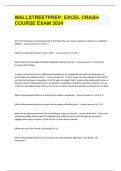
Assume US GAAP to answer this question. In 2017, $2 million in wages were earned and no cash wages were paid. In 2018, $8 million in wages were earned and $9 million in cash wages were paid. Cash wages were used to first pay wages earned in 2017 with the remainder used to pay wages earned in 2018. Any earned but unpaid wages will be paid during the first quarter of 2019. Using only the information provided, which of the following statements is most accurate? Liabilities decreased by $1.0 million in 2018. Liabilities increased by $6.0 million in 2018. Assets decreased by $7.0 million in 2018. Retained earnings decreased by $10.0 million in 2018. Retained earnings decreased by $9.0 million in 2018. Your answer is correct. Since wages were earned in 2017 but not yet paid, the opening balance sheet in 2018 would have an accrued wages liability of $2.0. These were paid in 2018, reversing the liability. However, since there is only $7.0 million in cash ($9.0 less the $2.0 million used to pay 2017 wages) available to pay wages earned in 2018, that leaves $1.0 million in earned wages unpaid, lowering the accrued wages liability to $1.0 million. The net impact to the liability is -$1.0 million (-$2.0 + $1 million). The only asset impacted is cash, which decreases by $9.0 million, while retained earnings decreases by $8.0 million, since wages are expensed when they are earned, not when they are paid. See Lesson: Payable, Accrued Expenses, Deferred Revenue & Debt Question 2 A company reported gross profit of $22 million in 2018. In addition, it recorded the following activities: Sales and marketing expenses were $6 million. Interest expense was $1 million. Sold equipment for $13 million that had a net book value of $9 million. $3 million in preferred stock issuance. Company’s tax rate is 40%. Calculate the company’s net income. $9.0 million $9.6 million $11.4 million $12.6 million $15.0 million Your answer is correct. Gross profit 22.0 Selling and marketing expenses (6.0) Interest expense (1.0) Gain on sale 4.0 Pretax income 19.0 Tax rate 40% Net income 11.4 Gain on sale is calculated as the sale price less the net book value. See Lessons: Net Income, EPS & Dividends Property, Plant & Equipment, Part 2 Question 3 The next two questions use the following data from TGX Global, a heavy equipment manufacturer (this information will be repeated on the next question): TGX Global sells excavators, with an average sale price of $750,000 per excavator. TGX received new orders for 100 excavators in 2018. TGX produced & delivered 130 excavators in 2018: 70 of these delivered excavators were ordered in 2017 and the rest (60 excavators) were part of the 100 ordered in 2018. TGX received payment for 120 excavators. TGX began selling 1-year maintenance services contracts for $60,000 per excavator in 2018, which begin after the excavator is delivered. Contracts were sold on 50% of all excavator orders made in 2018 (no contracts were sold on orders placed in 2017) Assume all excavators delivered in 2018 are delivered at year end. Calculate TGX’s 2018 revenue based on the transactions described above.
Written for
- Institution
-
University Of Notre Dame
- Course
-
ACCT GENERALLY
Document information
- Uploaded on
- July 25, 2023
- Number of pages
- 3
- Written in
- 2022/2023
- Type
- Exam (elaborations)
- Contains
- Questions & answers
Subjects
-
completed exam | wall street prep wall street