NR 507 midterm latest 2023 already passed
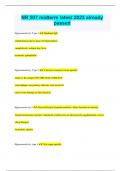
NR 507 midterm latest 2023 already passed Hypersensitivity: Type 1 -Mediated IgE -inflammation due to mast cell degranultion -anaphylactic, asthma, hay fever treatment: epinephrine Hypersensitivity: Type 2 -Cytotoxic reaction: tissue specific -binds to the antigen ON THE CELL SURFACE -macrophages are primary effectors cells involved cause tissue damage or alter function Hypersensitivity 2 -Graves Disease (hyperthyroidism) -alters function not destroy -blood transfusions reaction- transfused erythrocytes are destroyed by agglutination or lysis -drug allergies -hemolytic anemia Hypersensitivity: type 3 -Not organ specific -antibody binds to soluble antigen OUTSIDE THE CELL SURFACE that was released into the blood or bodily fluids, and the complex is then deposited in the tissues Hypersensitivity: Type 3 -rheumatoid arthritis -Systemic Lupus Erythematosus (SLE) -Raynaud's Hives (urticaria) Hypersensitivity Type 1 First responders to innate the immune system Neutrophils Allergic contact dermatitis Hypersensitivity Type IV Type 2 cytotoxic hypersensitivity mediated by: -IgG IgM -macrophages are primary effort cells - Serum Sickness type 3 hypersensitivity Hypersensitivity IV, -is more of a delayed immune response. -mediated T-cells attack tissue directly (no antibodies) Autoimmune -diseases in which the body makes antibodies directed against its own tissues - Primary immunodeficiency -Genetic; inherited -result of single gene defects -B and T cell deficiencies secondary immunodeficiency -acquired Common cause of secondary immunodeficiency Malnutrition Most patients diagnosed with SLE will have a positive ? antinuclear antibody (ANA) SLE (lupus) -Facial rash -vasculitis - tissue inflammation Renal disease associated with autoimmunity? Glomerulonephritis Sjogren's syndrome Inflammation in salivary and lacrimal glands SLE Autoantibodies and auto-active t-cells against DNA and nucleoprotein Sjögren's syndrome immune changes: Autoantibodies and auto-reactive t-cells against apoptotic cells rheumatoid arthritis manifestations: Joint inflammation, stiffness, pain, loss of range of motion Rheumatoid Arthritis immune changes: T-cells and B cells against joint associated antigens MS manifestations Formation of sclerotic plaque in the brain, leads to Muscle weakness and ataxia MS immune changes T-cells against brain antigens ___ measures the average size of RBCs MCV Anemia occur by... -impaired RBC production -excessive blood loss - increased RBC production microlytic anemia is characterized by hyper chromic RBS: Hereditary spherocytosis Anemia -"without blood" 4.7-6.1mcl Normal for men RBC 4.5-5.2mcL Normal for women RBC 13.5-17.5 Normal hemoglobin for men 12.0-15.5 g/dL Normal hemoglobin for women RBC The number of erythrocytes in 1 cubic mm of whole blood Hemoglobin (Hgb) The oxygen-carrying pigment of red cells Hematocrit (Hct) The volume of cells as a % of total volume of cells and plasma in whole blood 42-45% Normal for HCT for men 37-48% Normal HCT for women Mean Cell Volume (MCV) Measures the average size of the RBC 80-100 fL Normal MCV RDW (red cell distribution width) Estimate of the uniformity of individual cell size 11.5- 14.5% Normal RDW Microcytic (MVC 80fL) Iron deficiency Microcytic (MVC 80fL) less than Sideroblastic Microcytic (MVC 80fL) Thalassemia Microcytic (MVC 80fL) Anemia of chronic disease Normocytic (MVC 80-99) Anemia of inflammation and chronic disease Normocytic (MVC 80-99) Hereditary spherocytosis Normocytic (MVC 80-99) G6PD deficiency Normocytic (MVC 80-99) Paroxysmal nocturnal hemglobinuria Macrocytic (MVC 100) greater than B12 deficiency (pernicious anemia) Macrocytic (MVC 100) greater than Folate deficiency Hypochromic anemia -(MCHC) less than normal hemoglobin RBCs pale in color Normochromic anemia -(MCHC) normal hemoglobin Neither pale or dark Hyperchromic anemia - (MCHC) more than normal hemoglobin Dark rue or red Manifestations of anemia fatigue, pallor, weakness, dyspnea, dizziness, tachycardia iron deficiency anemia -microcytic, hypochromic -can cause excessive bleeding -treatment: iron supplements -insufficient iron levels or the inability of the cells mitochondria to utilize iron effectively Ferritin Measurement that reflects the body's total iron stores microcytic hypochromic anemia -iron deficiency anemia -sideroblastic -thalassemia Microcytic Normochromic Anemia of inflammation and chronic disease Microcytic Hyperchromic Hereditary spherocytosis Lack of intrinsic factor causes pernicious anemia Folic acid is essential for the body because It plays a role in maturing of RBCs Liver disease causes Non-megaloblastic anemia Macrocytic Anemia's -MCV larger than 100. -megaloblastic and non-megaloblastic megaloblastic anemia (macrocytic) Folate deficiency and vitamin b-12 deficiency Non-megaloblastic anemia (macrocytic) -Liver disease, myelodsplastic syndrome, hemorrhage Manifestations of Macrocytic Anemia's -fatigue -dyspnea -loss of appetite and weight -diarrhea -pallor B12 definitely (pernicious anemia) -Autoimmune destruction of intrinsic factor -peripheral neuropathy - treatment: injections risk: vegetarians, elderly, h-pylori infection Folate deficiency anemia -lack of folate leading to premature RBC death... caused by dietary deficiency -ferritin level normal -alcoholics, pregnancy, anticonvulsant meds folic acid foods peas beans veggies liver seeds orange juice fortified bread cereal rice pernicious anemia labs -Normal or low -folate -MCHC is normal -elevated MCV Folate deficiency labs macrocytic. (increased MCV) low RBC count. decreased folate. hemolytic anemia -destruction of lysis of RBCs due to enzymes or toxins produced by infectious agent , chemical release medication, effects of drugs Incorrect blood transfusions -type 2 hypersensitivity hemolytic anemia labs RBC normal size, reticulocyte count is high Aplastic anemia labs RBC normal, reticulocyte count low Blood loss anemia -Acute: GI bleed, trauma, labor -Chronic: GI bleed, deplete iron stores can result in iron deficiency anemia aplastic anemia "Without" =plasa of cell growth - chemical- chemo -viral: hepatitis -tumor -antibiotics and other meds: PCN, phenytoin, diuretics, anti diabetic, sulfa -congenital defects: fanconi's anemia ___ used to diagnose aplastic anemia -Blood test and bone marrow biopsy -granulocyte count less than 500 -platelet count less than 20,000 -absolute reticulocyte count less than or equal to 40x 109/L Post hemorrhage: lab Reticulocyte count is high MCHC normal sickle cell anemia -a genetic disorder that causes abnormal hemoglobin, resulting in some red blood cells assuming an abnormal sickle shape sickle cell anemia -autosomal recessive gene disorder -two abnormal genes, one form each parent Patho of sickle cell -Involves a single amino-acid change on the beta-chain -4 genes involved in encoding synthesis of the alpha protein chains for Hb. Genes located on chromosome 16 Hemoglobinopathies sickle cell and thalassemia Thalassemia -Autosomal recessive genetic disorder -abnormal Hb gene from each parent like sickle cell -many possible genetic mutations -single or muitlple amino changes on alpha and beta chains Manifestations of Sickle cell -Involves single Amino acid change on the betachai -Increased RBC hemoglobin S concentration, dehydration, acidosis, hypoxemia -have a cute painful episodes Manifestation of thalassemia -May have possible genetic mutations - ineffective erythropoiesis -occurs and people from south east Asia and China Patho of heart failure *less cardiac output -Heart tries to compensate for not pumping an adequate amt of blood -Increased heart rate -Blood vessels dilate -Heart hypertrophy -Right side triggered by MI or lung dx -Vascular resistance -Greater O2 demand -Cells become hypoxic Heart failure overtime causes....resulting in increase preload -decreased contractility -decreased stoke volume -increase left ventricular end-diastolic volume (LVEDV) Long-standing cause of heart failure Hypertension Flow of the heart: Inferior/Superior vena cava, right atrium, tricuspid valve, right ventricle, pulmonary semi lunar valve, pulmonary arteries, (deox), lungs, pulmonary veins, left atrium, mitral valve, left ventricle, aortic semi lunar valve, aorta, (oxy) Flow of the heart a. Right Atrium, Right Ventricle, Pulmonary Arteries, Lungs, Pulmonary Veins, Left Atrium, Left Ventricle, Aorta right sided heart failure manifestations 1. Jungular Vein Distention 2. Ascending Dependent Edema 3. Weight Gain 4. Hepatomegaly (Liver Enlargement 5. cor pulmonale right sided heart failure Right sided heart failure can occur due to left sided heart failure due to the back up of the fluid from the left side of the heart Preload -volume of blood in ventricles at end of diastole -determined by: 1. Amount of venous blood returning to the ventricles door and diastole 2. The amount of blood in the left Ventricle after systole -can cause a backflow of blood causing heart failure Afterload -the amount of resistance to ejection of blood from the ventricle -Elevated afterload results in increased ventricular workload and hypertrophy of the myocardium Stroke volume -The amount of blood ejected from the heart in one contraction. (Systole) Cardiac Output (CO) measurement of the amount of blood ejected per minute from either ventricle of the heart -CO= SV x HR -4-8L/min Heart failure definition The heart is an able to generate an adequate cardiac output such as the inadequate perfusion of tissues or increase diastolic filling pressure of the ventricle or both Left side HF (systolic) HFrEF : congestive heart failure -Heart failure with reduced ejection fraction -decreased contractility, increased preload, and increased afterload -S3 gallop ejection fraction -measurement of the volume percentage of left ventricular contents ejected with each contraction -if effected, the blood is unable to pump blood out of the ventricles resulting in increased preload Ejection fraction of ___% can't provide adequate cardiac output 40 cor pulomale Right ventricular failure secondary to pulmonary HTN Right sided heart failure diastolic caused by: -HTN, myocardial hypertrophy, myocardial infarction -decreased compliance of the left side and abnormal diastolic relaxation -increased afterload will cause an increased right ventricular contraction force and will eventually not be able to move the blood (blood will remain in the right atrium) Right HF involves.. -Right ventricle -super vena cava (preload) -pulmonary artery afterload Left HF involves -Left ventricle -pulmonary vein (preload) -aorta (afterload) Stage A HF Patient at risk for heart failure who have not yet developed structural heart changes (those with diabetes, those with coronary disease without prior infarct) Stage B HF Patients with structural heart disease reduce ejection fraction (left ventricular hypertrophy chamber enlargement) who have not yet developed symptoms of heart failure -structural heart damage, but no damage Stage C HF Patients you have developed clinical heart failure -symptomatic Stage D HF Patients with refractory heart failure that require advance intervention -example the need for bio -ventricular pacemaker left ventricular assist device or a heart transplant Class I HF No limitation of physical activity Class II HF -Slight limitation of physical activity -Patient is comfortable at rest but ordinary physical activity results and symptoms of HF Class 111 HF -There is marked limitation of physical activity -the patient is comfortable at rest but less than ordinary activity causes symptoms of HF Class IV HF The patient is unable to carry on any physical activity without symptoms of HF or they have symptoms of HF at rest Transition of stages of HF: -Once a stage has been reached the person can ever go back to the prior stage -the damage of the heart cannot be reversed Transition of classes in HF The patient may move between classes one and four as symptoms can be improved through treatment wand medications Manifestations of Right HF -Jugular vein distention -heptatosplenomegal -peripheral Edema -cor pulmonale tricuspid valve damage Left HF manifestations -Increase left ventricular afterload -decrease ejection fraction -increased left ventricular preload -pulmonary edema -Dyspnea CAD Long-standing atherosclerosis aortic stenosis murmur Mid-systolic crescendo-decrescendo heard loudest at the base and radiating to the neck Aortic regurgitation murmur -Diastolic rumbling murmur heard at the apex of the heart -An early high-pitched diastolic murmur hired at the left lower sternal border -A systolic crescendo-descrescendo murmur heard at the left upper sternal border Mitral Stenosis murmur Low pitch murmur auscultated at the hearts Apex Mitral regurgitation murmur Pansystolic, often loud, blowing, best heard at apex, radiates well to left axilla aortic stenosis -calcification of aortic valve cusps that restricts forward flow of blood during systole -narrowing of the aorta -S4 gallop -fainting, chest pressure -left ventricular hypertrophy mitral regurgitation -Reflux of blood from left ventricle into left atrium during systole -dyspnea, Jugular vein distention aortic regurgitation -flow of blood backward from the aorta into the heart; caused by a weak heart valve -severe SOB chest x-ray shows signs of pulmonary edema and cardiomegaly mitral stenosis -narrowing of the mitral valve opening usually caused by scarring from rheumatic fever -SOB on activity, tachycardia, JVD, crackles -EKG shows a-fib and left atrial hypertrophy Obstructive Disease characterized by an increase in resistance to airflow from the trachea and larger bronchi to the terminal and respiratory bronchioles Reduction of FEV1/FVC ratio Chronic asthma OBSTRUCTIVE PFT Diagnosis used for chronic bronchitis -FEV1 will be decreased (obstructive) -increased TLC simple spirometry measures -Exhaled flow rates that include: -title volume -vital capacity -FEV1 forced vital capacity -the maximum amount of air that can be removed from the lungs during forced expiration -normal lungs should exhale 80% of the FVC Restrictive Disease spirometry results -FEV1, FVC, TLC are reduced -FEV1/FVC ratio is normal Steps to analyze pulmonary function test 1.Determine the pattern 2.Determine the severity 3.Bronchodilator response FEV1/FVC ratio Determines if it's obstructive of restrictive FEV1/FVC ratio of ___% or less determines obstructive -70% FEV1/FVC ratio of greater than ___% determines restrictive 70% TLC is greater than __% in restrictive -80% -80-120% represents a normal range Obstructive pattern measurements: -FVC- decreased or normal -FEV1 - decreased -FEV1/FVC ratio: less than 70% -TLC: greater than 120 represents hyperinflation Restrictive pattern measurements FVC: decreased -FEV1: decreased -FEV1/FVC ratio: normal or greater 70% -TLC: 80% Determining the severity: mild 70% Determining the severity: moderate 60-70% Determining the severity: Moderately Severe 50-60% Determining the severity: severe 35-50% Determining the severity: Very severe 35% Causes air trap in the Longs after full expirationobstructive disorders definition COPD and asthma -Characterized by extraction of airflow during expiration -Shortness of breath when exhaling air -Causes air trap in the Longs after full expiration Types of COPD: irreversible chronic bronchitis and emphysema Restrictive disorders definition -Characterized by reduction in lung volume -Results in difficulty in taking air into the lungs -Due to stiffness and lung compliance or chest wall structural abnormalities -Includes interstitial lung disease, sclerosis, neuromuscular causes and significant obesity Chronic bronchitis will decrease ? FEV1 Emphysema has a late effect of__? Hypoxia and hypercapnia A patient with chronic bronchitis is likely to experience__? Respiratory acidosis due to inability to exhale CO2 Presentation of COPD on X-ray A flatten diaphragm, distended lung fields, and increased thoracic diameter GOLD criteria for COPD: stage 1: mild FEV1 % predicted 80-100% GOLD criteria for COPD: stage 2: moderate FEV1 % predicted 50%-80% GOLD criteria for COPD: stage 3: severe FEV1 % predicted 30-50% GOLD criteria for COPD: stage 4: very severe FEV1 % predicted Less than 30% Emphysema -hyperinflation of air sacs with destruction of alveolar walls (damage occurs in the airway, but the aveloi -air trapping -purses lip breathing -barrel chest Chronic Bronchitis definition -Bronchial inflammation hypersecretion of mucus and chronic productive cough that persist for at least three consecutive months for at least two successful years Result of chronic bronchitis -Excessive mucus production accumulation -hypertrophy of bronchial smooth muscles - hypertrophy and hyperplasia of chronic bronchial mucus producing cells -airflow obstruction -and decreased alveolar ventilation -(irreversible) Manifestations of chronic bronchitis -Productive and purulent cough -copious sputum production -Dyspnea - wheezing -rhonchi -cyanosis of the skin and mucous membranes -and peripheral edema Patho of chronic bronchitis Inspired irritants result in airway inflammation with infiltration of neutrophils, macrophages, and lymphocytes into the bronchial wall. chronic low oxygen -The kidneys compensate by increasing secretion of a erythropoietin the primary hormone results for simulating red blood cell production -As a result of increased red blood cells production the patient with chronic bronchitis exhibits in elevated hematocrit can develop secondary polycythemia Vera. -This increase in red blood cells causes strain on the pulmonary and cardiovascular system causing pulmonary hypertension due to vasoconstriction -causes right sided heart failure or cor pulmonale Asthma s/s common to both instrinsic and extrinsic: Wheezing Extrinsic asthma is -Triggered by an allergic reaction -elevated IgE -more common in children Intrinsic asthma is -triggered by non-allergic factors -no elevation in IgE -more common in adults less than 40 years of age Wheezing occurs at -The end of expiration -improves after bronchodilator use Asthma occurs at __% FEV1/FVC 70 Gold standard test for asthma Methacholine Challenge test Treatment of asthma *- Avoidance of triggers* - Short-acting ß2-agonists (SABA) - Inhaled corticosteroids (ICS) - Long-acting ß2-agonists (LABA) - Leukotriene antagonists (modifiers) (LTRA) Classic for asthma Decrease total long capacity and residual volume Interstitial Lung Disease... associated with smoking -pulmonary langerhans cell histiocytosis -desquamative interstitial pneumonia -respiratory brochiolitis-interstitial lung disease Breath sounds IlD Fine crackles Most diagnosed interstitial lung disease -radiation pnemonitis -pneumonconioses -hypersensitivity pneumonitis Microcytic-hypochromic iron deficiency sideroblastic thalassemia Microcytic normochromic Anemia of inflammation and chronic disease Microcytic hyperchromic Spherocytosis Hypertension directly effects which load? Afterload Which condition can lower preload? Hemorrhage left side of heart Aorta, pulmonary vein, left atrium, mitral valve, aortic valve, left ventricle Right sided of the heart: Super vena cava (preload), pulmonary artery, right atrium, pulmonary valve, tricuspid valve, inferior vena cava, right ventricle
Written for
- Institution
- NR 507 ADVANCED PATHOPHYSIOLOGY
- Course
- NR 507 ADVANCED PATHOPHYSIOLOGY
Document information
- Uploaded on
- August 15, 2023
- Number of pages
- 32
- Written in
- 2023/2024
- Type
- Exam (elaborations)
- Contains
- Questions & answers
Subjects
-
nr 507 midterm latest 2023 already passed

Also available in package deal