Unit 1 3.1 Understand the Importance of Flora and Fauna Identification for the Forest School
Programme Leader.
Identify the opportunities afforded through understanding the natural
space and the flora and fauna.
In order to continuously appreciate a place of beauty, in this case a forest or woodland, it is
important to identify what drew you to the place initially, in order to maintain that
environment, how to care and nurture it without manipulating and changing it beyond its
initial first encounter to ensure it maintains its biodiversity and ecology.
A Forest Leader needs to be aware of and understand the natural space which they are
utilising by being proactive and informed in the maintenance of their intended area,. Things
such as positive and negative impacts upon the flora and fauna and how sustainability and
ecology affect the space.
A Forest school leader needs to be cognizant with the limitations and responsibilities of using
a space. The most important being the health and wellbeing of the clients / customers/ service
users therefore it is crucial to be aware of the plants within the utilised space and their
possible toxicity or harmful properties. (See accompanying PowerPoint which highlight’s the
plant and its severity if ingested, this is not an exhaustive list and can be added to, to also
include fungi…etc.)
If delivering information to younger clients or younger users I would not be so vivid
regarding the outcome of the ingestion of said plants as this may lead to negative reaction to
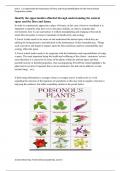
enjoying the outdoors, but rather something similar to the poster below:
Jo-Anne Benn-Day. Forest School Leadership. Level 3
Programme Leader.
Identify the opportunities afforded through understanding the natural
space and the flora and fauna.
In order to continuously appreciate a place of beauty, in this case a forest or woodland, it is
important to identify what drew you to the place initially, in order to maintain that
environment, how to care and nurture it without manipulating and changing it beyond its
initial first encounter to ensure it maintains its biodiversity and ecology.
A Forest Leader needs to be aware of and understand the natural space which they are
utilising by being proactive and informed in the maintenance of their intended area,. Things
such as positive and negative impacts upon the flora and fauna and how sustainability and
ecology affect the space.
A Forest school leader needs to be cognizant with the limitations and responsibilities of using
a space. The most important being the health and wellbeing of the clients / customers/ service
users therefore it is crucial to be aware of the plants within the utilised space and their
possible toxicity or harmful properties. (See accompanying PowerPoint which highlight’s the
plant and its severity if ingested, this is not an exhaustive list and can be added to, to also
include fungi…etc.)
If delivering information to younger clients or younger users I would not be so vivid
regarding the outcome of the ingestion of said plants as this may lead to negative reaction to
enjoying the outdoors, but rather something similar to the poster below:
Jo-Anne Benn-Day. Forest School Leadership. Level 3