Josh Devos
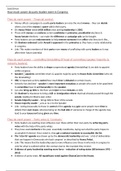
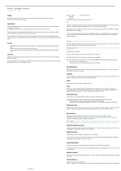
How much power do party leaders exert in Congress:
They do exert power – Financial control:
Money affects campaigns & usually party leaders can raise the most money – they can decide
where a lot of the money is spent within their party.
EX: Nancy Pelosi raised $430 million since joining leadership in 2002.
Those with money can endorse certain candidates in primaries, presidential elections &
house/senate elections – can make the difference as campaign ads can be bought.
Party leaders can use endorsements to help remove someone from office who they don’t like…
EX: Boehner endorsed Justin Amash’s opponent in the primaries as they have a rocky relationship
in congress.
Link: This makes members of their party more weary of conflicting with party leaders as it may
affect their future potential.
They do exert power – controlling timetabling (if head of committee/speaker/majority &
minority leaders):
Party leaders have the ability to shape congressional agenda (timetabling) & are able to appoint
within congress.
Speaker appoints committee chairs & appoint majority party to House Rules Committee (who do
the timetabling)
HRC is important as they control how much time is debated on certain issues.
Seniority has declined – speaker is more important nowadays as people who want to be appointed
to committee have to act favourably to the speaker.
Can also bring up bills to the floor and reject to hear debates on bills
EX: Boehner’s reluctance to bring a bill on immigration reform that had already passed through the
senate, leading to Obama exec order.
Senate Majority Leader – brings bills to floor of the senate
House majority Leader – acts as no.2 to the Speaker
Link : Acting favourably to those in control of the agenda may gain some people more time to
debate their own issues, whereas being on the bad side of someone in charge of the agenda may
lead to your issues not being given any time.
They do exert power – Party votes & ‘Contracts’
Party leaders are exerting more influence over those within their own party by enforcing party
votes with the help of the party whips.
They have used contracts in the past, essentially manifestos, laying out what the party hopes to
accomplish if elected. Once voted in, they get a national mandate to accomplish the list.
The ‘6 for 06’ agenda was drawn up by the democratic leadership and was ‘ a list of deliverables
that can happen in Democrats win back congress’ as described by Nancy Pelosi.
Link: This means that the leadership exerts more influence over those in who vote in congress to
vote for what is outlined within the contract due to the mandate they receive.
Evidence of party leadership exerting more force – reduction of swing states (68 between 1992 –
2012)
Evidence of party votes: All republicans voted against ObamaCare in the House.
How much power do party leaders exert in Congress:
They do exert power – Financial control:
Money affects campaigns & usually party leaders can raise the most money – they can decide
where a lot of the money is spent within their party.
EX: Nancy Pelosi raised $430 million since joining leadership in 2002.
Those with money can endorse certain candidates in primaries, presidential elections &
house/senate elections – can make the difference as campaign ads can be bought.
Party leaders can use endorsements to help remove someone from office who they don’t like…
EX: Boehner endorsed Justin Amash’s opponent in the primaries as they have a rocky relationship
in congress.
Link: This makes members of their party more weary of conflicting with party leaders as it may
affect their future potential.
They do exert power – controlling timetabling (if head of committee/speaker/majority &
minority leaders):
Party leaders have the ability to shape congressional agenda (timetabling) & are able to appoint
within congress.
Speaker appoints committee chairs & appoint majority party to House Rules Committee (who do
the timetabling)
HRC is important as they control how much time is debated on certain issues.
Seniority has declined – speaker is more important nowadays as people who want to be appointed
to committee have to act favourably to the speaker.
Can also bring up bills to the floor and reject to hear debates on bills
EX: Boehner’s reluctance to bring a bill on immigration reform that had already passed through the
senate, leading to Obama exec order.
Senate Majority Leader – brings bills to floor of the senate
House majority Leader – acts as no.2 to the Speaker
Link : Acting favourably to those in control of the agenda may gain some people more time to
debate their own issues, whereas being on the bad side of someone in charge of the agenda may
lead to your issues not being given any time.
They do exert power – Party votes & ‘Contracts’
Party leaders are exerting more influence over those within their own party by enforcing party
votes with the help of the party whips.
They have used contracts in the past, essentially manifestos, laying out what the party hopes to
accomplish if elected. Once voted in, they get a national mandate to accomplish the list.
The ‘6 for 06’ agenda was drawn up by the democratic leadership and was ‘ a list of deliverables
that can happen in Democrats win back congress’ as described by Nancy Pelosi.
Link: This means that the leadership exerts more influence over those in who vote in congress to
vote for what is outlined within the contract due to the mandate they receive.
Evidence of party leadership exerting more force – reduction of swing states (68 between 1992 –
2012)
Evidence of party votes: All republicans voted against ObamaCare in the House.