Paramedic trauma final Questions and Answers Graded A+
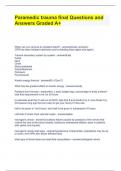
Paramedic trauma final Questions and Answers Graded A+ When can you remove an impaled object? Airway occlusion CPR has been initiated (otherwise you're stabbing them again and again) Trauma secondary system by system Scalp Facial Neck Chest Musculoskeletal Pelvis/Abdomen Perineum Psychosocial Kinetic energy formula KE=1/2mv^2 What has the greatest effect on kinetic energy velocity Parkland burn formula 4mL x body weight (kg) x percentage of body surface= total fluid requirement in mL for 24 hours to calculate what the IV will run at NOW, take that # and divide it by 2, now divide it by (8-however long ago the burn was) to get your hourly IV flow rate half to be given in 1st 8 hours, next half to be given in subsequent 16 hours Left side of chest most vascular organ spleen neurogenic shock Circulatory failure caused by paralysis of the nerves that control the size of the blood vessels, leading to widespread dilation; seen in patients with spinal cord injuries. neurogenic shock vital signs hypotensive, bradycardia, respirations may be up or down, and WPD skin below affected area what type of shock does not need fluid resuscitation cardiogenic shock subcutaneous emphysema A characteristic crackling sensation felt on palpation of the skin, caused by the presence of air in soft tissues. common rule for splinting ortho injuries leave in position found what extremity do you never pull traction on even if there is no distal pulse arms because of the nerve bundles proximal to bones as well as large vessels. what is the initial cause of damage from lightning strikes ventricular arrhythmias Decerebrate extension away from body, pronation of arms/legs Cushing's triad three classic signs—bradycardia, systolic hypertension(widening pulse pressure), and bradypnea—seen with pressure on the medulla as a result of brain stem herniation Beck's triad Jugular Venous distension, muffled heart sounds, decreased BP(narrowing pulse pressure) -----> Cardiac Tamponade clinical pearls electrical alternans pulsus paradoxus types of distributive shock neurogenic, anaphylactic, septic Vitals for stages of shock Compensated: tachycardic, normotenive or slightly hypertensive Decompensated: tachycardic, hypertensive irreversible: bradycardic, hypotensive, and bradypnea which stage of shock do catecholamines maintain blood pressure compensated Hemothorax signs and symptoms presents similarly to hemorrhagic shock and pneumothorax flat jugular veins, hypotension, absent lung sounds, it is very rare to have mediastinal shift, trauma, dull percussion PASG indications unstable pelvis Epidural hematoma a collection of blood in the space between the skull and dura mater intial (+) LOC, then lucid, then progressive LOC/AMS Subdural hematoma symptoms decreased consciousness pupil inequality motor deficits worst headache of life what do pupils tell you about neurologic status in closed head injuries whether there is involvement to the optic nerve. Tx for evisceration moist sterile dressings, do not attempt to stabilize or reinsert Care for amputated body part -Wrap body part in clean gauze; wash cloth, or towel that has been soaked with clean water -Place wrapped body part in a plastic bag -Place body part on a bed of ice, but do not submerge -Transport immediately to medical facility Rhabdomyolysis dissolution of striated muscle (caused by trauma, extreme exertion, or drug toxicity; in severe cases renal failure can result)
Written for
- Institution
- Paramedic trauma fisdap
- Course
- Paramedic trauma fisdap
Document information
- Uploaded on
- January 14, 2024
- Number of pages
- 3
- Written in
- 2023/2024
- Type
- Exam (elaborations)
- Contains
- Questions & answers
Subjects
-
paramedic trauma final questions and answers grade
-
when can you remove an impaled object airway occl
-
trauma secondary system by system scalp facial nec
-
parkland burn formula 4ml x body weight kg x per

Also available in package deal