Chapter 13 -- Principles of Pharmacology correctly answered
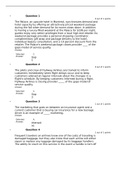
Chapter 13 -- Principles of PharmacologyA patient experiences profound sedation when an opioid, such as fentanyl, is given together with a benzodiazepine, such as midazolam. This is an example of: - correct answer Synergism. All of the following medications fall in the same classification, EXCEPT: - correct answer Diazepam. A patient recently began taking an antipsychotic medication and is experiencing a dystonic reaction. What drug is indicated? - correct answer Diphenydramine. Compared to Schedule III drugs, Schedule IV drugs: - correct answer Have a lower abuse potential and include medications such as diazepam (Valium) and lorazepam (Ativan). The term affinity, as it applies to pharmacology, is MOST accurately defined as the: - correct answer Ability of a medication to bind to a receptor. The paramedic should be MOST suspicious that a controlled substance has been tampered with if: - correct answer An appropriate dose of the drug seems ineffective, especially when patient tolerance is unlikely. Patients with primary pulmonary hypertension may experience acute decompensation if they are given a: - correct answer Vasopressor. The desired clinical effect after administering a beta-2 agonist medication is: - correct answer Relaxation of bronchiole smooth muscle. When a medication alters the velocity of the conduction of electricity through the heart, it is said to have a(n) _____________ effect. - correct answer Dromotropic.
Written for
- Institution
- Opioid PHARMACOLOGY
- Course
- Opioid PHARMACOLOGY
Document information
- Uploaded on
- January 24, 2024
- Number of pages
- 5
- Written in
- 2023/2024
- Type
- Exam (elaborations)
- Contains
- Questions & answers
Subjects
- opioid pharmacology
-
chapter 13 principles of pharmacology

Also available in package deal