NURS 611 / NURS611 Exam 2 (Latest 2024 / 2025): Advanced Pathophysiology | Complete Guide with Questions and Verified Answers | 100% Correct - Maryville
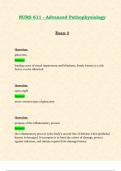
Exam 2: NURS611 / NURS 611 (Latest 2024 / 2025) Advanced Pathophysiology Exam Review | Complete Guide with Questions and Verified Answers | 100% Correct - Maryville Q: glaucoma Answer: leading cause of visual impairment and blindness; family history is a risk factor, can be inheritied Q: open angle Answer: most common type of glaucoma Q: purpose of the inflammatory process Answer: the inflammatory process is the body's second line of defense when epithelial barrier is damaged. It's purpose is to limit the extent of damage, protect against infection, and initiate repair of the damaged tissue Q: what are the 4 cardinal signs of inflammation Answer: edema, pain, warmth, and redness edema: arterioles near the site of infection or injury constrict briefly. Vasodilation then causes slower blood velocity and increases local blood flow to the injured site. plasma leaks from vessels to tissues causing swelling and blood becomes more viscous warmth/redness: the increased blood flow and increasing concentration of red cells at the site of inflammation. leukocytes adhere to vessel walls pain: biochemical mediators, such as histamine, stimulate the endothelial cells that line capillaries and venules to retract, creating spaces at junction between cells Q: chemotactic factor Answer: a biochemical substance that attracts leukocytes to the site of inflammation Q: describe chemotactic activity Answer: this activity occurs distal to the inflammation in order to attract leukocytes from circulation. this activity is required for a much longer period than that of anaphylatoxic activity Q: phagocytosis Answer: the destruction of microorganisms and cellular debris; the process by which a cell ingests and disposes of damaged cells and foreign material Q: describe the action of phagocytes in inflammation Answer: 1. opsonization (recognition of the target and adherence of the phagocyte to it 2. engulfment (ingestion or endocytosis) and formation of phagosome 3. fusion with lysosomal granules within the phagocyte (phagolysosome) 4. destruction of the target Q: what systemic changes are associated with acute inflammation Answer: fever, leukocytosis ( transient increase in the number of circulating leukocytes), and plasma proteins Q: how can fever be beneficial Answer: the generation of a febrile response can be beneficial because the microorganisms that cause some conditions are highly sensitive to small increases in body temp Q: resolution of tissue Answer: is damage is minor, no complications occur, and destroyed tissues are capable of regeneration, it is possible to return injured tissues to an approximation of their original structure and physiologic function Q: repair of tissue Answer: replacement of destroyed tissue with scar tissue; new tissue may not be able to function as the original tissue; occurs if resolution is not possible Q: what happens if resolution is not possible Answer: repair takes place instead. This is when extensive damage is present, injury occurs in tissues not capable of regeneration, infection results in abscess or granuloma formation, or fibrin persists in the lesion; scar tissue forms Q: what population is at risk for impaired inflammation and wound healing Answer: older adults; impaired healing may not be directly associated with again but can be linked to a chronic illness such as heart disease or DM. In addition, anti-inflammatory steroid medications can interfere with the healing process Q: humoral immunity Answer: antibody circulates in the blood and binds to antigens on infectious agents Q: cellular immunity Answer: T cells undergo differentiation during an immune response and develop into several subpopulations of cells that react directly with antigen on the surface of infectious agents. some develop into t-cells that can stimulate activities of other leukocytes; some develop into t-cytotoxic cells that attack and kill targets directly Q: target cells for t-cells Answer: cells infected by a variety of viruses, as well as cells that have become cancerous. Q: active immunity Answer: acquired; ex-vaccines; produced by an individual either after natural exposure to an antigen or after immunization
Written for
Document information
- Uploaded on
- March 11, 2024
- Number of pages
- 56
- Written in
- 2023/2024
- Type
- Exam (elaborations)
- Contains
- Questions & answers
Subjects
- nurs611
- exam 2
- nurs 611 exam 2
- advanced pathophysiology
- exam review
- maryville university
- latest edition 2024
-
actual exam
-
exam prep
-
test success
-
test review
-
study notes
-
content
-
guide
-
review
-
study guide

Also available in package deal