Nutrition and Diet
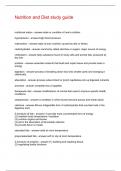
Glasses of water per day - answer-6~8 glasses digestion - answer-body breaks down food into smaller parts, changes the food chemically, and moves the food To lose weight, an individual should increase X and decrease Y - answer-X: activity Y: caloric intake Diet: soft - answer-easy to digest; used following surgery, treating infections, digestive disorders, chewing problems Diet: diabetic - answer-patients with diabetes mellitus, do not produce enough insulin Diet: low-calorie - answer-overweight patients Diet: high-calorie - answer-underweight/anorexia nervosa Diet: low-cholesterol - answer-patients with atherosclerosis, heart disease Diet: fat-restricted - answer-obese patients, patients with gallbladder, liver disease, atherosclerosis Diet: sodium-restricted - answer-cardiovascular disease (hypertension, congestive heart failure), kidney disease, edema (retention of fluids) Diet: low-protein - answer-kidney/renal disease, allergic conditions Diet: bland - answer-easily digestable foods: ulcers, colitis, other digestive diseases Diet: low-residue - answer-digestive diseases Diet: high-protein - answer-children and adolescents (delayed growth), pregnant or lactating women, surgery patients, burns, fevers, infections Sources for Vitamin A - answer-liver, butter, whole milk, egg yolk Function of Vitamin A - answer-structure and functioning of the cells of the skin and mucous membranes Sources for Vitamin D - answer-Sunshine Function of Vitamin D - answer-Growth, regulates calcium and phosphorous absorption and metabolism Function of Vitamin E - answer-Necessary for protection of cell structure, esp. red blood cells and epithelial cells; antioxidant to inhibit breakdown of vitamin A Function of Vitamin B12 - answer-Production of healthy red blood cells Sources for Vitamin C - answer-Citrus fruits, pineapple, melons, berries, tomatoes, cabbage, broccoli, green peppers Functions of Vitamin C - answer-Healthy gums, aids in wound healing Function of Calcium - answer-clotting of the blood Function of Chlorine - answer-acid-base balance/formation of hydrochloric acid Function of Iodine - answer-formation of hormones in the thyroid gland Sources of Copper - answer-liver, organ meats, nuts, legumes, whole-grain cereals Function of Copper - answer-utilization of iron, component of enzymes Sources of Fluorine - answer-fluoridated water, fish, meat, seafood
Written for
- Institution
- Nutrition and Diet-
- Course
- Nutrition and Diet-
Document information
- Uploaded on
- May 1, 2024
- Number of pages
- 4
- Written in
- 2023/2024
- Type
- OTHER
- Person
- Unknown
Subjects

Also available in package deal