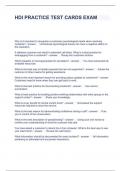
Microbiology Chapter 4 UTA Tholen Prokaryotes (Bacteria and Archaea) are - Answer -everywhere. Prokaryotes are - Answer -VERY adaptable & resilient Prokaryotes have the ability to - Answer -switch metabolic or respiration methods Mutualism - Answer -both populations benefit; ex: gut nutrition metabolism Amensalism - Answer -one population is harmed and the other is unaffected; ex: antimicrobial defense on skin Commensalism - Answer -one population is benefitted and the other is unaffected; ex: Skin cells as food source Neutralism - Answer -both populations are unaffected; Spores in soil Parasitism - Answer -one population is benefitted, the other is harmed; ex: Tuberculosis Polymicrobial "communities" - Answer -group of interacting populations of organisms Prokaryotes + Eukaryote microbes= microbes - Answer -microbiome Microbiota - Answer -all prokaryotic and eukaryotic microorganisms that are associated with a certain organism or environment cooperative - Answer -biofilm formation competing - Answer -scarce nutrients Resident microbiota - Answer -microorganisms that constantly live in/on our bodies transient microbiota - Answer -microorganisms temporarily found in the human body, may include pathogenic microorganisms prokaryotes - Answer -don't reproduce sexually; classified by stains BEST APPROACH to prokaryotes - Answer -molecular + biochemical + microscopy Standard for bacterial taxonomy - Answer -Bergey's Manual of Systemic Bacteriology Largest collection of microbes available - Answer -American Type Culture Collection gram positive prokaryotes - Answer -LOW guanine -cytosine nucleotides; HIGH G -C gram negative prokaryotes - Answer -proteobacteria and spirochetes Atypical - Answer -neither Alphaproteobacteria - Answer -Oliotrophs live in low nutrients environments; Chlamydia & Rickettsia are prominent genera (Obligate intracellular and must have a host to be metabolically active) Alphaproteobacteria: Rickettsia - Answer -causative agents for Rocky mountain spotted fever & typhus fevers Alphaproteobacteria: Chlamydia - Answer -causative agents for lymphogranuloma venereum (STD) Betoproteobacteria - Answer -Eutrophs require many nutrients; prominent genera include Bordetella and Neisseria
Exam (elaborations)
Microbiology Chapter 4 UTA Tholen Questions and Answers
Rating
Sold
-
Pages
6
Grade
A+
Uploaded on
06-05-2024
Written in
2023/2024
Prokaryotes (Bacteria and Archaea) are - Answer-everywhere. Prokaryotes are - Answer-VERY adaptable & resilient Prokaryotes have the ability to - Answer-switch metabolic or respiration methods Mutualism - Answer-both populations benefit; ex: gut nutrition metabolism Amensalism - Answer-one population is harmed and the other is unaffected; ex: antimicrobial defense on skin Commensalism - Answer-one population is benefitted and the other is unaffected; ex: Skin cells as food source Neutralism - Answer-both populations are unaffected; Spores in soil Parasitism - Answer-one population is benefitted, the other is harmed; ex: Tuberculosis Polymicrobial "communities" - Answer-group of interacting populations of organisms Prokaryotes + Eukaryote microbes= microbes - Answer-microbiome Microbiota - Answer-all prokaryotic and eukaryotic microorganisms that are associated with a certain organism or environment cooperative - Answer-biofilm formation competing - Answer-scarce nutrientsResident microbiota - Answer-microorganisms that constantly live in/on our bodies transient microbiota - Answer-microorganisms temporarily found in the human body, may include pathogenic microorganisms prokaryotes - Answer-don't reproduce sexually; classified by stains BEST APPROACH to prokaryotes - Answer-molecular + biochemical + microscopy Standard for bacterial taxonomy - Answer-Bergey's Manual of Systemic Bacteriology Largest collection of microbes available - Answer-American Type Culture Collection gram positive prokaryotes - Answer-LOW guanine-cytosine nucleotides; HIGH G-C gram negative prokaryotes - Answer-proteobacteria and spirochetes Atypical - Answer-neither Alphaproteobacteria - Answer-Oliotrophs live in low nutrients environments; Chlamydia & Rickettsia are prominent genera (Obligate intracellular and must have a host to be metabolically active) Alphaproteobacteria: Rickettsia - Answer-causative agents for Rocky mountain spotted fever & typhus fevers Alphaproteobacteria: Chlamydia - Answer-causative agents for lymphogranuloma venereum (STD) Betoproteobacteria - Answer-Eutrophs require many nutrients; prominent genera include Bordetella and NeisseriaBetoproteobacteria: Bordetella - Answer-causative agents whooping (pertussis) cough; produces toxins to paralyze lung cilia Betoproteobacteria: Neisseria gonorrhea - Answer-causative agent for gonorrhea STD Betoproteobacteria: Neisseria meningitides - Answer-causative agent for bacterial meningitis
Show more
Read less
Institution
Microbiology Chapter 4 UTA Tholen
Course
Microbiology Chapter 4 UTA Tholen
Whoops! We can’t load your doc right now. Try again or contact support.
Written for
- Institution
- Microbiology Chapter 4 UTA Tholen
- Course
- Microbiology Chapter 4 UTA Tholen
Document information
- Uploaded on
- May 6, 2024
- Number of pages
- 6
- Written in
- 2023/2024
- Type
- Exam (elaborations)
- Contains
- Questions & answers
Subjects
-
microbiology chapter 4 uta tholen
Content preview
$8.49
Get access to the full document:
100% satisfaction guarantee
Immediately available after payment
Both online and in PDF
No strings attached

Also available in package deal
Package deal
Microbiology UTA 2460 bundled exams with complete solution
12
2024
$ 101.88
More info