Sherpath/EAQ Questions and Answers 100% Verified Graded A
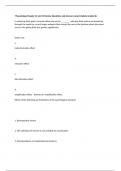
The nurse is caring for a patient who is taking penicillin antibiotics. The patient reports flushing, itching, hives, anxiety, and throat and tongue swelling. The nurse finds that the patient has a rapid, irregular pulse. Which condition may the patient have as a result of taking the antibiotic? A. tolerance to the antibiotic drugs B. An allergic anaphylactic reaction C. Clostridium difficile bacterial infection D. Glucose-6-phosphate dehydrogenase deficiency - B How does penicillin work to destroy bacteria? A. interferes with cell wall synthesis. B. It binds irreversibly to the cell wall. C. It interrupts bacterial DNA processes. D. It interrupts bacterial RNA processes. - A Penicillin inhibits transpeptidases and activates autolysins. This disrupts the synthesis of the cell wall and promotes active destruction of the cell wall. These combined actions result in cell lysis and death. When instructing a patient about antibiotic therapy, the nurse explains that which condition occurs when the normal flora are disturbed during antibiotic therapy? A. Organ toxicity B. Superinfection C. Hypersensitivity D. Rebound toxicity - B Antibiotic therapy can destroy the normal flora of the body, which typically inhibit the overgrowth of fungi and yeast. When the normal flora are decreased, these organisms can overgrow and cause infections. A patient who is about to undergo an open cholecystectomy is administered intravenous ceftriaxone. Which antibiotic treatment is the patient likely getting? A. Empiric B. Definitive C. Prophylactic D. Colonization - C A prophylactic antibiotic treatment is administered before the actual onset of an infection. Surgery places a patient at a major risk for infection. Therefore antibiotic treatment given before surgery is a prophylactic treatment against infection. A patient receiving antibiotics for chronic tonsillitis has been experiencing abdominal pain and cramps associated with frequent watery stools. Which infection does the nurse suspect? A. Klebsiella infection B. Clostridium infection C. Acinetobacter infection D. Enterococcus infection - B Antibiotic-associated diarrhea may be a result of superinfection due to the use of antibiotics in the treatment of tonsillitis. Here, the antibiotics disrupt the gut flora growth and promote Clostridium difficile growth. The patient has been ordered azithromycin and asks the nurse why the medication does not have to be taken as often as other antibiotics that have previously been ordered. Which is the nurse's best response? A. "You'll need to ask your health care provider questions like that." B. "I'll call the pharmacy and ask about the chemical makeup of the drug." C. "This is a much more effective drug than what you received previously." D. "This drug has a longer duration of action than some of the other antibiotics." - D Azithromycin is one of the newer macrolide antibiotics. It has a longer duration of action as well as fewer and less severe gastrointestinal side effects than erythromycin. The patient has been prescribed sulfamethoxazole/trimethoprim. The nurse notes that the patient has a history of kidney stones. Which statement is the highest priority instruction for the nurse to give to the patient?
Written for
- Institution
- Sherpath/EAQ
- Course
- Sherpath/EAQ
Document information
- Uploaded on
- June 2, 2024
- Number of pages
- 12
- Written in
- 2023/2024
- Type
- Exam (elaborations)
- Contains
- Questions & answers
Subjects
- sherpatheaq
- sherpath eaq
-
sherpatheaq questions and answers 100 verified
-
sherpatheaq questions and answers