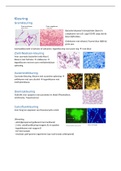
CELL DIVISION
Mitosis
Cell cycle
For growth, repair, replacement, asexual reproduction (p)
Interphase
- 2 chromos per type one from each parent = diploid
- Normal metabolic activities (producing enzymes,
- Nucleus divides once = 2 genetically identical cells
hormones), preparing for cell division
- DNA is replicated and checked for errors
Prophase
- Protein synthesis in cytoplasm
- Chromosomes coil, condense (visible)
- Mitochondria + chloroplasts grow/divide
- Centrioles to opposite ends, spindles
- ATP amount increased
- Nucleolus + envelope breaks down
G1 – proteins that synthesise
Metaphase
organelles are produced and
- Chromos in middle, centromere spindle
organelles duplicate + size ↑
- Centre of the cell = metaphase plate
S – synthesis, DNA replicate
G2 – check duplicate DNA
Anaphase
errors + energy stores ↑
- Separates pair of sister chromatids
- To opposite side centromere first (V)
Homologous pairs
Telophase
- Humans have 46 chromosomes, 23 pairs
- Chromos opposite poles, uncoil
- 1 chromosome in each pair from each
- Nucleolus + nuclear envelope forms
parent
- Chromosomes in each pair are same size and have
Meiosis
same genes, different alleles
New gametes, reduction division - start with full number
- Possible comb 2n (N = number of pairs)
of chromos, end with half so diploid (2n) to haploid (n)
Cytokinesis
Prophase 1
- Cytoplasm divides, begins anaphase, ends telophase
- Chromos condense, envelope breaks down
- Animals = cleavage furrow, membrane pulled by
- Arrange into homologous pairs = bivalents
cytoskeleton, fuses with side, 2 genet identical cells
- Crossing over = same gene but new allele (chromatid)
- plants = no cleavage furrow (wall), vesicles from Golgi
- Centrioles move to poles creating spindle fibres
apparatus assemble in centre, fuse
Metaphase 1
Regulation
- Homologous pairs to centre, independent assortment
- Checkpoints monitor accurate completion of cycle
- Spindle fibres attach to centromere
- Cells can enter G0 after G1 and G2 checkpoint
- G0 is when the cell leaves cycle due to
Anaphase 1
> Differentiation – specialised not able to divide
- Spindles contract separating homologous pairs
> DNA damaged – no longer divides (normal cells
- Chiasmata break = recombinant chromatids
limited amount of division, become senescent)
- Aging = ↑ senescent cells (cancer, arthritis)
Telophase 1
- Some cells stimulated back to dividing (lymphocytes)
- Nuclear envelope forms around each group
- 2 haploid cells from diploids
G1 - cell size, nutrients, growth factors, DNA damage
G2 - cell size, DNA replication errors, DNA damage
Meiosis 2 (not reduction)
metaphase – chromosome attached to spindle in centre
- Like mitosis, anaphase 2, chromatids separated, one
chromatid from each chromo (indep assortment)
- 4 genetically different haploid cells = gametes
Genetic variation in meiosis
1) Crossing over chromatids – meiosis 1, each parent
2) Independent assortment – metaphase 1,
random (mum/dad)
Mitosis
Cell cycle
For growth, repair, replacement, asexual reproduction (p)
Interphase
- 2 chromos per type one from each parent = diploid
- Normal metabolic activities (producing enzymes,
- Nucleus divides once = 2 genetically identical cells
hormones), preparing for cell division
- DNA is replicated and checked for errors
Prophase
- Protein synthesis in cytoplasm
- Chromosomes coil, condense (visible)
- Mitochondria + chloroplasts grow/divide
- Centrioles to opposite ends, spindles
- ATP amount increased
- Nucleolus + envelope breaks down
G1 – proteins that synthesise
Metaphase
organelles are produced and
- Chromos in middle, centromere spindle
organelles duplicate + size ↑
- Centre of the cell = metaphase plate
S – synthesis, DNA replicate
G2 – check duplicate DNA
Anaphase
errors + energy stores ↑
- Separates pair of sister chromatids
- To opposite side centromere first (V)
Homologous pairs
Telophase
- Humans have 46 chromosomes, 23 pairs
- Chromos opposite poles, uncoil
- 1 chromosome in each pair from each
- Nucleolus + nuclear envelope forms
parent
- Chromosomes in each pair are same size and have
Meiosis
same genes, different alleles
New gametes, reduction division - start with full number
- Possible comb 2n (N = number of pairs)
of chromos, end with half so diploid (2n) to haploid (n)
Cytokinesis
Prophase 1
- Cytoplasm divides, begins anaphase, ends telophase
- Chromos condense, envelope breaks down
- Animals = cleavage furrow, membrane pulled by
- Arrange into homologous pairs = bivalents
cytoskeleton, fuses with side, 2 genet identical cells
- Crossing over = same gene but new allele (chromatid)
- plants = no cleavage furrow (wall), vesicles from Golgi
- Centrioles move to poles creating spindle fibres
apparatus assemble in centre, fuse
Metaphase 1
Regulation
- Homologous pairs to centre, independent assortment
- Checkpoints monitor accurate completion of cycle
- Spindle fibres attach to centromere
- Cells can enter G0 after G1 and G2 checkpoint
- G0 is when the cell leaves cycle due to
Anaphase 1
> Differentiation – specialised not able to divide
- Spindles contract separating homologous pairs
> DNA damaged – no longer divides (normal cells
- Chiasmata break = recombinant chromatids
limited amount of division, become senescent)
- Aging = ↑ senescent cells (cancer, arthritis)
Telophase 1
- Some cells stimulated back to dividing (lymphocytes)
- Nuclear envelope forms around each group
- 2 haploid cells from diploids
G1 - cell size, nutrients, growth factors, DNA damage
G2 - cell size, DNA replication errors, DNA damage
Meiosis 2 (not reduction)
metaphase – chromosome attached to spindle in centre
- Like mitosis, anaphase 2, chromatids separated, one
chromatid from each chromo (indep assortment)
- 4 genetically different haploid cells = gametes
Genetic variation in meiosis
1) Crossing over chromatids – meiosis 1, each parent
2) Independent assortment – metaphase 1,
random (mum/dad)