Disaster preparedness and emergency care
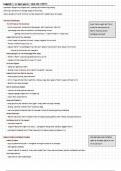
Triage system for emergency care Emergency severity index ESI 1 = most critical, death is imminent ESI 2 = High risk, will die without treatment, or suicide risk ESI 3 = Needs care, but not in immediate treat of death ESI 4 = Urgent care issues ESI 5 = None emergent Phases of a disaster Prewarning of disaster, Disaster event occurs, Recuperative effort Previous Play Next Rewind 10 seconds Move forward 10 seconds Unmute 0:00 / 0:15 Full screen Brainpower Read More mental health in disasters High risk = children and adolescents Women = anxiety and depression Men = PTSD / suicide PTSD diagnosis 3-6 months after event Care of emergency patient primary survey Airway, Alertness Breathing Circulation Disability Exposure, environment Facilitate adjuncts Get resuscitation adjuncts **Always control bleeding/hemorrhage first Heat related emergencies Core temp rises within 10 - 15 minutes higher than 105.8 F AMS, confusion, coma Hypotension Tachycardia Tachypnea Weakness Hot, dry skin, absence of perspiration Heatstroke Most serious heat emergency Increased sweating, vasodilation, and RR, depletes fluids and electrolytes, especially sodium. Sweat glands stop working. Heatstroke treatment Stabilize ABGs Rapidly lower core temp = (cool environment, remove clothing, place in front of a fan, cool bath, ice packs to groin/axilla, peritoneal/rectal lavage with iced fluids) Monitor for dysrhythmias 100% O@ ECG/ pulse ox Labs Catheter Control any shivering Monitor for rhabdomyolysis (urine amount, color, pH, myoglobin) Frostbite Cold stress causes vasoconstriction leading to decreased blood flow and vascular stasis Superficial frostbite Ears, nose, fingers, toes Skin = waxy, pale yellow/blue/mottled. Crunchy/frozen Tingling, numbness, burning Never squeeze, massage, or scrub injured area Swelling can occur with thawing Remove clothing and jewelry Nursing care with superficial frostbite Immerse affected area in 98.6 - 104 F circulating water Blisters within hours Avoid heavy blankets and clothes Rewarming is very painful, give analgesia Deep frostbite involves muscle, bone, and tendon. Skin is white, hard, and insensitive to touch. Mottling gradually progressive to gangrene. Immerse in 98.6 - 104 F water until distal flushing of skin occurs Deep frostbite after rewarming Elevate to decrease edema Significant edema within 3 hours Blistering in 6 hours to days Evaluate for systemic hypothermia Prepare for possible amputation Hypothermia Core body temp less then 95 F _peripheral vasoconstriction and shivering occur to facilitate heat production Mild hypothermia 93 - 95 F -Shivering -Lethargy -Confusion -Irrational behavior -HR changes Moderate hypothermia 86 - 93 F -Rigidity -Bradycardia, Bradypnea -BP obtainable by Doppler -Metabolic / resp acidosis -Hypovolemia -Shivering decreases or disappears at 86 F Severe hypothermia Lower the 86 F -undetectable vital signs -absent reflexes, pupils fixed and dilated -possible bradycardia, V-fib, PEA Warm patient to 86 F before pronounced dead Types of rewarming for hypothermia Passive external (spontaneous) rewarming - remove wet clothing, apply dry clothes and warm blankets, use radiant lights Active external rewarming - fluid or air-filled warming blankets, warm water immersion Active internal rewarming - Heated humidified oxygen, warmed IV fluids, peritoneal lavage with warmed fluids Bioterrism Anthrax, botulism, and plague. -treated with antibiotics, assuming sufficient supply and nonresistant bacteria Smallpox can be prevented with a vaccine, even when given after exposure Chemical agents of terrorism Sarin - toxic nerve gas, can cause death within minutes. Paralyzes respiratory muscles. *Antidote for nerve agent = atropine, pralidoxime chloride Phosgene - colorless gas used in chemical manufacturing *if inhaled at high concentrations for long periods causes severe respiratory distress, pulmonary edema, death Mustard gas - Yellow/brown color with a garlic odor *Irritates eyes, causes skin burns/blisters Radiologic/Nuclear Agents of Terrorism -Radiologic dispersal devices (RRDs) ("dirty bombs"): mix of explosives and radioactive material -When detonated, blast scatters radioactive dust,
Written for
- Institution
- Disaster and emergency
- Course
- Disaster and emergency
Document information
- Uploaded on
- July 27, 2024
- Number of pages
- 9
- Written in
- 2023/2024
- Type
- Exam (elaborations)
- Contains
- Questions & answers
Subjects
-
disaster preparedness and emergency care