exam 3 UH manoa Psych 100 ch. 7 | Questions & Answers (100 %Score) Latest Updated
2024/2025 Comprehensive Questions A+ Graded Answers | With Expert Solutions
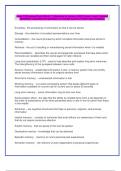
Encoding - the processing of information so that it can be stored
Storage - the retention of encoded representations over time
Consolidation - the neural process by which encoded information becomes stored in
memory
Retrieval - the act of recalling or remembering stored information when it is needed
Reconsolidation: - describes the neural and epigenetic processes that take place when
memories are recalled and then stored again for later retrieval
Long-term potentiation (LTP) - used to help describe and explain long term memories.
The strengthening of the synapses between nerve cells.
Sensory memory - unattended information is lost, a memory system that very briefly
stores sensory information close to its original sensory form
Short-term memory: - unrehearsed information is lost
Working memory: - is a active processing system that keeps different types of
ifnormation available for current use for current use for about 30 seconds
Long-term memory: - some information may be lost over time
Serial position effect - the idea that the ability to recalled items from a list depends on
the order of presentation of the items presented early or late in the list rather than those
in the middle
Schemas: - are cognitive structures that help us perceive, organize, and process
information
Implicit memory: - consists of memories that exist without our awareness of them and
that do not require conscious attention
Explicit memory - that we speak of that can be spoken
Declarative memory - knowledge that can be declared
Episodic memory: - memory for one's personal past experiences
Semantic memory: - the memory of acts independent of personal experiences
2024/2025 Comprehensive Questions A+ Graded Answers | With Expert Solutions
Encoding - the processing of information so that it can be stored
Storage - the retention of encoded representations over time
Consolidation - the neural process by which encoded information becomes stored in
memory
Retrieval - the act of recalling or remembering stored information when it is needed
Reconsolidation: - describes the neural and epigenetic processes that take place when
memories are recalled and then stored again for later retrieval
Long-term potentiation (LTP) - used to help describe and explain long term memories.
The strengthening of the synapses between nerve cells.
Sensory memory - unattended information is lost, a memory system that very briefly
stores sensory information close to its original sensory form
Short-term memory: - unrehearsed information is lost
Working memory: - is a active processing system that keeps different types of
ifnormation available for current use for current use for about 30 seconds
Long-term memory: - some information may be lost over time
Serial position effect - the idea that the ability to recalled items from a list depends on
the order of presentation of the items presented early or late in the list rather than those
in the middle
Schemas: - are cognitive structures that help us perceive, organize, and process
information
Implicit memory: - consists of memories that exist without our awareness of them and
that do not require conscious attention
Explicit memory - that we speak of that can be spoken
Declarative memory - knowledge that can be declared
Episodic memory: - memory for one's personal past experiences
Semantic memory: - the memory of acts independent of personal experiences