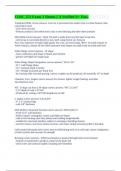
COSC 253 Exam 3 Simms || A Verified A+ Pass.
Traditional Mills correct answers -Iron ore is processed into molten iron in a blast furnace, then
converted to steel
- 25%-35% recycled
- Primary products: flat-rolled stock such as steel decking and other sheet products
Mini-Mills correct answers - Most US steel is made from recycled steel scrap here
- steel scrap is converted directly to new steel using electric arc furnaces
Pros: less expensive to build, high quality low cost, use less energy, 90%+ recycled content, in
North America, almost all hot-rolled structural steel shapes are made from recycled steel here
Wide Flange correct answers - W shape
- most commonly used shape in beams and columns
- greater web depth for longer span
Wide-Flange Shape Designation correct answers "W10 x 30"
- W = wide flange shape
- 10 = nominal depth in inches
- 30 = Weight in pounds per lineal foot
- by varying roller size and spacing, various weights can be produced, all nominally 10" in depth
Channels, Tees, Angles correct answers For trusses, lighter weight framing, and other
miscellaneous uses
WT: T-shape cut from a W-shape correct answers "WT 13.5x47"
- 13.5"depth of web x 47 lb/ft
- Produced by cutting a W27x94 lengthwise in half
L angles correct answers "L4x3x3/8"
- 4" x 3" nominal legs
- with 3/8" thickness
HSS (Hollow Structural Section) correct answers "HSS 8x8x1/2"
- 8"x8"x1/2" wall thickness
- hollow square, rectangular, round, and elliptical shapes
- cold or hot-forming steel strip (sheet) and welding longitudinally
- suitable for structural members subject to twisting or buckling stresses
- used for trusses, structural column sections, and where simple external profile is desirable
Cold-worked (formed) steel correct answers Deforming steel in its cold state causes realignment
of steel crystals and increases its strength
Riveting correct answers - White hot fastener is inserted through holes to be fastened
- fastener is hammered to produce a head on the plain end
- metal cools and contracts tightly clamping steel members
, -rarely used today, mostly in historic structures
Bolts correct answers Carbon steel bolts - relatively low strength, limited uses, fastening light
frame elements and holding temp connections, also called common/unfinished bolts
High strength bolts - stronger than common bolts, used for fastening primary structural members,
heat treated for tensile strength
bearing-type connection correct answers - bolts only need to be installed in a snug tight condition
- body of bolt resists movement between connected members by bearing against sides of bolt
holes
- shear stress
- connection will slip before reaching full strength
slip-critical connection correct answers - bolt is tensioned to such an extent that movement in the
joint is resisted by friction between the members themselves
- bolt is very highly stressed but in tension
- no slippage, bolts tightened to 70% of their strength
- used where joints experience load reversals, high stressed joints, or where slippage would be
detrimental (column splices in tall buildings)
Bolt Tensioning correct answers Turn-of-nut method: nut is tightened 1/3 a turn past snug
Load indicator washers: when bolt is adequately tensioned, protrusions on the water are
flattened, some indicator washers squirt dye
Calibrated wrench: torque wrench used to tighten bolts, not used frequently
shear connection correct answers - joins only the web of the beam to column flange
- transfers gravity (shear) loads from beam to column
- not sufficiently rigid to transfer bending forces (bending moment)
Moment connections correct answers -Beam flanges are joined to column
-transfers gravity (shear) loads and bending forces to column
-Column may be reinforced with stiffener plates to carry bending forces
- welds join top and bottom beam flanges to column and reinforcing plates
- creates continuous beam condition that transmits bending forces
Coped Beam to Girder Connection correct answers - steal beam to girder connection
- top flanges of beam are coped (cut away) to allow the tops of a beam and girder to be set level
Column to Column Connection correct answers - column splices typically at waist height to
avoid interference with beam-column connections
- where outer dimensions of connected columns differ, a butt plate or bearing plate is added to
the connections
Traditional Mills correct answers -Iron ore is processed into molten iron in a blast furnace, then
converted to steel
- 25%-35% recycled
- Primary products: flat-rolled stock such as steel decking and other sheet products
Mini-Mills correct answers - Most US steel is made from recycled steel scrap here
- steel scrap is converted directly to new steel using electric arc furnaces
Pros: less expensive to build, high quality low cost, use less energy, 90%+ recycled content, in
North America, almost all hot-rolled structural steel shapes are made from recycled steel here
Wide Flange correct answers - W shape
- most commonly used shape in beams and columns
- greater web depth for longer span
Wide-Flange Shape Designation correct answers "W10 x 30"
- W = wide flange shape
- 10 = nominal depth in inches
- 30 = Weight in pounds per lineal foot
- by varying roller size and spacing, various weights can be produced, all nominally 10" in depth
Channels, Tees, Angles correct answers For trusses, lighter weight framing, and other
miscellaneous uses
WT: T-shape cut from a W-shape correct answers "WT 13.5x47"
- 13.5"depth of web x 47 lb/ft
- Produced by cutting a W27x94 lengthwise in half
L angles correct answers "L4x3x3/8"
- 4" x 3" nominal legs
- with 3/8" thickness
HSS (Hollow Structural Section) correct answers "HSS 8x8x1/2"
- 8"x8"x1/2" wall thickness
- hollow square, rectangular, round, and elliptical shapes
- cold or hot-forming steel strip (sheet) and welding longitudinally
- suitable for structural members subject to twisting or buckling stresses
- used for trusses, structural column sections, and where simple external profile is desirable
Cold-worked (formed) steel correct answers Deforming steel in its cold state causes realignment
of steel crystals and increases its strength
Riveting correct answers - White hot fastener is inserted through holes to be fastened
- fastener is hammered to produce a head on the plain end
- metal cools and contracts tightly clamping steel members
, -rarely used today, mostly in historic structures
Bolts correct answers Carbon steel bolts - relatively low strength, limited uses, fastening light
frame elements and holding temp connections, also called common/unfinished bolts
High strength bolts - stronger than common bolts, used for fastening primary structural members,
heat treated for tensile strength
bearing-type connection correct answers - bolts only need to be installed in a snug tight condition
- body of bolt resists movement between connected members by bearing against sides of bolt
holes
- shear stress
- connection will slip before reaching full strength
slip-critical connection correct answers - bolt is tensioned to such an extent that movement in the
joint is resisted by friction between the members themselves
- bolt is very highly stressed but in tension
- no slippage, bolts tightened to 70% of their strength
- used where joints experience load reversals, high stressed joints, or where slippage would be
detrimental (column splices in tall buildings)
Bolt Tensioning correct answers Turn-of-nut method: nut is tightened 1/3 a turn past snug
Load indicator washers: when bolt is adequately tensioned, protrusions on the water are
flattened, some indicator washers squirt dye
Calibrated wrench: torque wrench used to tighten bolts, not used frequently
shear connection correct answers - joins only the web of the beam to column flange
- transfers gravity (shear) loads from beam to column
- not sufficiently rigid to transfer bending forces (bending moment)
Moment connections correct answers -Beam flanges are joined to column
-transfers gravity (shear) loads and bending forces to column
-Column may be reinforced with stiffener plates to carry bending forces
- welds join top and bottom beam flanges to column and reinforcing plates
- creates continuous beam condition that transmits bending forces
Coped Beam to Girder Connection correct answers - steal beam to girder connection
- top flanges of beam are coped (cut away) to allow the tops of a beam and girder to be set level
Column to Column Connection correct answers - column splices typically at waist height to
avoid interference with beam-column connections
- where outer dimensions of connected columns differ, a butt plate or bearing plate is added to
the connections