Chapter 1
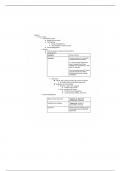
❖ Intro to Patho
➢ Framework for patho
■ Etiology and risk factor
■ Pathogenesis
● Clinical manifestations
● Clinical stages and clinical course
■ Clinical Management
➢ Etiology
■ Study of causes or response for phenomenon
■ Classifications**
Idiopathic Cause unknown
Iatrogenic Causes results from unintended or
unwanted medical treatment
I.e. chronic kidney disease then
goes to dialysis then pt lose
potassium to hypocalcemia = side
effect of treatment
I.e pt has autoimmune dis. Then pt
gets steroids then side effect
cushings syndrome bc change
metabolism
● Risk factors
◆ A factor when present increases the chance of disease
➢ Pt smoking will be more likely to get cancer
◆ Modifiable and nonmodifiable
➢ Nonmod = factor cannot change
■ Genetics, age, gender
➢ Mod = clinical key for nurses
■ Prevention and management
■ I.e diet, exercise, lifestyle, where live,
➢ Clinical Manifestations
Signs (anyone else but pt) *objective or observed*
manifestation of disease
Symptoms (pt complain) *subjunctive* feeling of
abnormality in the body
Syndrome Similar to S/S but etiology of signs
and symptoms has not yet been
determined
,➢ Stages and clinical Course
■ Periods
Latent Period**(incubation Time between exposure of tissues
period) to injouras agent & first
appearance of S/S
-also a period during
illness when S/S first
apperar
-S/S become mild, silent or
disappear
-known in textbook as
remission
Prodormal Period **time during which first S/S
appear indicating onset of disease
Subclinical Stage** Pt functions normally, disease
prossess are well established
-has hypertension but living best
life, pt not aware of health
■ Courses
Acute Clinical Course Short lived; S/S go very severe
very fast, like allergic reaction
Chronic Clinical Course May last more then 3 months to
years, sometimes following an
acute course
These two are normally used for chronic diseases
Exacterbation** A sudden increase in severity of
disease or S/S
-pt has ebola, fever goes
from 100 to 104 fast
Remission** Decrease in severity or S/S
■ Stages of recovery
Convalescent** Stage of recovery After a
disease, injury or surgical
procedure
Sequela Subsequent pathological condition
, resulting from an illness
-ebola then vomiting
becomes 7 times a day so
consequence pt gets
hypovolmic condition could
lead to shock, kidney
failure, or heart failure
➢ Concepts of Normality in Health and Disease
Sensitivity** Probility that a test will be (+)
when applied to a person with a
Pt has 85% sensitivity = particular condition **true (+)
probability the pt with disease will -pt has diabetes and test urine for
test positive diabetes is positive
Specificity** Probaility that a test will be
negative when applied to a person
Pt has 50% specificity = w/o particular condition **true (-)
probability the pt without disease -pt w/no diabetes then urine will
will test negative not likley have high levels
Test Results (+) Test Results (-)
Patient w/disease True positive False negative
Condeq= undertreatment
Patient w/o disease False positive True negative
Condeq= over treatment
❖ Patterns of disease distribution
➢ Types**
Endemic Native to a local region
Epidemic Spread to many people at the same
time (large scale)
Pandemic Spread to large geographic areas
➢ Aggregate factors of ecological variables
■ Age
■ Ethnic group
■ Gender
❖ Intro to Patho
➢ Framework for patho
■ Etiology and risk factor
■ Pathogenesis
● Clinical manifestations
● Clinical stages and clinical course
■ Clinical Management
➢ Etiology
■ Study of causes or response for phenomenon
■ Classifications**
Idiopathic Cause unknown
Iatrogenic Causes results from unintended or
unwanted medical treatment
I.e. chronic kidney disease then
goes to dialysis then pt lose
potassium to hypocalcemia = side
effect of treatment
I.e pt has autoimmune dis. Then pt
gets steroids then side effect
cushings syndrome bc change
metabolism
● Risk factors
◆ A factor when present increases the chance of disease
➢ Pt smoking will be more likely to get cancer
◆ Modifiable and nonmodifiable
➢ Nonmod = factor cannot change
■ Genetics, age, gender
➢ Mod = clinical key for nurses
■ Prevention and management
■ I.e diet, exercise, lifestyle, where live,
➢ Clinical Manifestations
Signs (anyone else but pt) *objective or observed*
manifestation of disease
Symptoms (pt complain) *subjunctive* feeling of
abnormality in the body
Syndrome Similar to S/S but etiology of signs
and symptoms has not yet been
determined
,➢ Stages and clinical Course
■ Periods
Latent Period**(incubation Time between exposure of tissues
period) to injouras agent & first
appearance of S/S
-also a period during
illness when S/S first
apperar
-S/S become mild, silent or
disappear
-known in textbook as
remission
Prodormal Period **time during which first S/S
appear indicating onset of disease
Subclinical Stage** Pt functions normally, disease
prossess are well established
-has hypertension but living best
life, pt not aware of health
■ Courses
Acute Clinical Course Short lived; S/S go very severe
very fast, like allergic reaction
Chronic Clinical Course May last more then 3 months to
years, sometimes following an
acute course
These two are normally used for chronic diseases
Exacterbation** A sudden increase in severity of
disease or S/S
-pt has ebola, fever goes
from 100 to 104 fast
Remission** Decrease in severity or S/S
■ Stages of recovery
Convalescent** Stage of recovery After a
disease, injury or surgical
procedure
Sequela Subsequent pathological condition
, resulting from an illness
-ebola then vomiting
becomes 7 times a day so
consequence pt gets
hypovolmic condition could
lead to shock, kidney
failure, or heart failure
➢ Concepts of Normality in Health and Disease
Sensitivity** Probility that a test will be (+)
when applied to a person with a
Pt has 85% sensitivity = particular condition **true (+)
probability the pt with disease will -pt has diabetes and test urine for
test positive diabetes is positive
Specificity** Probaility that a test will be
negative when applied to a person
Pt has 50% specificity = w/o particular condition **true (-)
probability the pt without disease -pt w/no diabetes then urine will
will test negative not likley have high levels
Test Results (+) Test Results (-)
Patient w/disease True positive False negative
Condeq= undertreatment
Patient w/o disease False positive True negative
Condeq= over treatment
❖ Patterns of disease distribution
➢ Types**
Endemic Native to a local region
Epidemic Spread to many people at the same
time (large scale)
Pandemic Spread to large geographic areas
➢ Aggregate factors of ecological variables
■ Age
■ Ethnic group
■ Gender