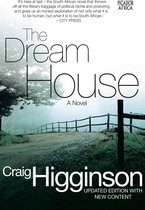
The Dream House Essay
Kate Jones
Topic 16
“This is the problem of history. We cannot know that which we were not there to see and
hear and experience for ourselves. We must rely on the words of others.” – Yaa Gyasi
Explore how the novel unpacks the idea that the problem of history is that even relying on
the words of others provides an unsatisfactory account of the truth.
The Dream House reveals that there is no single truth; rather, it is a subjective and personal
experience. Each character creates a truth that consists of his own experiences as well as
the words of others. This is shown through Patricia’s, Looksmart’s and Beauty’s conflicting
accounts of Grace’s death, Looksmart’s first time fishing and the naming of Looksmart. The
novel demonstrate that relying too heavily on others’ accounts of the past may result in a
lack of satisfaction, but that it is important for each character to create a version of the truth
that combines both the objective truth with their own experiences, in order to facilitate
reconciliation and growth.
Neither Patricia, Looksmart or Beauty were present for the entirety of Grace’s death, and
therefore none of the characters can know the full truth of the event, often “rely[ing] on the
words of others” to build an understanding of how the event unfolded. However, through
their discussions of that day, each character is able to leave with a version of the truth that
best allows them to move forwards and look towards the future. Initially, Patricia believes
Richard’s assurances that Grace was “taunting the dog”, recalling “her irritation with the girl”
and viewing the event as a “sorry affair” that is not worth re-evaluating. Looksmart’s visit
forces her to acknowledge that there is more to the story, and that “maybe [she] got it wrong”.
He tells her that he “saw it as murder” and “can’t forgive” Patricia for viewing Grace as
“slightly less than human”. However, Looksmart’s recollections are not the absolute truth:
his story is only about “what [he] saw”. Beauty’s subsequent discussions with Patricia
confirm that Looksmart’s account “is not the full story” as she reveals that Richard was
paying Grace for sex, “each and every time”, and that Grace was pregnant with Richard’s
child. The conflicting testimonies demonstrate that the “problem of history” is that it
comprises of multiple narratives and not one absolute truth.
Kate Jones
Topic 16
“This is the problem of history. We cannot know that which we were not there to see and
hear and experience for ourselves. We must rely on the words of others.” – Yaa Gyasi
Explore how the novel unpacks the idea that the problem of history is that even relying on
the words of others provides an unsatisfactory account of the truth.
The Dream House reveals that there is no single truth; rather, it is a subjective and personal
experience. Each character creates a truth that consists of his own experiences as well as
the words of others. This is shown through Patricia’s, Looksmart’s and Beauty’s conflicting
accounts of Grace’s death, Looksmart’s first time fishing and the naming of Looksmart. The
novel demonstrate that relying too heavily on others’ accounts of the past may result in a
lack of satisfaction, but that it is important for each character to create a version of the truth
that combines both the objective truth with their own experiences, in order to facilitate
reconciliation and growth.
Neither Patricia, Looksmart or Beauty were present for the entirety of Grace’s death, and
therefore none of the characters can know the full truth of the event, often “rely[ing] on the
words of others” to build an understanding of how the event unfolded. However, through
their discussions of that day, each character is able to leave with a version of the truth that
best allows them to move forwards and look towards the future. Initially, Patricia believes
Richard’s assurances that Grace was “taunting the dog”, recalling “her irritation with the girl”
and viewing the event as a “sorry affair” that is not worth re-evaluating. Looksmart’s visit
forces her to acknowledge that there is more to the story, and that “maybe [she] got it wrong”.
He tells her that he “saw it as murder” and “can’t forgive” Patricia for viewing Grace as
“slightly less than human”. However, Looksmart’s recollections are not the absolute truth:
his story is only about “what [he] saw”. Beauty’s subsequent discussions with Patricia
confirm that Looksmart’s account “is not the full story” as she reveals that Richard was
paying Grace for sex, “each and every time”, and that Grace was pregnant with Richard’s
child. The conflicting testimonies demonstrate that the “problem of history” is that it
comprises of multiple narratives and not one absolute truth.