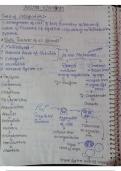
Comprehensive "Neet Notes On Animal Kingdom "
The Animal Kingdom (Kingdom Animalia) includes multicellular, eukaryotic organisms that are heterotrophic and mostly motile. It is divided into two broad categories: invertebrates (without a backbone) and vertebrates (with a backbone). Invertebrates include phyla like Porifera (sponges), Cnidaria (jellyfish), Platyhelminthes (flatworms), Nematoda (roundworms), Annelida (segmented worms), Arthropoda (insects, spiders), Mollusca (snails, octopuses), and Echinodermata (starfish). Vertebrates fall under Phylum Chordata, including classes such as Pisces (fish), Amphibia, Reptilia, Aves (birds), and Mammalia. Animals have diverse body structures, modes of reproduction, and adaptations for survival, forming a major portion of Earth’s biodiversity. The Animal Kingdom (Kingdom Animalia) includes multicellular, eukaryotic organisms that are heterotrophic and mostly motile. It is divided into two broad categories: invertebrates (without a backbone) and vertebrates (with a backbone). Invertebrates include phyla like Porifera (sponges), Cnidaria (jellyfish), Platyhelminthes (flatworms), Nematoda (roundworms), Annelida (segmented worms), Arthropoda (insects, spiders), Mollusca (snails, octopuses), and Echinodermata (starfish). Vertebrates fall under Phylum Chordata, including classes such as Pisces (fish), Amphibia, Reptilia, Aves (birds), and Mammalia. Animals have diverse body structures, modes of reproduction, and adaptations for survival, forming a major portion of Earth’s biodiversity.
Written for
- Course
- India
Document information
- Uploaded on
- September 26, 2024
- Number of pages
- 20
- Written in
- 2023/2024
- Type
- Class notes
- Professor(s)
- Manish
- Contains
- 11th to 12th
Subjects
-
animal kingdom
-
classification
-
pattern of complexities