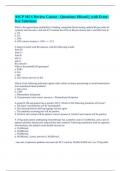
ASCP MLS Review Course - Questions Missed || with Error-
free Solutions.
What is the approximate probability of finding compatible blood among random Rh-pos units for
a patient who has anti-c and anti-K? Consider that 20% of Rh-pos donors lack c and 90% lack K.
a. 1%
b. 2%
c. 18%
d. 45% correct answers c. 18% --> .2*.9
A donor is tested with Rh antisera, with the following results:
Anti-D+
Anti-C+
Anti-E-
anti-c+
anti-e+
Rh control 0
What is the probable Rh genotype?
a. R1R1
b. R1r
c. R0r
d. R2r correct answers d. R2r
Which of the following infectious agents relies solely on donor questioning to avoid transmission
from transfused blood products?
a. Zika virus
b. CMV
c. Plasmodium falciparum
d. Trypanosoma cruzi correct answers c. Plasmodium falciparum
A group B, Rh-neg patient has a positive DAT. Which of the following situations will occur?
a. All major crossmatches will be incompatible
b. The forward/reverse ABO groupings will not agree
c. The antibody screening test will be positive
d. Weak D and control will be positive correct answers d. Weak D and control will be positive
A 70-kg male patient undergoing chemotherapy has a platelet count of 10,000/mcL and a unit of
aphresis platelets (leukocytes reduced) has been ordered. Following transfusion with no expected
refractoriness, the platelet count should increase to:
a. 15,000/mcL
b. 20,000/mcL
c. 30,000/mcL
d. 40,000/mcL correct answers d. 40,000 mcL
- one unit of apheresis platelets increases the PLT count by 30,000-50,000 mcL in a 70-kg adult
, Twenty units of RBCs (leukoreduced) are tested for residual leukocyte counts as part of the
monthly QC plan. 1/20 units tested shows a leukocyte count of 5.6 x 10^6 while the remaining
19 units show leukocyte counts <5 x 10^6. What should be done?
a. Perform leukocyte counts on 20 additional units
b. Accept the QC results
c. Revalidate the manufacturing method
d. Retest the unit with the higher leukocyte count correct answers b. Accept the QC results
A patient has the following results:
anti-C +
anti-D +
anti-E +
anti-c +
anti-e +
What is the probable genotype?
a. R1R1
b. R1r'
c. R0r''
d. R1R2 correct answers c. R0r''
A 56-year-old diagnosed with cold agglutinin disease (CAD) has a 2+ positive DAT. When the
DAT is repeated using monospecific antiglobulin sera, which of the following is most likely to
be detected on red cells?
a. IgM
b. IgG
c. C3d
d. C4a correct answers c. C3d
Which of the following does NOT occur during pretransfusion testing?
a. Antibody screen to detect clinically signficant Abs
b. Weak D testing on all D-neg recipients
c. Recipient ABO forward/reverse typings
d. Comparison of serologic results to previous records correct answers b. Weak D testing on all
D-negative recipients
A patient is group O, Rh-neg with anti-D and anti-K in her serum. What percentage of the
general donor population of white race/ethnicity would be compatible with this patient?
a. 0.5
b. 2.0
c 3.0
d. 6.0 correct answers d. 6.0
free Solutions.
What is the approximate probability of finding compatible blood among random Rh-pos units for
a patient who has anti-c and anti-K? Consider that 20% of Rh-pos donors lack c and 90% lack K.
a. 1%
b. 2%
c. 18%
d. 45% correct answers c. 18% --> .2*.9
A donor is tested with Rh antisera, with the following results:
Anti-D+
Anti-C+
Anti-E-
anti-c+
anti-e+
Rh control 0
What is the probable Rh genotype?
a. R1R1
b. R1r
c. R0r
d. R2r correct answers d. R2r
Which of the following infectious agents relies solely on donor questioning to avoid transmission
from transfused blood products?
a. Zika virus
b. CMV
c. Plasmodium falciparum
d. Trypanosoma cruzi correct answers c. Plasmodium falciparum
A group B, Rh-neg patient has a positive DAT. Which of the following situations will occur?
a. All major crossmatches will be incompatible
b. The forward/reverse ABO groupings will not agree
c. The antibody screening test will be positive
d. Weak D and control will be positive correct answers d. Weak D and control will be positive
A 70-kg male patient undergoing chemotherapy has a platelet count of 10,000/mcL and a unit of
aphresis platelets (leukocytes reduced) has been ordered. Following transfusion with no expected
refractoriness, the platelet count should increase to:
a. 15,000/mcL
b. 20,000/mcL
c. 30,000/mcL
d. 40,000/mcL correct answers d. 40,000 mcL
- one unit of apheresis platelets increases the PLT count by 30,000-50,000 mcL in a 70-kg adult
, Twenty units of RBCs (leukoreduced) are tested for residual leukocyte counts as part of the
monthly QC plan. 1/20 units tested shows a leukocyte count of 5.6 x 10^6 while the remaining
19 units show leukocyte counts <5 x 10^6. What should be done?
a. Perform leukocyte counts on 20 additional units
b. Accept the QC results
c. Revalidate the manufacturing method
d. Retest the unit with the higher leukocyte count correct answers b. Accept the QC results
A patient has the following results:
anti-C +
anti-D +
anti-E +
anti-c +
anti-e +
What is the probable genotype?
a. R1R1
b. R1r'
c. R0r''
d. R1R2 correct answers c. R0r''
A 56-year-old diagnosed with cold agglutinin disease (CAD) has a 2+ positive DAT. When the
DAT is repeated using monospecific antiglobulin sera, which of the following is most likely to
be detected on red cells?
a. IgM
b. IgG
c. C3d
d. C4a correct answers c. C3d
Which of the following does NOT occur during pretransfusion testing?
a. Antibody screen to detect clinically signficant Abs
b. Weak D testing on all D-neg recipients
c. Recipient ABO forward/reverse typings
d. Comparison of serologic results to previous records correct answers b. Weak D testing on all
D-negative recipients
A patient is group O, Rh-neg with anti-D and anti-K in her serum. What percentage of the
general donor population of white race/ethnicity would be compatible with this patient?
a. 0.5
b. 2.0
c 3.0
d. 6.0 correct answers d. 6.0