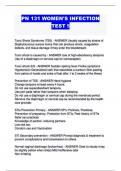
Toxic Shock Syndrome (TSS) - ANSWER Usually caused by strains of
Staphylococcus aureus toxins that can produce shock, coagulation
defects, and tissue damage if they enter the bloodstream
Toxic shock is caused by - ANSWER Use of high-absorbency tampons
Use of a diaphragm or cervical cap for contraception
Toxic shock S/S - ANSWER Sudden spiking fever Flulike symptoms
Hypotension Generalized rash that resembles a sunburn Skin peeling
from palms of hands and soles of feet after 1 to 2 weeks of the illness
Prevention of TSS - ANSWER Hand hygiene
Change tampons at least every 4 hours.
Do not use superabsorbent tampons.
Use peri pads rather than tampons when sleeping.
Do not use a diaphragm or cervical cap during the menstrual period.
Remove the diaphragm or cervical cap as recommended by the health
care provider.
STIs Prevention Primary - ANSWER 5P's: Partners, Practices,
Prevention of pregnancy, Protection from STIs, Past history of STIs
Safer sex practices
Knowledge of partner, reducing partners
Low-risk sex
Condom use and Vaccination
STI Secondary prevention - ANSWER Prompt diagnosis & treatment to
prevent complications and transmission to others
Normal vaginal discharge (leukorrhea) - ANSWER Clear to cloudy (may
be slightly yellow when dries) Mild inoffensive odor
Non-irritating
Staphylococcus aureus toxins that can produce shock, coagulation
defects, and tissue damage if they enter the bloodstream
Toxic shock is caused by - ANSWER Use of high-absorbency tampons
Use of a diaphragm or cervical cap for contraception
Toxic shock S/S - ANSWER Sudden spiking fever Flulike symptoms
Hypotension Generalized rash that resembles a sunburn Skin peeling
from palms of hands and soles of feet after 1 to 2 weeks of the illness
Prevention of TSS - ANSWER Hand hygiene
Change tampons at least every 4 hours.
Do not use superabsorbent tampons.
Use peri pads rather than tampons when sleeping.
Do not use a diaphragm or cervical cap during the menstrual period.
Remove the diaphragm or cervical cap as recommended by the health
care provider.
STIs Prevention Primary - ANSWER 5P's: Partners, Practices,
Prevention of pregnancy, Protection from STIs, Past history of STIs
Safer sex practices
Knowledge of partner, reducing partners
Low-risk sex
Condom use and Vaccination
STI Secondary prevention - ANSWER Prompt diagnosis & treatment to
prevent complications and transmission to others
Normal vaginal discharge (leukorrhea) - ANSWER Clear to cloudy (may
be slightly yellow when dries) Mild inoffensive odor
Non-irritating