Remoteness
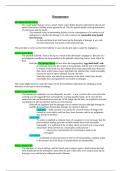
The Wagon Mound (No.1) –
D’s vessel leaked furnace oil at a wharf. Some cotton debris became embroiled in the oil and
sparks from some wielding works ignited the oil. The fire spread rapidly causing destruction
of some boats and the wharf.
The essential factor in determining liability for the consequences of a tortious act of
negligence is whether the damage is of such a kind as the reasonable man should
have foreseen.
As duty and breach are both based on the foresight of damage, it was only
fair that remoteness was based on the same principle.
This principle is rarely used to limit liability in cases of physical injury caused by negligence.
Smith v Leech Brain –
The plaintiff suffered a burn to his lip as a result of the defendant’s negligence. Because of a
pre-malignant condition, the burn resulted in the plaintiff contracting cancer, from which he
died.
Held that The Wagon Mound did not affect the longstanding “egg-shell skull” rule.
A tortfeasor must take his victim as he found him, and the test of D’s liability
in respect of the death was not whether they could reasonably have foreseen
that a burn would cause cancer and death, but whether they could reasonably
foresee the type of injury suffered, namely, the burn.
Since the cancer was merely an extension of the burn, which they should
reasonably have anticipated, Ds were liable in damages.
The courts might choose to limit the impact of the foreseeability requirement by adopting a broad
definition of the type or kind of damage.
Hughes v Lord Advocate –
The entrance to a manhole was not adequately secured – it was covered with a tent and in the
evening was left unguarded but surrounded by warning paraffin lamps. An 8-year-old boy
entered the tent and knocked or lowered one of the lamps into the hole. An explosion occurred
causing him to fall into the hole and be severely burned.
Rejected the argument that the damage was too remote because although damage by
paraffin burn had been foreseeable damage, by explosion had not.
Lord Reid – “[t]his accident was caused by a known source of danger, but
caused in a way which could not have been foreseen, and in my judgement
that affords no defence.”
Lord Guest –
“In order to establish a coherent chain of causation it is not necessary that the
precise details leading up to the accident should have been reasonably
foreseeable: it is sufficient if the accident which occurred is of a type which
should have been foreseen by a reasonably careful person.”
“…the precise concatenation of circumstances need not be
envisaged.”
Lord Pearce –
“…to demand too great precision in the test of foreseeability would be unfair
to the pursuer since the facets of misadventure are innumerable.”
Jolley v Sutton LBC –
The claimant, a 14-year-old boy, and his friend were trying to repair a derelict boat that had
been abandoned on the defendant’s land when the jack which they were using to prop up the
boat gave way and the boat collapsed on the claimant.
The Wagon Mound (No.1) –
D’s vessel leaked furnace oil at a wharf. Some cotton debris became embroiled in the oil and
sparks from some wielding works ignited the oil. The fire spread rapidly causing destruction
of some boats and the wharf.
The essential factor in determining liability for the consequences of a tortious act of
negligence is whether the damage is of such a kind as the reasonable man should
have foreseen.
As duty and breach are both based on the foresight of damage, it was only
fair that remoteness was based on the same principle.
This principle is rarely used to limit liability in cases of physical injury caused by negligence.
Smith v Leech Brain –
The plaintiff suffered a burn to his lip as a result of the defendant’s negligence. Because of a
pre-malignant condition, the burn resulted in the plaintiff contracting cancer, from which he
died.
Held that The Wagon Mound did not affect the longstanding “egg-shell skull” rule.
A tortfeasor must take his victim as he found him, and the test of D’s liability
in respect of the death was not whether they could reasonably have foreseen
that a burn would cause cancer and death, but whether they could reasonably
foresee the type of injury suffered, namely, the burn.
Since the cancer was merely an extension of the burn, which they should
reasonably have anticipated, Ds were liable in damages.
The courts might choose to limit the impact of the foreseeability requirement by adopting a broad
definition of the type or kind of damage.
Hughes v Lord Advocate –
The entrance to a manhole was not adequately secured – it was covered with a tent and in the
evening was left unguarded but surrounded by warning paraffin lamps. An 8-year-old boy
entered the tent and knocked or lowered one of the lamps into the hole. An explosion occurred
causing him to fall into the hole and be severely burned.
Rejected the argument that the damage was too remote because although damage by
paraffin burn had been foreseeable damage, by explosion had not.
Lord Reid – “[t]his accident was caused by a known source of danger, but
caused in a way which could not have been foreseen, and in my judgement
that affords no defence.”
Lord Guest –
“In order to establish a coherent chain of causation it is not necessary that the
precise details leading up to the accident should have been reasonably
foreseeable: it is sufficient if the accident which occurred is of a type which
should have been foreseen by a reasonably careful person.”
“…the precise concatenation of circumstances need not be
envisaged.”
Lord Pearce –
“…to demand too great precision in the test of foreseeability would be unfair
to the pursuer since the facets of misadventure are innumerable.”
Jolley v Sutton LBC –
The claimant, a 14-year-old boy, and his friend were trying to repair a derelict boat that had
been abandoned on the defendant’s land when the jack which they were using to prop up the
boat gave way and the boat collapsed on the claimant.