biology leap 2025
Study online at https://quizlet.com/_f5zwm2
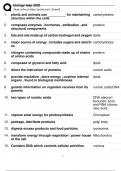
1. plants and animals use __________ for maintaining carbohydrates
structure within the cells
2. composes enzymes , hormones , antibodies , and proteins
structural components
3. fats and oils made up of carbon hydrogen and oxygen lipids
4. major source of energy , includes sugars and starch- carbohydrates
es
5. nitrogen containing compounds made up of chains proteins
of amino acids
6. composed of glycerol and fatty acid lipids
7. direct the instruction of proteins nucleic acids
8. provide insulation , store energy , cushion internal lipids
organs , found in biological membranes
9. genetic information an organism receives from its nucleic acids/DNA
parents
10. two types of nucleic acids DNA (deoxyri-
bonucleic acid)
and RNA (ribonu-
cleic acid)
11. capture solar energy for photosynthesis Chloroplast
12. package, distribute products golgi body
13. digests excess products and food particles lysosomes
14. transform energy through respiration / power house Mitochondria
of the cell
15. Contains DNA which controls cellular activities nucleus
, biology leap 2025
Study online at https://quizlet.com/_f5zwm2
16. produce proteins ribosomes
17. store substances vacuole
18. bilayer that protects and encloses the cell;controls cell (plasma)
transport;maintains homeostasis membrane
19. Rigid second layer that protects and encloses the cell cell wall
20. Cell division that produces reproductive cells in sex- meiosis
ually reproducing organisms
21. fluid like substance that contains various membrane cytoplasm
bound structures (organelles) that perform various
functions
22. site of chemical reactions Endoplasmic
Reticulum (ER)
23. Two types of endoplasmic reticulum rough (contains
ribosomes) and
smooth (lipid pro-
duction)
24. Provides internal structure cytoskeleton
25. Two types of cytoskeleton microfilaments (
fibers ) and micro-
tubules ( cylinders
)
26. organism that exists as a singular/independent cell unicellular
27. organisms that exists as specialized groups of cells multicellular
28. has nuclear material in the center of the cell, but is prokaryote
not enclosed by a nuclear membrane; no membrane
bound organelles; found in bacteria and blue green
bacteria
Study online at https://quizlet.com/_f5zwm2
1. plants and animals use __________ for maintaining carbohydrates
structure within the cells
2. composes enzymes , hormones , antibodies , and proteins
structural components
3. fats and oils made up of carbon hydrogen and oxygen lipids
4. major source of energy , includes sugars and starch- carbohydrates
es
5. nitrogen containing compounds made up of chains proteins
of amino acids
6. composed of glycerol and fatty acid lipids
7. direct the instruction of proteins nucleic acids
8. provide insulation , store energy , cushion internal lipids
organs , found in biological membranes
9. genetic information an organism receives from its nucleic acids/DNA
parents
10. two types of nucleic acids DNA (deoxyri-
bonucleic acid)
and RNA (ribonu-
cleic acid)
11. capture solar energy for photosynthesis Chloroplast
12. package, distribute products golgi body
13. digests excess products and food particles lysosomes
14. transform energy through respiration / power house Mitochondria
of the cell
15. Contains DNA which controls cellular activities nucleus
, biology leap 2025
Study online at https://quizlet.com/_f5zwm2
16. produce proteins ribosomes
17. store substances vacuole
18. bilayer that protects and encloses the cell;controls cell (plasma)
transport;maintains homeostasis membrane
19. Rigid second layer that protects and encloses the cell cell wall
20. Cell division that produces reproductive cells in sex- meiosis
ually reproducing organisms
21. fluid like substance that contains various membrane cytoplasm
bound structures (organelles) that perform various
functions
22. site of chemical reactions Endoplasmic
Reticulum (ER)
23. Two types of endoplasmic reticulum rough (contains
ribosomes) and
smooth (lipid pro-
duction)
24. Provides internal structure cytoskeleton
25. Two types of cytoskeleton microfilaments (
fibers ) and micro-
tubules ( cylinders
)
26. organism that exists as a singular/independent cell unicellular
27. organisms that exists as specialized groups of cells multicellular
28. has nuclear material in the center of the cell, but is prokaryote
not enclosed by a nuclear membrane; no membrane
bound organelles; found in bacteria and blue green
bacteria