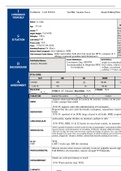
1.) Barbara had 3 lab test results that would be considered abnormal or out of normal
range including her BMI, Vitamin D, and 24 hour urine calcium. Barbara is 5 feet tall and
weighs 88 lbs and her BMI comes to 17.2 which is out of range for the expected BMI of
18.5-24.9. Her Vitamin D is also abnormally low measuring at 27.5 mg/ml compared to
the normal range of 30-74 mg/ml. Barbara’s BMI and Vitamin D were low, however she
did have one abnormally high result which was for the 24 hour calcium. The normal
range for 24 hour calcium mg/ml is 100-300 and Barbara's labs resulted in a reading od
382 mg/ml.
2.) I would diagnose Barbars with Osteoporosis or Osteopenia based on her reported
medical history and current lifestyle as well as her lab results from the tests run for this
examination. Osteoporosis is a disease that is associated with weak or brittle bones and
decreased bone density and mass. Osteopenia is very similar to osteoporosis however
it is less severe and is sometimes used as a pre-diagnosis to Osteoporosis.
3.) What leads me to believe that is a proper diagnosis for Barbara is that she meets
multiple of the risk factors associated with Osteoporosis and her blood work shows
additional indications of abnormalities that are connected to bone health and strength.
Barbara is 58 years old, has gone through menopause, does not consume high calcium
foods, and smokes at least semi regularly. These characteristics are all risk factors for
Osteoporosis. Being thin, being a woman, having low estrogen levels (as one might
postmenopausal), and being a smoker meet all four of the most common risk factors for
developing Osteoporosis. Low estrogen levels specifically impacts osteoblasts which
are the cells in bones that form the matrix and collagen fibers making bones thicker and
stronger much like how calcium intake is crucial to harden and strengthen bones as
well. However her blood work reveals even more information for what could be an
indication of Osteoporosis. Barbara’s Vitamin D was low and her 24 hour urine calcium
is high. This is significant because calcium needs a sufficient level of Vitamin D to be
absorbed and used by the body, so even if Baraba is consuming enough calcium her
body is not able to use it properly because it is unable to absorb it into its system. This
might also be because of her 24 hour urine calcium is so high, because it is traveling
right through her blood and out of her urine without being absorbed.
4.) As previously mentioned estrogen levels can heavily impact bone health, especially
in individuals who have gone through menopause, such as Barbara has. Menopause is
when a woman's body begins to reduce reproductive hormones and her menstruation
cycle comes to a complete end. Throughout menopause women experience a
decreased level of estrogen. According to the article “How does estrogen affect
osteoporosis” by Caitlin Geng and reviewed by Megan Soliman, MD, “the hormone
estrogen regulates bone metabolism” and goes on to explain how the production of
range including her BMI, Vitamin D, and 24 hour urine calcium. Barbara is 5 feet tall and
weighs 88 lbs and her BMI comes to 17.2 which is out of range for the expected BMI of
18.5-24.9. Her Vitamin D is also abnormally low measuring at 27.5 mg/ml compared to
the normal range of 30-74 mg/ml. Barbara’s BMI and Vitamin D were low, however she
did have one abnormally high result which was for the 24 hour calcium. The normal
range for 24 hour calcium mg/ml is 100-300 and Barbara's labs resulted in a reading od
382 mg/ml.
2.) I would diagnose Barbars with Osteoporosis or Osteopenia based on her reported
medical history and current lifestyle as well as her lab results from the tests run for this
examination. Osteoporosis is a disease that is associated with weak or brittle bones and
decreased bone density and mass. Osteopenia is very similar to osteoporosis however
it is less severe and is sometimes used as a pre-diagnosis to Osteoporosis.
3.) What leads me to believe that is a proper diagnosis for Barbara is that she meets
multiple of the risk factors associated with Osteoporosis and her blood work shows
additional indications of abnormalities that are connected to bone health and strength.
Barbara is 58 years old, has gone through menopause, does not consume high calcium
foods, and smokes at least semi regularly. These characteristics are all risk factors for
Osteoporosis. Being thin, being a woman, having low estrogen levels (as one might
postmenopausal), and being a smoker meet all four of the most common risk factors for
developing Osteoporosis. Low estrogen levels specifically impacts osteoblasts which
are the cells in bones that form the matrix and collagen fibers making bones thicker and
stronger much like how calcium intake is crucial to harden and strengthen bones as
well. However her blood work reveals even more information for what could be an
indication of Osteoporosis. Barbara’s Vitamin D was low and her 24 hour urine calcium
is high. This is significant because calcium needs a sufficient level of Vitamin D to be
absorbed and used by the body, so even if Baraba is consuming enough calcium her
body is not able to use it properly because it is unable to absorb it into its system. This
might also be because of her 24 hour urine calcium is so high, because it is traveling
right through her blood and out of her urine without being absorbed.
4.) As previously mentioned estrogen levels can heavily impact bone health, especially
in individuals who have gone through menopause, such as Barbara has. Menopause is
when a woman's body begins to reduce reproductive hormones and her menstruation
cycle comes to a complete end. Throughout menopause women experience a
decreased level of estrogen. According to the article “How does estrogen affect
osteoporosis” by Caitlin Geng and reviewed by Megan Soliman, MD, “the hormone
estrogen regulates bone metabolism” and goes on to explain how the production of