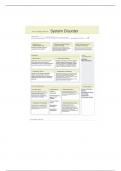
ACTIVE LEARNING TEMPLATE: System Disorder
STUDENT NAME _____________________________________
20
Cardiovascular Disorders Planning Care for a Child Who Has Heart Failure
DISORDER/DISEASE PROCESS __________________________________________________________ REVIEW MODULE CHAPTER ___________
Alterations in Pathophysiology Related Health Promotion and
Health (Diagnosis) to Client Problem Disease Prevention
Result of an acute of chronic In the heart muscle is unable to pump Maintain an exercise routine to remain physically active
effectively, resulting in inadequate cardiac and consult with provider before starting any exercise
cardiopulmonary problem. output, myocardial hypertrophy, and regimenconsume a diet low in sodium along with fluid
restrictions and consult with the profvider regarding diet
pulmonary/systemic congestion
ASSESSMENT SAFETY
CONSIDERATIONS
Risk Factors Expected Findings Fall Risk,
Older adults have an increased risk for Dyspnea, orthopnea, nocturnal dyspnea, Risk of infection
heart failure and can have worse fatigue, displaced apical pulse, frothy
manifestations due to increased systolic sputum, pulmonary congestion, jugular
blood presure and some medications vein distention, ascending dependent
edema, weight gain, polyuria, nocturia
Laboratory Tests Diagnostic Procedures
Human B-type natriuretic peptides Hemodynamic monitoring - mixed venous oxygen
(hBNP) elevated hBNP confirms a saturation is directly related to cardiac output. a
drop in SvO2 indicates worsening cardiac
diagnosis of heart failure in clients who functionUltrasound - used to measure the systolic
have dyspnea and rules out respiratory and diastolic functioning of the
illnesses heartTransesophageal echocardiagraphy. Gives a
detailed view of cardiac structures
PATIENT-CENTERED CARE Complications
Nursing Care Medications Client Education Acute pulmonary
Use techniques to promote effective breathing edema
Monitor daily weight and I/Os assess Diuretics -
forshortness of berath and dyspnea on furosemide
techniques understand prescribed medications and
how to administer them continue to take Cardiogenic shock
exertion administer oxygen as medications even if feeling better follow instructions
for reasons to contact the provider remain on Pericardial
prescribed monitor vital signs and
hemodynamic pressures position the Afterload reducing
low-sodium diet
tamponade
client to maximize ventiliation agents - ACE Pulmonary edema
inhibitors
Inotropic Agents -
Therapeutic Procedures digoxin Interprofessional Care
Ventricular assist device - a mechanical pump that
Beta blockers - Cardiology and pulmonary
assists a heart that is too weak to pump blood
servicesRespiratory services for
through the body used in clients who are awaiting carvedilol inhalers, breathing treatments, and
heart transplants or who have severe end-stage
heart failure.Heart transplant- a possible option for suctioningCardiac rehab for prolonged
end-stage heart failure
Vasodilators - weakness and assistance with
nitroglycerin increasing level of activityNutrition for
diet modification
ACTIVE LEARNING TEMPLATES
STUDENT NAME _____________________________________
20
Cardiovascular Disorders Planning Care for a Child Who Has Heart Failure
DISORDER/DISEASE PROCESS __________________________________________________________ REVIEW MODULE CHAPTER ___________
Alterations in Pathophysiology Related Health Promotion and
Health (Diagnosis) to Client Problem Disease Prevention
Result of an acute of chronic In the heart muscle is unable to pump Maintain an exercise routine to remain physically active
effectively, resulting in inadequate cardiac and consult with provider before starting any exercise
cardiopulmonary problem. output, myocardial hypertrophy, and regimenconsume a diet low in sodium along with fluid
restrictions and consult with the profvider regarding diet
pulmonary/systemic congestion
ASSESSMENT SAFETY
CONSIDERATIONS
Risk Factors Expected Findings Fall Risk,
Older adults have an increased risk for Dyspnea, orthopnea, nocturnal dyspnea, Risk of infection
heart failure and can have worse fatigue, displaced apical pulse, frothy
manifestations due to increased systolic sputum, pulmonary congestion, jugular
blood presure and some medications vein distention, ascending dependent
edema, weight gain, polyuria, nocturia
Laboratory Tests Diagnostic Procedures
Human B-type natriuretic peptides Hemodynamic monitoring - mixed venous oxygen
(hBNP) elevated hBNP confirms a saturation is directly related to cardiac output. a
drop in SvO2 indicates worsening cardiac
diagnosis of heart failure in clients who functionUltrasound - used to measure the systolic
have dyspnea and rules out respiratory and diastolic functioning of the
illnesses heartTransesophageal echocardiagraphy. Gives a
detailed view of cardiac structures
PATIENT-CENTERED CARE Complications
Nursing Care Medications Client Education Acute pulmonary
Use techniques to promote effective breathing edema
Monitor daily weight and I/Os assess Diuretics -
forshortness of berath and dyspnea on furosemide
techniques understand prescribed medications and
how to administer them continue to take Cardiogenic shock
exertion administer oxygen as medications even if feeling better follow instructions
for reasons to contact the provider remain on Pericardial
prescribed monitor vital signs and
hemodynamic pressures position the Afterload reducing
low-sodium diet
tamponade
client to maximize ventiliation agents - ACE Pulmonary edema
inhibitors
Inotropic Agents -
Therapeutic Procedures digoxin Interprofessional Care
Ventricular assist device - a mechanical pump that
Beta blockers - Cardiology and pulmonary
assists a heart that is too weak to pump blood
servicesRespiratory services for
through the body used in clients who are awaiting carvedilol inhalers, breathing treatments, and
heart transplants or who have severe end-stage
heart failure.Heart transplant- a possible option for suctioningCardiac rehab for prolonged
end-stage heart failure
Vasodilators - weakness and assistance with
nitroglycerin increasing level of activityNutrition for
diet modification
ACTIVE LEARNING TEMPLATES