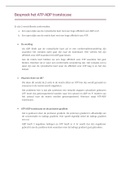
Q1 Did someone die?
YES: Homicide
Q2 Is there a MR of intention to kill or cause GBH
o YES: Murder/Voluntary Manslaughter
INTRO:
This essay will discuss whether A is liable for either murder or voluntary
manslaughter.
STEP 1 : Establish murder
Definition: Currently there is no statutory definition of murder. Sir Edward
Coke defined murder as the unlawful killing of another person under
Queen’s peace with the malicious aforethought. All actus reus and mens
rea elements must be proven to establish murder.
Actus Reus:
(1) unlawful
There must be no full defence available
o Self-defence – Beckford & Clegg
o Necessity – Re F & Re A
o Duress not a defence available for murder - Howe
o (insanity and intoxication leave to VM)
(2) killing
D must have caused or accelerated the death of V (Dyson). There
must be a factual or legal causal link between the act and the death.
o Factual: ‘but for’ (White)
- The death would not happen but for the act. If the death
is going to happen anywhere, it is not but for the act and
thus no connection.
o Legal:
- The act must be a substantial and operating cause of V’s
death (Smith)
- If there is a novus actus interveniens, it will break the
chain of causation.
- If the reaction of the 3rd party is a natural & foreseeable
reaction, the chain of causation will not be broke
(Pagett)
- The condition of V which render him particularly
vulnerable to the injury does not constitute a novus actus
interveniens (Blaue; Dear)
(3) person
A person in living refers to a person who is capable of independent
living (Vo v France-foetus; Poulton-baby not fully expelled) but not
dead (Bland – brain death) at the time of the act
(4) under Queen’s peace
YES: Homicide
Q2 Is there a MR of intention to kill or cause GBH
o YES: Murder/Voluntary Manslaughter
INTRO:
This essay will discuss whether A is liable for either murder or voluntary
manslaughter.
STEP 1 : Establish murder
Definition: Currently there is no statutory definition of murder. Sir Edward
Coke defined murder as the unlawful killing of another person under
Queen’s peace with the malicious aforethought. All actus reus and mens
rea elements must be proven to establish murder.
Actus Reus:
(1) unlawful
There must be no full defence available
o Self-defence – Beckford & Clegg
o Necessity – Re F & Re A
o Duress not a defence available for murder - Howe
o (insanity and intoxication leave to VM)
(2) killing
D must have caused or accelerated the death of V (Dyson). There
must be a factual or legal causal link between the act and the death.
o Factual: ‘but for’ (White)
- The death would not happen but for the act. If the death
is going to happen anywhere, it is not but for the act and
thus no connection.
o Legal:
- The act must be a substantial and operating cause of V’s
death (Smith)
- If there is a novus actus interveniens, it will break the
chain of causation.
- If the reaction of the 3rd party is a natural & foreseeable
reaction, the chain of causation will not be broke
(Pagett)
- The condition of V which render him particularly
vulnerable to the injury does not constitute a novus actus
interveniens (Blaue; Dear)
(3) person
A person in living refers to a person who is capable of independent
living (Vo v France-foetus; Poulton-baby not fully expelled) but not
dead (Bland – brain death) at the time of the act
(4) under Queen’s peace