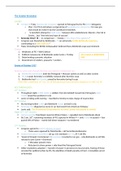
The October Revolution
CAUSES
14 Sept -> 9 day ‘Democratic Congress’ opened in Petrograd by the PG (1600 delegates)
o Plan = for PG to introduce a programme of revolutionary democracy for new gov
that would be voted in by the Constituent Assembly
o “a last-ditch attempt to build unity” between RW establishment, liberals + the LW in
Soviet…. but “few held any hope of success”
Kerensky tired + ill --- in comparison --- Trotsky = “the king of the agitators”
Congress was thwarted by Bolsheviks – “…an extremely hostile Bolshevik response…
culminating in a mass walk out”
Many (including the British Ambassador) believed that a Bolshevik coup was imminent
Causes:
1. Weakness of PG + WW1 defeat
2. Political manoeuvres of Bolsheviks under Lenin + Trotsky All created an EXPLOSIVE
3. Deteriorating economic situation MIX
4. Resentment of soldiers, peasants + workers
Events of October 1917
Reasons why Lenin though the time was right for a Bolshevik rev:
1. Bolsheviks dominated both the Petrograd + Moscow soviets as well as other soviets
2. PG = v weak; Kerensky’s credibility reduced after Kornilov coup
3. Bolsheviks had Red Guards, armed by Kerensky during K coup
After MRC established 16th Oct, 15/18 Petrograd garrisons declared allegiance to MRC not PG
KEY CHRONOLOGY:
24th October:
Throughout night, 5,000 sailors + soldiers from Krondstadt moved into Petrograd + Red
Guard seized key positions in city
Lenin in hiding until evening – travelled to Smolny to take charge of insurrection
25th October
By morning further 3,000 pro-Bolshevik troops arrived in city
Kerensky fled disguised as nurse in car borrowed from American Embassy
Lenin said: ‘The Provisional Government is no more, power has passed to soviets’
Night 25th/ 26th October
Aurora warship fired blank round at Winter Palace -> signalled start of Bolshevik attack
By 2 am, 26th, remaining members of PG captured in Winter P -> only 6 died in assault -> few
guards left at Palace – mainly laid down weapons + surrendered
27th October:
Congress agreed to Lenin’s Decree on Land
o These were opposed by Mensheviks + LW Social Revolutionaries
Central Executive Committee set up: 101 members 62 = B, 29 = LW SRs
‘Soviet of People’s Commissars’ (Sovnarkom) created to run gov – only Bolsheviks as LW SRs
refused to join (Lenin = chairman)
o 7 SRs latter joined in Nov
o Reluctant to share power + side-lined the Petrograd Soviet
Other resolutions adopted -> transfer of power in provinces to local soviets, freeing of those
arrested for political action by PG, the abolition of death penalty at front + immediate arrest
of Kerensky
, WEAKNESSES OF THE PROVISIONAL GOVERNMENT STRENGTHS OF THE BOLSHEVIKS
Political Position Political manoeuvres
Essentially liberal – members had supported Tactful retreat and compromise
constitutional monarchy, meant there were already Lenin would threaten resignation + appeals to the
unpopular with many rank and file in attempt to persuade members of
Members – all old industrialists + landowning the Bolsheviks to support an immediate revolution
class, would never have support of working-class Use of slogan e.g. ‘peace, bread, land’
revolutionaries who had fought for abdication of
Tsar
Temporary -> not an established government, just
looking to set up constituent assembly -> never
solved big problems
Order No. 1 (passed by Soviets) meant they had
very little order an urgent policies couldn’t be
passed
Policies Policies
Members were generally more revolutionary Wanted to stop the war
Didn’t solve 2 major problems –> land hunger and Wouldn’t support unpopular Provisional
the war Government
Allowed Bolsheviks to seize initiative by insisting Would transfer all power to popular soviets
only Constituent Assembly could make important Would re-allocate land to peasants by local
decisions -> tied hands for too long soviet
Released all radicals (Bolsheviks, SRs, Mensheviks) Sort hunger problem -> good slogans
Give proletariat the power
Kerensky’s mistakes Lenin and Trotsky as leaders
He delayed elections of Constituent Assembly Lenin = skilful orator, had strong skills of
Arrogant -> lived in Alexander III’s rooms in persuasion
Winter Palace + had red flag raised up and down Strong – wouldn’t give in
as he went in + out of palace Gave people what they wanted
Reputation among enemies as a Napoleon figure
Inflexible -> insisted on continuing war Trotsky = more rational, wanted to wait until
Kerensky offensive -> lost faith of officers + Congress of Soviets to try and get support from
soldiers all socialist parties before revolution
Appointed Kornilov as Commander-in-chief -> v Described as ‘king of the agitators’ – spread that
right wing general who wanted to try and seize coup was imminent
power Chair of Petrograd Soviet – good leader, main
July days – didn’t take harsh enough measures organiser of revolution
against Bolsheviks ‘the Bolshevik putsch could have been prevented by a
pair of bullets’ (Kotkin)
WW1 defeat Pressure from workers and peasants
7m Russians killed, wounded or captured by end Dealt with them by promising policies that
of 1916 -> did not end war soon enough because would benefit them e.g. re-allocating land and
they were too reliant on French loans, lost a lot getting rid of Prov Gov
of support
Kerensky offensive lost a lot of morale + caused
a lot of soldier to desert
The Extent of the Oct/Nov Revolution
CAUSES
14 Sept -> 9 day ‘Democratic Congress’ opened in Petrograd by the PG (1600 delegates)
o Plan = for PG to introduce a programme of revolutionary democracy for new gov
that would be voted in by the Constituent Assembly
o “a last-ditch attempt to build unity” between RW establishment, liberals + the LW in
Soviet…. but “few held any hope of success”
Kerensky tired + ill --- in comparison --- Trotsky = “the king of the agitators”
Congress was thwarted by Bolsheviks – “…an extremely hostile Bolshevik response…
culminating in a mass walk out”
Many (including the British Ambassador) believed that a Bolshevik coup was imminent
Causes:
1. Weakness of PG + WW1 defeat
2. Political manoeuvres of Bolsheviks under Lenin + Trotsky All created an EXPLOSIVE
3. Deteriorating economic situation MIX
4. Resentment of soldiers, peasants + workers
Events of October 1917
Reasons why Lenin though the time was right for a Bolshevik rev:
1. Bolsheviks dominated both the Petrograd + Moscow soviets as well as other soviets
2. PG = v weak; Kerensky’s credibility reduced after Kornilov coup
3. Bolsheviks had Red Guards, armed by Kerensky during K coup
After MRC established 16th Oct, 15/18 Petrograd garrisons declared allegiance to MRC not PG
KEY CHRONOLOGY:
24th October:
Throughout night, 5,000 sailors + soldiers from Krondstadt moved into Petrograd + Red
Guard seized key positions in city
Lenin in hiding until evening – travelled to Smolny to take charge of insurrection
25th October
By morning further 3,000 pro-Bolshevik troops arrived in city
Kerensky fled disguised as nurse in car borrowed from American Embassy
Lenin said: ‘The Provisional Government is no more, power has passed to soviets’
Night 25th/ 26th October
Aurora warship fired blank round at Winter Palace -> signalled start of Bolshevik attack
By 2 am, 26th, remaining members of PG captured in Winter P -> only 6 died in assault -> few
guards left at Palace – mainly laid down weapons + surrendered
27th October:
Congress agreed to Lenin’s Decree on Land
o These were opposed by Mensheviks + LW Social Revolutionaries
Central Executive Committee set up: 101 members 62 = B, 29 = LW SRs
‘Soviet of People’s Commissars’ (Sovnarkom) created to run gov – only Bolsheviks as LW SRs
refused to join (Lenin = chairman)
o 7 SRs latter joined in Nov
o Reluctant to share power + side-lined the Petrograd Soviet
Other resolutions adopted -> transfer of power in provinces to local soviets, freeing of those
arrested for political action by PG, the abolition of death penalty at front + immediate arrest
of Kerensky
, WEAKNESSES OF THE PROVISIONAL GOVERNMENT STRENGTHS OF THE BOLSHEVIKS
Political Position Political manoeuvres
Essentially liberal – members had supported Tactful retreat and compromise
constitutional monarchy, meant there were already Lenin would threaten resignation + appeals to the
unpopular with many rank and file in attempt to persuade members of
Members – all old industrialists + landowning the Bolsheviks to support an immediate revolution
class, would never have support of working-class Use of slogan e.g. ‘peace, bread, land’
revolutionaries who had fought for abdication of
Tsar
Temporary -> not an established government, just
looking to set up constituent assembly -> never
solved big problems
Order No. 1 (passed by Soviets) meant they had
very little order an urgent policies couldn’t be
passed
Policies Policies
Members were generally more revolutionary Wanted to stop the war
Didn’t solve 2 major problems –> land hunger and Wouldn’t support unpopular Provisional
the war Government
Allowed Bolsheviks to seize initiative by insisting Would transfer all power to popular soviets
only Constituent Assembly could make important Would re-allocate land to peasants by local
decisions -> tied hands for too long soviet
Released all radicals (Bolsheviks, SRs, Mensheviks) Sort hunger problem -> good slogans
Give proletariat the power
Kerensky’s mistakes Lenin and Trotsky as leaders
He delayed elections of Constituent Assembly Lenin = skilful orator, had strong skills of
Arrogant -> lived in Alexander III’s rooms in persuasion
Winter Palace + had red flag raised up and down Strong – wouldn’t give in
as he went in + out of palace Gave people what they wanted
Reputation among enemies as a Napoleon figure
Inflexible -> insisted on continuing war Trotsky = more rational, wanted to wait until
Kerensky offensive -> lost faith of officers + Congress of Soviets to try and get support from
soldiers all socialist parties before revolution
Appointed Kornilov as Commander-in-chief -> v Described as ‘king of the agitators’ – spread that
right wing general who wanted to try and seize coup was imminent
power Chair of Petrograd Soviet – good leader, main
July days – didn’t take harsh enough measures organiser of revolution
against Bolsheviks ‘the Bolshevik putsch could have been prevented by a
pair of bullets’ (Kotkin)
WW1 defeat Pressure from workers and peasants
7m Russians killed, wounded or captured by end Dealt with them by promising policies that
of 1916 -> did not end war soon enough because would benefit them e.g. re-allocating land and
they were too reliant on French loans, lost a lot getting rid of Prov Gov
of support
Kerensky offensive lost a lot of morale + caused
a lot of soldier to desert
The Extent of the Oct/Nov Revolution